Introduction to Demand Paging
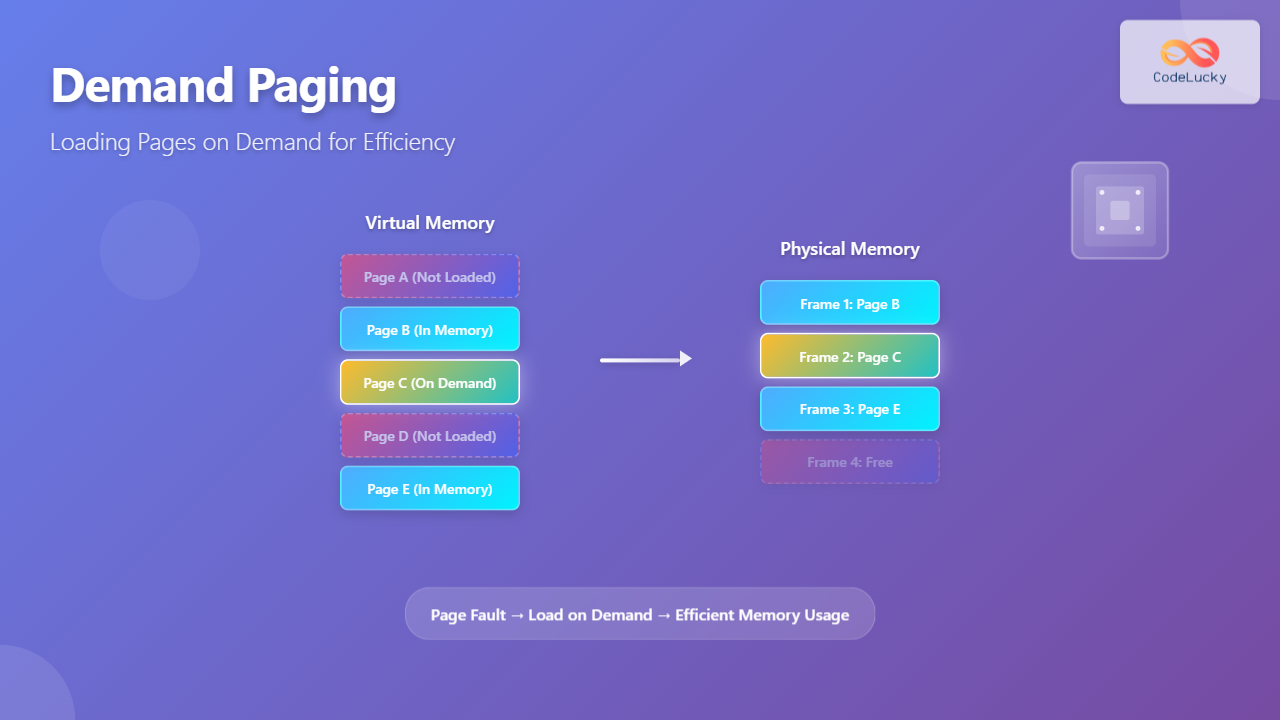
Demand paging is a sophisticated memory management technique used by modern operating systems to optimize memory usage and improve system performance. Instead of loading entire programs into physical memory at once, demand paging loads pages into memory only when they are actually needed during program execution.
This lazy loading approach allows systems to run programs that are larger than the available physical memory, creating an illusion of unlimited memory space through virtual memory management. When a program references a page that isn’t currently in memory, the operating system handles the request transparently, loading the required page from storage.
How Demand Paging Works
The demand paging mechanism operates on the principle of locality of reference – the observation that programs typically access only a small portion of their total memory space at any given time. This behavior makes demand paging highly effective for memory optimization.

Key Components of Demand Paging
Several critical components work together to implement demand paging effectively:
- Page Table: Maps virtual addresses to physical addresses and tracks page status
- Valid/Invalid Bits: Indicate whether a page is currently in memory
- Page Fault Handler: Operating system routine that loads missing pages
- Secondary Storage: Backing store where pages are kept when not in memory
- Frame Allocation: Management of available physical memory frames
Page Fault Handling Process
When a program attempts to access a page that isn’t in memory, a page fault occurs. This hardware-generated interrupt triggers the operating system’s page fault handler to resolve the situation.

Types of Page Faults
Page faults can be categorized into different types based on their cause:
- Hard Page Fault: Page must be loaded from secondary storage
- Soft Page Fault: Page is in memory but not marked as present
- Invalid Page Fault: Access to unmapped or protected memory region
Advantages of Demand Paging
Demand paging provides numerous benefits that make it essential for modern operating systems:
Memory Efficiency
Reduced Memory Requirements: Programs use only the memory they actually need, allowing more programs to run simultaneously. A typical program might use only 10-20% of its total allocated memory space during execution.
Improved System Performance
By loading pages on demand, the system reduces:
- Initial program loading time
- Memory fragmentation
- Unnecessary I/O operations
- Overall system startup time
Support for Large Programs
Programs larger than physical memory can execute seamlessly, as only active portions need to be in memory simultaneously.
Implementation Example
Let’s examine a practical implementation of demand paging concepts:
// Simplified page table entry structure
struct page_table_entry {
    unsigned int present : 1;      // Page in memory?
    unsigned int writable : 1;     // Write permission
    unsigned int user : 1;         // User mode access
    unsigned int accessed : 1;     // Recently accessed
    unsigned int dirty : 1;        // Modified since load
    unsigned int frame : 20;       // Physical frame number
};

// Page fault handler (simplified)
void handle_page_fault(unsigned long virtual_addr) {
    struct page_table_entry *pte;
    unsigned long page_num;
    unsigned long frame_num;

    // Extract page number from virtual address
    page_num = virtual_addr >> PAGE_SHIFT;

    // Get page table entry
    pte = &page_table[page_num];

    // Check if page is valid but not present
    if (!pte->present) {
        // Allocate physical frame
        frame_num = allocate_frame();

        // Load page from storage
        load_page_from_disk(page_num, frame_num);

        // Update page table entry
        pte->frame = frame_num;
        pte->present = 1;
        pte->accessed = 1;

        // Flush TLB entry
        flush_tlb_entry(virtual_addr);
    }
}
Page Replacement Algorithms
When physical memory becomes full, the operating system must decide which pages to evict to make room for new pages. Various algorithms handle this decision:

Least Recently Used (LRU) Algorithm
LRU is one of the most effective page replacement algorithms, based on the principle that recently used pages are more likely to be used again soon.
class LRUPageReplacer:
    def __init__(self, capacity):
        self.capacity = capacity
        self.pages = {}
        self.access_order = []

    def access_page(self, page_num):
        if page_num in self.pages:
            # Update access order
            self.access_order.remove(page_num)
            self.access_order.append(page_num)
            return "HIT"
        else:
            # Page fault occurred
            if len(self.pages) >= self.capacity:
                # Replace least recently used page
                lru_page = self.access_order.pop(0)
                del self.pages[lru_page]
                print(f"Evicted page {lru_page}")

            # Load new page
            self.pages[page_num] = True
            self.access_order.append(page_num)
            return "MISS"

# Example usage
replacer = LRUPageReplacer(3)
accesses = [1, 2, 3, 4, 1, 2, 5, 1, 2, 3, 4, 5]

for page in accesses:
    result = replacer.access_page(page)
    print(f"Page {page}: {result}")
Performance Considerations
The effectiveness of demand paging depends on several factors that impact system performance:
Page Fault Rate
The effective access time can be calculated using the formula:
Effective Access Time = (1 - p) × Memory Access Time + p × Page Fault Time
Where p is the page fault rate. For optimal performance, the page fault rate should be kept as low as possible.
Working Set Size
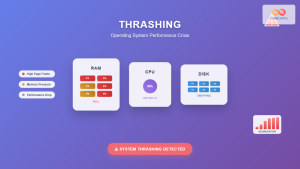
The working set represents the set of pages a process actively uses during a time window. Proper working set management prevents thrashing – a condition where the system spends more time handling page faults than executing useful work.

Advanced Demand Paging Techniques
Prepaging
Prepaging attempts to predict which pages will be needed soon and loads them proactively. This technique reduces page faults but requires sophisticated prediction algorithms.
Copy-on-Write (COW)
COW optimization delays copying pages until they are actually modified, significantly improving the performance of process creation and memory sharing.
// Copy-on-Write page handling
void handle_cow_fault(struct vm_area *vma, unsigned long addr) {
    struct page *old_page, *new_page;

    // Get the current page
    old_page = get_page(addr);

    // Check if page is shared
    if (page_count(old_page) > 1) {
        // Allocate new page
        new_page = alloc_page();

        // Copy page contents
        copy_page_data(old_page, new_page);

        // Update page table to point to new page
        update_page_table(addr, new_page);

        // Mark as writable
        set_page_writable(addr);

        // Decrease reference count of old page
        put_page(old_page);
    } else {
        // Just mark as writable
        set_page_writable(addr);
    }
}
Real-World Applications
Demand paging is crucial in various computing scenarios:
Database Management Systems
Database systems use demand paging to manage large datasets efficiently, loading only the required data pages into memory buffers.
Virtual Machines
Hypervisors employ demand paging to allocate memory to virtual machines dynamically, enabling memory overcommitment.
Mobile Operating Systems
Mobile devices with limited memory rely heavily on demand paging to run multiple applications simultaneously.
Monitoring and Optimization
System administrators can monitor demand paging performance using various tools:
# Monitor page fault statistics on Linux
vmstat 1

# View detailed memory information
cat /proc/meminfo

# Check page fault rates per process
ps -eo pid,comm,maj_flt,min_flt

# Monitor swap usage
swapon -s
Optimization Strategies
- Increase Physical Memory: More RAM reduces page fault frequency
- Optimize Page Size: Balance between internal fragmentation and I/O efficiency
- Improve Locality: Reorganize code and data structures for better access patterns
- Use Memory Mapping: Leverage memory-mapped files for efficient I/O

Future Developments
Demand paging continues to evolve with technological advances:
Non-Volatile Memory
Technologies like Intel Optane blur the line between memory and storage, potentially changing how demand paging operates.
Machine Learning Integration
AI-driven page replacement algorithms can learn application patterns to make better eviction decisions.
Heterogeneous Memory Systems
Future systems may manage multiple memory types with different characteristics, requiring sophisticated demand paging strategies.
Conclusion
Demand paging represents a fundamental advancement in memory management, enabling efficient use of system resources while supporting complex, memory-intensive applications. By loading pages only when needed, operating systems can run more programs simultaneously and handle datasets larger than physical memory.
Understanding demand paging concepts is essential for system programmers, performance engineers, and anyone working with memory-intensive applications. As computing systems continue to evolve, demand paging will remain a critical component of efficient memory management, adapting to new hardware architectures and application requirements.
The success of demand paging lies in its ability to transparently manage memory complexity while providing applications with the illusion of unlimited memory space. This abstraction has enabled the development of sophisticated software systems that would be impossible without effective virtual memory management.
Related Posts
Paging in Operating System: Complete Guide to Memory Management and Page Tables
What is Paging in Operating Systems? Paging is a memory management scheme that allows the operating system to store and...
Page Replacement Algorithms: FIFO, LRU, Optimal – Complete Guide
Introduction to Page Replacement Algorithms Page replacement algorithms are fundamental components of virtual memory systems in modern operating systems. When...
Virtual Memory in OS: Complete Guide to Paging, Segmentation and Address Translation
Virtual memory is one of the most fundamental concepts in modern operating systems, enabling efficient memory management and providing crucial...
Working Set Model: Memory Management Strategy for Operating Systems
The Working Set Model is a fundamental memory management strategy that revolutionized how operating systems handle virtual memory allocation and...
Thrashing in Operating System: Complete Guide to Causes, Effects and Prevention Techniques
What is Thrashing in Operating System? Thrashing is a critical performance degradation condition in operating systems where the system spends...
Memory Allocation Techniques: Contiguous vs Non-contiguous Management Strategies
Memory allocation is a fundamental aspect of operating system design that determines how programs and data are stored and accessed...
Windows Memory Management: Virtual Memory Implementation and Optimization Guide
Introduction to Windows Virtual Memory Windows virtual memory is a sophisticated memory management system that allows programs to use more...
Memory Management in Operating System: Virtual and Physical Memory Fundamentals
Introduction to Memory Management Memory management is one of the most critical functions of an operating system, responsible for efficiently...
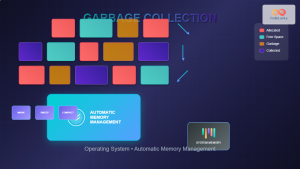
Garbage Collection in Operating System: Complete Guide to Automatic Memory Management
What is Garbage Collection in Operating Systems? Garbage collection is an automatic memory management technique used by operating systems and...
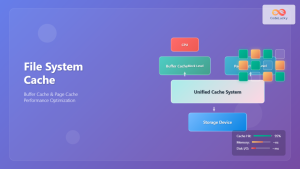
File System Cache: Buffer Cache and Page Cache Explained with Examples
File system caching is a fundamental performance optimization technique in modern operating systems that dramatically reduces disk I/O operations by...
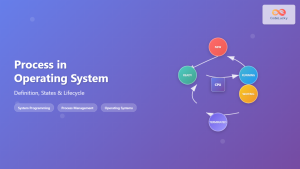
Process in Operating System: Complete Guide to Definition, States and Lifecycle
What is a Process in Operating System? A process is a program in execution that consists of the program code...
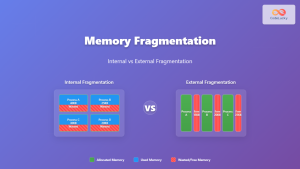
Memory Fragmentation: Internal vs External Fragmentation in Operating Systems
Memory fragmentation is one of the most critical challenges in operating system memory management, directly impacting system performance and resource...