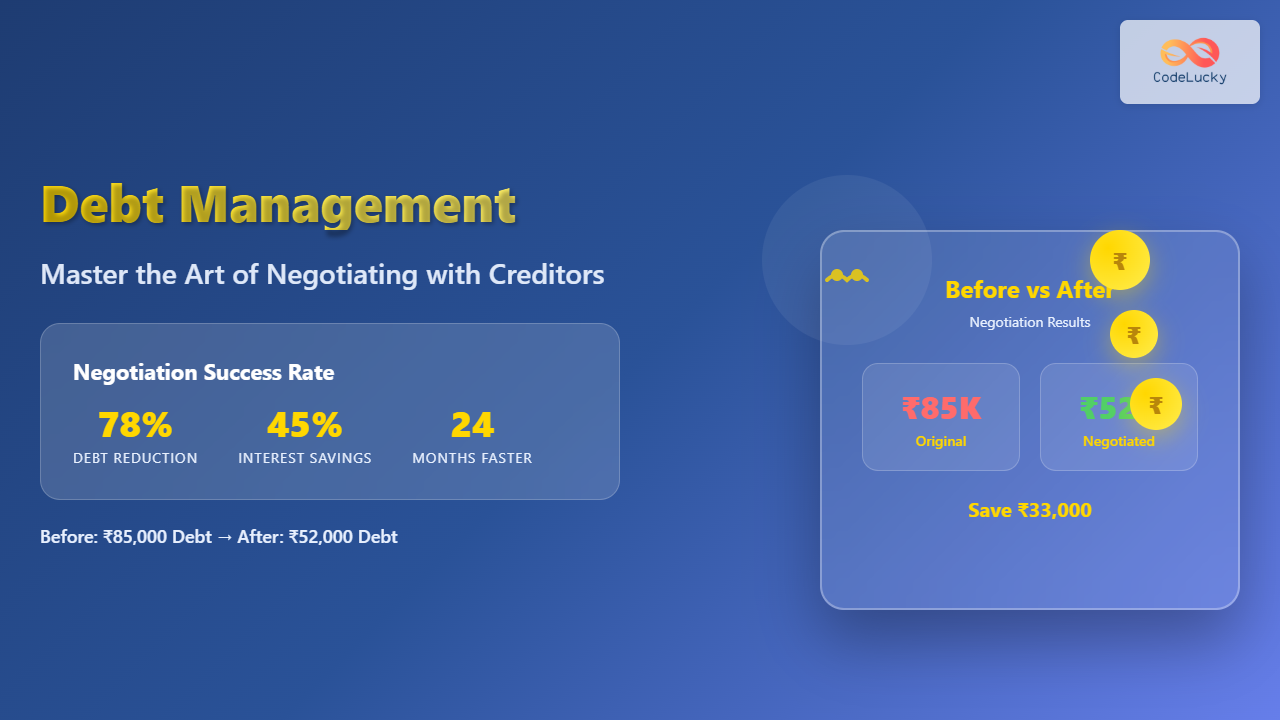
Debt Management: Negotiating with Creditors is a crucial skill for anyone aiming to regain control over their finances. When debts pile up, many people panic or avoid communication with lenders. However, actively negotiating with creditors can lead to reduced interest rates, extended payment terms, or even partial debt forgiveness. This article from CodeLucky.com walks you through a detailed, step-by-step approach to negotiating with creditors, supported by real-life examples and visual guides.
Understanding Debt Negotiation
Debt negotiation, also called debt settlement, involves directly communicating with creditors to modify the terms of repayment. The goal is to make the debt more manageable by agreeing on terms that work for both parties—typically reduced payments or altered schedules.
Unlike debt consolidation, negotiation doesn’t require third-party intermediaries or loans. It’s based on communication, trust, and strategic presentation of your financial situation.

Step-by-Step Guide to Negotiating with Creditors
1. Assess and Prioritize Your Debts
Start by listing all your outstanding debts, including the owed amount, interest rate, and minimum payments. This helps you identify which debts are most urgent or costly.
- Example: If you owe ₹50,000 on a credit card at 24% interest and ₹30,000 on a personal loan at 12%, prioritize negotiating the credit card debt first.
2. Gather Financial Evidence
Before contacting your creditor, gather all necessary details that demonstrate your financial hardship. This includes income proof, expense breakdowns, and bank statements. Showing transparency builds credibility during negotiation.
3. Approach the Creditors Strategically
When reaching out, maintain a polite and professional tone. Avoid blame or defensive language. Instead, express your willingness to pay but emphasize your current limitations.
Sample Script:
"Hello, I appreciate the opportunity to speak with you regarding my account.
Due to recent financial challenges, I’m struggling to meet the current terms.
I’d like to discuss a modified repayment plan that ensures regular payments
while helping me stay financially stable."
4. Propose Realistic Terms
Offer a plan you can sustain. You might request:
- Reduced interest rates (e.g., from 24% to 12%).
- Extended repayment period (e.g., 36 to 48 months).
- Partial forgiveness in exchange for lump-sum payment.

5. Document the Agreement
Always request written confirmation of the negotiated terms before making any payments. This legal safeguard prevents future misunderstandings and ensures both parties comply with the updated terms.
6. Make Timely Payments
Honoring your new arrangement is key to rebuilding trust. Consistent payments also help you improve or stabilize your credit score over time.
Interactive Debt Calculation Example
Use the interactive example below to compare repayment options before and after negotiation:
// Example JavaScript snippet for simple calculation
let owed = 50000;
let oldRate = 0.24;
let newRate = 0.12;
let months = 24;

let oldPayment = (owed * (1 + oldRate)) / months;
let newPayment = (owed * (1 + newRate)) / months;

console.log("Old Monthly Payment: ₹" + oldPayment.toFixed(2));
console.log("New Monthly Payment: ₹" + newPayment.toFixed(2));
Try adjusting the values above in your browser console to simulate different negotiation outcomes.
Best Practices During Debt Negotiation
- Stay calm and factual: Emotional appeals rarely work; data does.
- Keep records: Document every call or email exchange.
- Stay consistent: Follow through on every promise made.
- Seek help if overwhelmed: Non-profit credit counselors can guide negotiations.
Common Mistakes to Avoid
- Ignoring creditors or delaying contact.
- Agreeing to amounts you cannot afford long-term.
- Failing to confirm settlements in writing.

Long-Term Impact of Successful Negotiation
Successful negotiation provides breathing space to manage cash flow and prevents default or legal collection. Over time, consistent repayment improves your credit profile, restoring access to future financial opportunities like housing loans or business credit.

Conclusion
Negotiating with creditors is not a sign of failure—it’s a proactive strategy to regain financial health. By transparently communicating challenges and committing to agreed terms, borrowers can transform overwhelming debt into structured, achievable repayment plans. Whether you’re a salaried professional or a small business owner, mastering debt negotiation ensures that your financial future remains secure and stress-free.
Stay tuned to CodeLucky.com for more practical guides on smart money management and personal finance mastery.