Crypto investing has evolved far beyond Bitcoin. Among the new generation of blockchain innovations, Ethereum and smart contracts stand out as the foundation of decentralized finance (DeFi), non-fungible tokens (NFTs), and digital governance systems. This article explores how Ethereum enables programmable money, how smart contracts work, and how investors can participate safely and profitably.
Understanding Ethereum: Beyond Digital Currency
While Bitcoin pioneered the idea of decentralized money, Ethereum introduced programmable money — a blockchain network that can execute code directly on-chain. Instead of only storing transaction data, Ethereum’s blockchain also stores and runs smart contracts, enabling automated agreements without intermediaries.
Ethereum’s main components include:
- Ether (ETH): The native cryptocurrency used to pay for transactions and compute operations (known as “gas fees”).
- Ethereum Virtual Machine (EVM): The environment where smart contracts are deployed and executed.
- Nodes and Validators: Computers that verify transactions, maintain consensus, and secure the network via Proof of Stake (PoS).

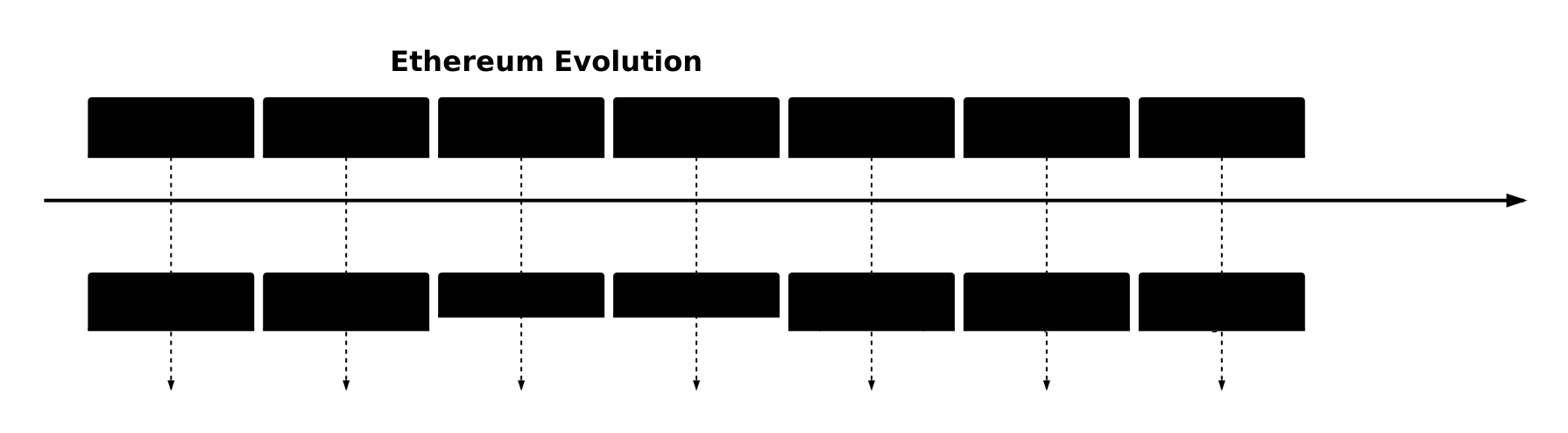
The above diagram illustrates how investors’ transactions interact with Ethereum’s blockchain and smart contracts, highlighting its automatic validation and trustless execution process.
What Are Smart Contracts?
Smart contracts are self-executing digital agreements written in programming languages like Solidity. They eliminate the need for middlemen by enforcing the terms of contracts automatically, using blockchain transparency and immutability.
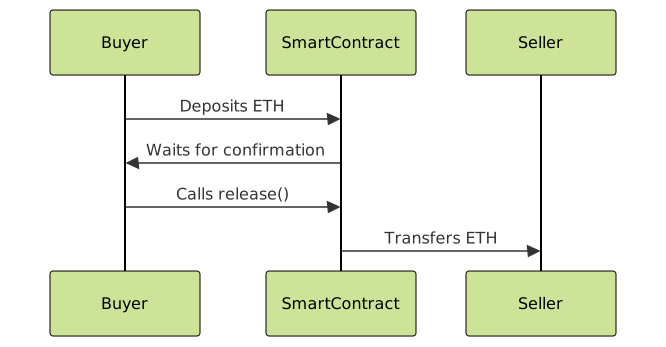
For example, a simple escrow contract can hold funds until a condition is met:
// Solidity example: Simple Escrow
pragma solidity ^0.8.0;

contract Escrow {
    address payable public buyer;
    address payable public seller;
    uint public amount;

    constructor(address payable _seller) payable {
        buyer = payable(msg.sender);
        seller = _seller;
        amount = msg.value;
    }

    function release() external {
        require(msg.sender == buyer, "Only buyer can release funds");
        seller.transfer(amount);
    }
}
In this example, the buyer locks ETH into the contract. Only when they approve, the funds are released to the seller — no banks, no intermediaries, just code.
Why Ethereum Matters for Investors
Ethereum enables a new kind of financial ecosystem — DeFi (Decentralized Finance). Through DeFi, investors can lend, borrow, trade, and earn yields directly from their crypto wallets. Unlike traditional finance, DeFi platforms operate 24/7 and rely solely on open-source code and cryptographic security.
Some popular investment avenues on Ethereum include:
- Staking ETH: Earn passive income by helping secure the network.
- Yield Farming: Provide liquidity to decentralized exchanges (DEXs) like Uniswap and earn fees or tokens in return.
- NFTs: Invest in unique digital assets that use Ethereum’s ERC-721 token standard.
- DAO Participation: Gain voting rights in decentralized projects and protocols through governance tokens.

Example: Yield Farming with Smart Contracts
To illustrate, let’s look at a simple yield farming transaction flow:
- You connect your Ethereum wallet (like MetaMask) to a DeFi application.
- You deposit ETH or stablecoins (like USDC) into a liquidity pool.
- The smart contract issues liquidity tokens as proof of deposit.
- You earn rewards automatically based on your share of the pool.

Risks and Rewards in Ethereum Investing
Like any investment, Ethereum-based opportunities come with risks. Investors must balance rewards with potential vulnerabilities.
| Opportunity | Potential Gain | Key Risk |
|---|---|---|
| Staking ETH | 5–10% annual yield | Volatility and slashing penalties |
| DeFi Yield Farming | Variable APY, sometimes >100% | Smart contract bugs or rug pulls |
| NFT Investing | Capital gains, collectible value | Market illiquidity, hype cycles |
Interactive Example: Understanding Gas Fees
Ethereum transactions require users to pay gas fees, the cost for using network computational power. Below is a simple interactive simulation (HTML + JS) that helps you experiment with gas calculation in a browser environment (non-blockchain).
<label>Gas Price (Gwei): </label>
<input type="number" id="gasPrice" value="20"/><br/>
<label>Gas Limit: </label>
<input type="number" id="gasLimit" value="21000"/><br/>
<button onclick="calcGasFee()">Calculate Fee</button>
<p id="output"></p>

<script>
function calcGasFee(){
    const price = document.getElementById('gasPrice').value;
    const limit = document.getElementById('gasLimit').value;
    const feeInEth = (price * limit * 1e-9).toFixed(6);
    document.getElementById('output').textContent = 'Estimated Transaction Fee: ' + feeInEth + ' ETH';
}
</script>
Best Practices for Crypto Investors
- Always verify smart contract addresses from official sources.
- Use hardware wallets for storing large amounts of ETH or tokens.
- Stay updated with Ethereum Improvement Proposals (EIPs), as network upgrades can affect gas fees and rewards.
- Diversify holdings — combine staking, NFTs, and stablecoins to reduce volatility.
Future Outlook: Ethereum 2.0 and Beyond
With Ethereum’s transition to Proof of Stake and scaling through Layer 2 solutions (like Optimism and Arbitrum), transactions will become faster and cheaper. This shift will make decentralized applications more accessible, supporting mass adoption of Web3 technologies.
Conclusion
Ethereum is more than a cryptocurrency — it’s a programmable financial layer for the internet. Smart contracts have opened gateways to decentralized finance, creative ownership, and transparent governance. For investors, understanding how they work is essential to navigate the rapidly evolving crypto-economic landscape safely and profitably.
Article by CodeLucky.com — Building clarity in code, finance, and the future of digital innovation.