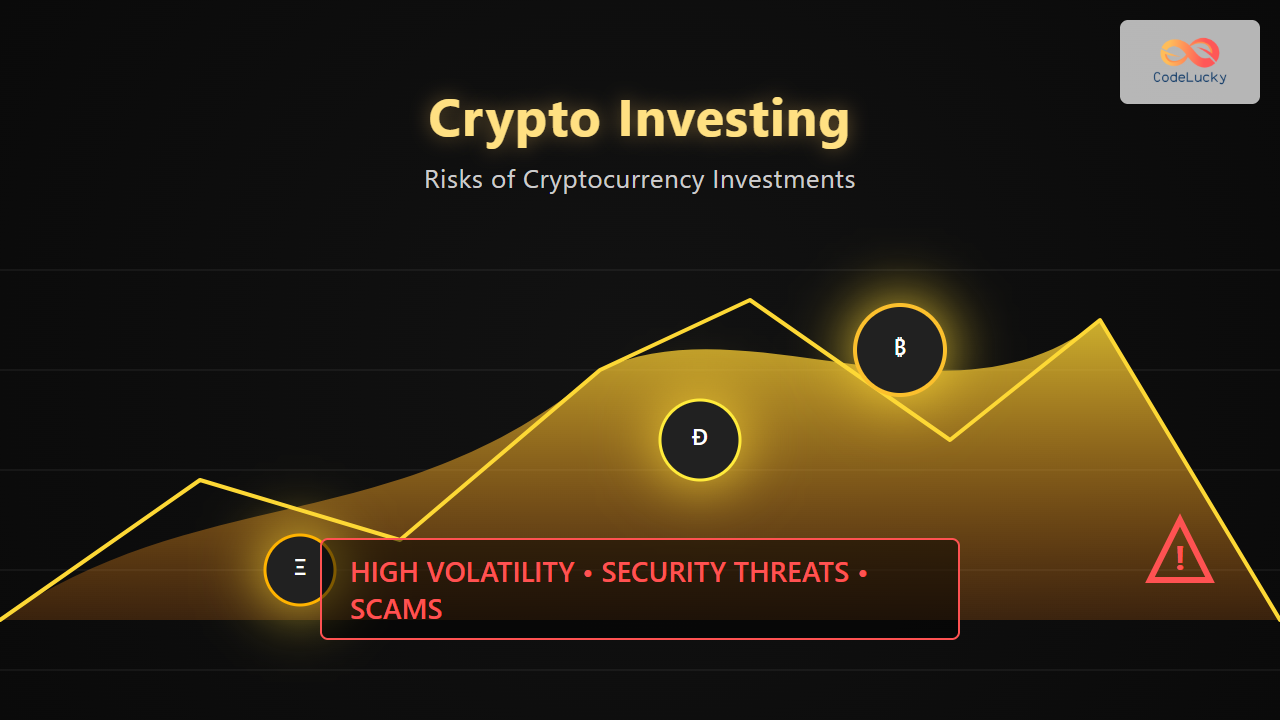
Cryptocurrencies have transformed how we think about money and investment growth. From Bitcoin’s meteoric rise to new blockchain innovations, crypto investing has opened opportunities for both profit and peril. However, before diving into decentralized finance (DeFi) or buying tokens, understanding the major risks of cryptocurrency investments is essential for every investor.
1. Market Volatility
Cryptocurrency markets are famous — or infamous — for their extreme volatility. Prices of digital assets can rise or fall by double-digit percentages in a single day. For instance, Bitcoin dropped from $68,000 to under $20,000 between late 2021 and 2022. Such fluctuations can devastate portfolios that aren’t diversified or protected by risk controls.

Volatility is largely due to speculative trading, limited regulation, and global sentiment shifts. Small investors often buy during hype cycles and sell in panic, amplifying swings.
2. Regulatory Uncertainty
Government policies and regulations heavily influence crypto markets. Some countries embrace digital assets, while others restrict them outright. Regulatory changes — such as taxation rules or crypto bans — can instantly affect both price stability and liquidity.
For example, when China announced its crypto mining ban, Bitcoin’s hash rate plunged dramatically, leading to a temporary drop in network efficiency and prices. Investors should track major global policies to anticipate potential market shifts.

3. Security and Hacking Risks
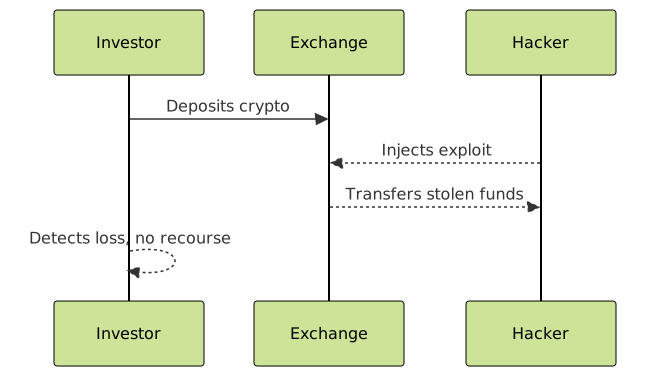
Although blockchain technology itself is secure, cryptocurrency exchanges and digital wallets remain prime targets for hackers. Billions of dollars have been lost from vulnerabilities in smart contracts, phishing attacks, and DeFi protocol exploits.
Example: In 2022, a major bridge hack in the DeFi ecosystem led to over $600 million being stolen from users. Such events underscore the importance of using hardware wallets and conducting transactions only on verified platforms.
Below is a simplified view of how a hack might unfold:
4. Lack of Investor Protection
Unlike traditional finance, cryptocurrencies operate in a largely unregulated environment. There are no governing bodies or insurance mechanisms by default. If an exchange goes bankrupt or a token’s project team disappears, investors may never recover their assets.
Consider the collapse of major crypto exchanges like FTX — users lost access to billions in deposits overnight. This demonstrates why due diligence, transparency, and custody awareness are vital for any investor.

5. Scams and Rug Pulls
The decentralized nature of blockchain can empower bad actors to create deceptive projects. Rug pulls, where developers withdraw liquidity and abandon a project, have caused massive losses. Some investors realize the danger only after total capital loss.
Example Interactive Visualization: Try this quick thought exercise — imagine you contributed $500 to a new token pool showing +300% gains in two weeks. Suddenly, liquidity vanishes, and your wallet shows $0. That’s a rug pull in action. Always verify developer credentials, token audits, and project transparency before investing.
6. Psychological and Emotional Risk
Crypto markets operate 24/7, inducing decision fatigue and FOMO (Fear of Missing Out). Investors often chase rapid profits or panic sell during dips, leading to emotional trades and poor outcomes. Developing a disciplined strategy — such as dollar-cost averaging — is a key safeguard against impulsive behavior.

7. Technological Risk
Every cryptocurrency’s foundation relies on code — and code can fail. Network bugs, smart contract flaws, or consensus failures can jeopardize asset security or render tokens worthless. Blockchain forks may split communities and fragment value.
For instance, Ethereum’s “Merge” transition was a success, but a failed update could have caused major disruptions in the ecosystem and token valuation.
8. Liquidity Risks
Low market liquidity can make it difficult to sell tokens at fair value, especially for lesser-known altcoins. Thinly traded assets can trap investors when volatility rises or exchanges restrict withdrawals.
Small-cap cryptos often show exaggerated gains but can drop 80–90% once early traders exit. For portfolio stability, consider allocating only a portion to high-risk, low-liquidity coins.
How to Manage Crypto Investment Risks
- Invest only what you can afford to lose.
- Diversify across established coins (like Bitcoin, Ethereum) and stable assets.
- Store long-term holdings in hardware wallets, not exchanges.
- Follow reliable crypto news and regulatory developments.
- Use limit orders and stop-loss mechanisms to control portfolio drawdowns.
- Continuously educate yourself about decentralized finance and blockchain technology trends.
Final Thoughts
Cryptocurrency investing offers innovation and independence but also substantial risks. Understanding market volatility, security threats, and emotional pitfalls equips investors to make informed choices. With careful research and practical risk management, investors can participate in crypto growth while minimizing potential downsides.
At CodeLucky.com, we believe smart investing begins with strong awareness. Learn technology, understand finance, and invest intelligently — that’s the real crypto advantage.