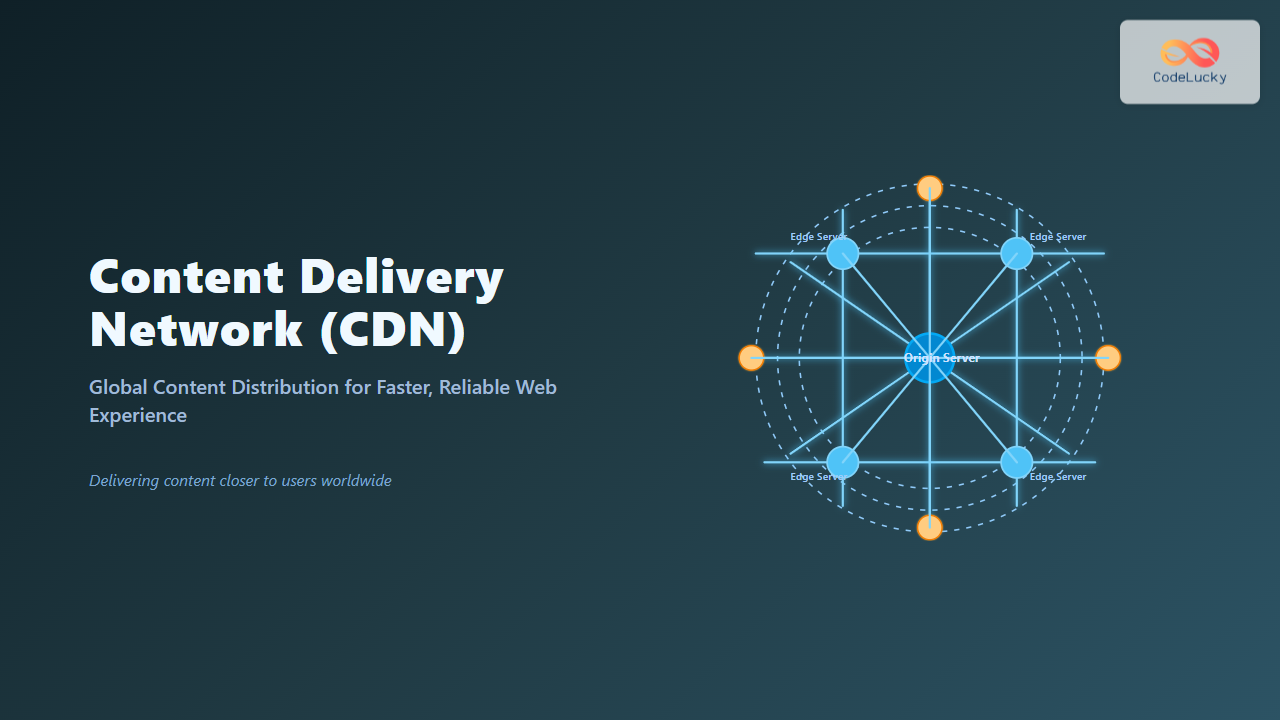
Content Delivery Network (CDN) technology is fundamental for delivering digital content swiftly and reliably to users around the globe. As web traffic continues to soar and user expectations for near-instant page loads rise, understanding CDNs—their architecture, function, and benefits—is crucial for developers, companies, and digital marketers alike.
What Is a Content Delivery Network (CDN)?
A Content Delivery Network (CDN) is a system of distributed servers strategically located across different geographies. These servers work together to deliver internet content—such as web pages, images, videos, and application data—to users more efficiently by serving content from the node geographically closest to the user.
Instead of fetching content directly from the origin server (which might be far away and cause latency), users retrieve cached copies from edge servers, reducing load times and improving user experience.
Core Components of a CDN
- Origin Server: The primary source of all the original web content.
- Edge Servers (PoPs): Distributed cache servers located worldwide that store copies of the content closer to end users.
- CDN Network: The interconnected global system enabling data routing and synchronization between origin and edge servers.
- Request Routing: Mechanisms (such as DNS redirection, IP Anycast) to route user requests to the nearest edge server.
How Does a CDN Work? — Step-by-Step Flow
The process of content delivery through a CDN involves several key steps:

1. A user requests content via their browser or app.
2. The DNS system routes this request to the geographically nearest CDN edge server (PoP).
3. The edge server checks if it already has the requested content cached.
4. If cached, the content is served instantly to the user.
5. If not cached, the edge server fetches content from the origin server, caches it for subsequent requests, and serves it to the user.
Benefits of Using a CDN
- Reduced Latency: Proximity of edge servers to users minimizes delay in content delivery.
- Improved Availability and Reliability: Multiple servers reduce points of failure and can handle outages gracefully.
- Load Balancing: Distributes traffic globally to prevent overloading a single server.
- Better Security: CDNs offer protection against DDoS attacks and strengthen SSL/TLS encryption.
- Cost Efficiency: Offloads bandwidth consumption from origin servers, potentially reducing hosting costs.
Example: Global Content Delivery with a CDN
Imagine a popular streaming website headquartered in the USA with millions of viewers worldwide. Without a CDN, European and Asian users must connect directly to the US origin servers, leading to slower buffering and longer load times. With a CDN in place, multiple edge servers in Europe, Asia, and other continents cache videos locally:
- A user in Germany requests a video.
- The CDN directs the request to an edge server in Frankfurt.
- The video is served immediately from this nearby server, reducing buffering time dramatically.

Technical Aspects of CDNs
Caching Strategies
CDNs employ sophisticated caching mechanisms such as:
- Time-Based Expiration: Content is cached for a predefined Time To Live (TTL).
- Cache Invalidation: Manual or automated purging of stale content to ensure freshness.
- Dynamic Content Acceleration: Optimization techniques for non-cacheable, API-driven content.
Content Types Delivered by CDNs
- Static Assets: Images, stylesheets, JavaScript files, fonts, etc.
- Streaming Media: Live and on-demand video/audio streaming.
- Software Downloads: Large files like game patches, software installers.
- Dynamic Content: Personalized web content often via edge computing.
Interactive Example: Simulating Content Requests With & Without CDN
Below is a simulated user request latency example (in milliseconds) across continents comparing origin-only versus CDN delivery:
| Region | Latency Origin Only (ms) | Latency With CDN (ms) |
|---|---|---|
| North America | 50 | 20 |
| Europe | 180 | 30 |
| Asia | 250 | 40 |
| Australia | 280 | 50 |
Popular CDN Providers
The market offers various CDN solutions tailored to different needs, including:
- Cloudflare: Known for security features and global reach.
- Akamai: One of the oldest CDNs with extensive infrastructure.
- Amazon CloudFront: Integrated tightly with AWS services.
- Fastly: Developer-friendly with real-time caching control.
Future of CDNs: Edge Computing and Beyond
Modern CDNs are evolving beyond caching, incorporating edge computing—running scripts and custom logic closer to users at edge servers. This reduces server load and latency further while enabling personalized, dynamic web applications at scale.

Summary
Content Delivery Networks are vital to modern web infrastructure, allowing rapid, reliable, and secure delivery of all types of digital content at a global scale. By caching content closer to users, reducing network hops, and enhancing availability, CDNs improve user experience significantly. Understanding how they work and leveraging them effectively is key for developers and businesses aiming to optimize web performance in today’s connected world.