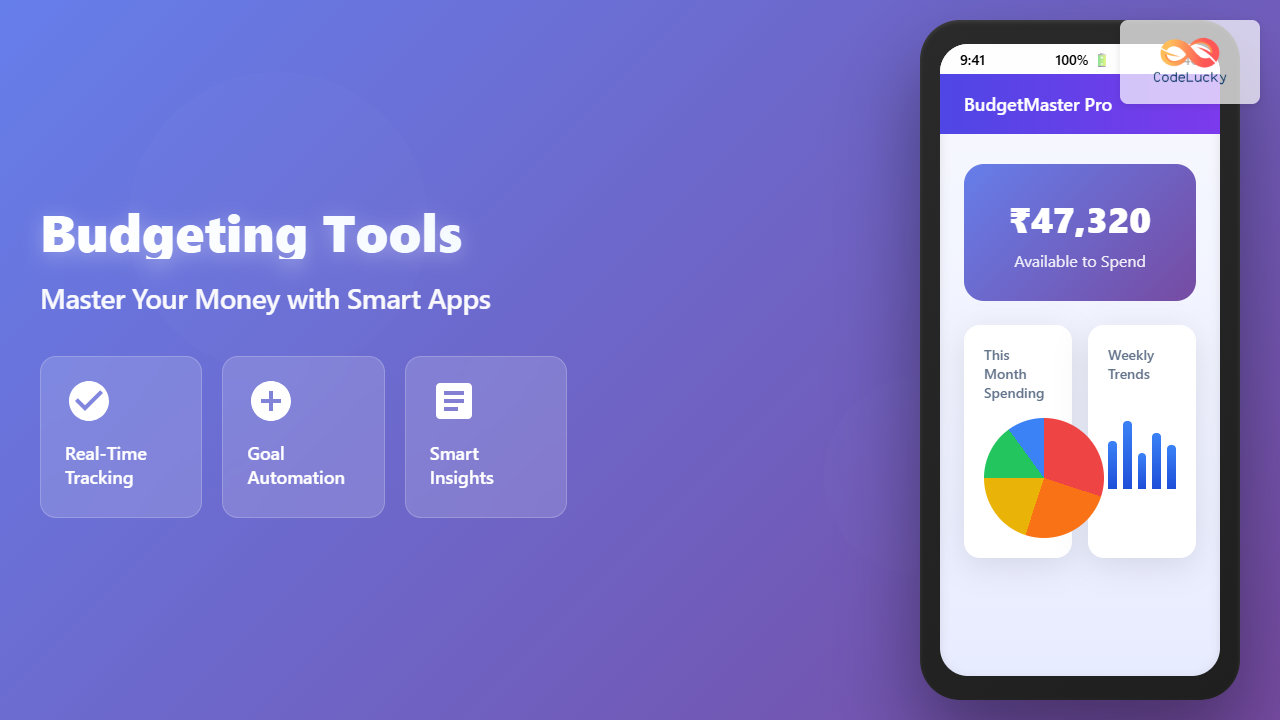
Managing your personal finances effectively begins with one essential habit — budgeting. But thanks to today’s digital ecosystem, it’s much easier to track where your money goes using specialized budgeting tools and apps. Whether you’re saving for a goal, cutting unnecessary expenses, or simply trying to organize your income and spending, the right apps can make a huge difference.
Why Budgeting Tools Matter
Manual budgeting with spreadsheets may still work for some, but automation saves time and provides instant insights into spending patterns. Budgeting tools help with:
- Tracking all income and expenses in one place.
- Visualizing spending vs. savings with charts and alerts.
- Setting financial goals and monitoring progress automatically.
- Integrating with bank accounts for real-time updates.
- Preventing overspending with predictive analytics or notifications.
Types of Budgeting Apps
Budgeting tools come in several varieties, tailored to different financial personalities. Here are the most common types:
- Expense Trackers: Simple apps like Money Manager or Wallet that categorize your daily expenses.
- Goal-Based Apps: Tools such as Goodbudget or Qapital designed for specific saving goals.
- Comprehensive Budget Suites: Full-fledged platforms like YNAB (You Need A Budget) or Mint that sync with your bank accounts and investment portfolios.
- Zero-Based Budgeting Apps: Tools like EveryDollar that help you allocate every rupee or dollar you earn.
Visual Breakdown: How Budgeting Tools Work
The process of digital budgeting usually follows a repetitive but impactful pattern. Below is a flowchart representing a typical lifecycle of digital budgeting:
Top 5 Budgeting Apps to Try
- YNAB (You Need A Budget): A data-driven planner that encourages zero-based budgeting and focuses on assigning every unit of currency to a purpose.
- Mint: Perfect for beginners, Mint connects directly to your accounts and tracks spending habits automatically while suggesting budget goals.
- PocketGuard: Keeps things simple by showing how much money is “safe to spend” after bills and goals are considered.
- Goodbudget: Uses an envelope-style budgeting system for controlled spending, ideal for couples or joint financial planning.
- Money Manager App: A sleek app for Android users that provides charts, automatic categorization, and expense analytics offline.
Interactive Example: Monthly Budget Allocator
Below is a simple example of how an allocation-based budgeting app divides income into categories. Imagine your monthly income is ₹80,000.

Such visual insights make it easier to understand spending composition and identify areas to trim.
Essential Features to Look For
- Bank Integration: Automatically import transactions to save time.
- Custom Categories: Flexibility to group expenses based on your lifestyle.
- Data Visualization: Interactive graphs and charts enhance clarity.
- Cross-Device Sync: Access your budget across phone and web.
- Security: End-to-end encryption and password protection are a must.
Visual Comparison: Manual vs. Digital Budgeting

While manual methods provide control, digital tools deliver efficiency, real-time insights, and consistency.
Practical Steps to Get Started
- Download a Budgeting App: Choose one based on your financial goals and preferred level of automation.
- Set Monthly Income: Input your total net earnings.
- Create Categories: Define spending areas (food, transport, bills, leisure, etc.).
- Track Daily: Log expenses or rely on automated sync.
- Review Weekly: Analyze reports and make adjustments.
Interactive Habit Cycle: Staying Consistent

This cycle reinforces consistency, forming a sustainable budgeting habit over time. With each repeat, your financial control sharpens.
Tips for Maximum Effectiveness
- Use automation wherever possible to reduce manual entry errors.
- Review past data for trend analysis and forecast upcoming expenses.
- Bundle small goals into short-term milestones for better motivation.
- Leverage notifications for reminders on bills, savings, or spending limits.
Summary
Budgeting may sound tedious, but today’s digital tools simplify the process through automation, visual insights, and real-time tracking. Whether you’re using YNAB’s zero-based system or Mint’s automated monitoring, these tools empower you to align your money with your goals. The right approach transforms budgeting from a chore into a lifestyle habit — keeping your finances under your full control.