In the world of personal finance, understanding the difference between savings and checking accounts is essential for managing your money wisely. Both are fundamental banking tools but serve distinct purposes. Whether you’re setting up your first bank account or optimizing your finances, this guide will help you understand how each type works, their benefits, and how to use them effectively — with clear examples and interactive visuals.
What is a Savings Account?
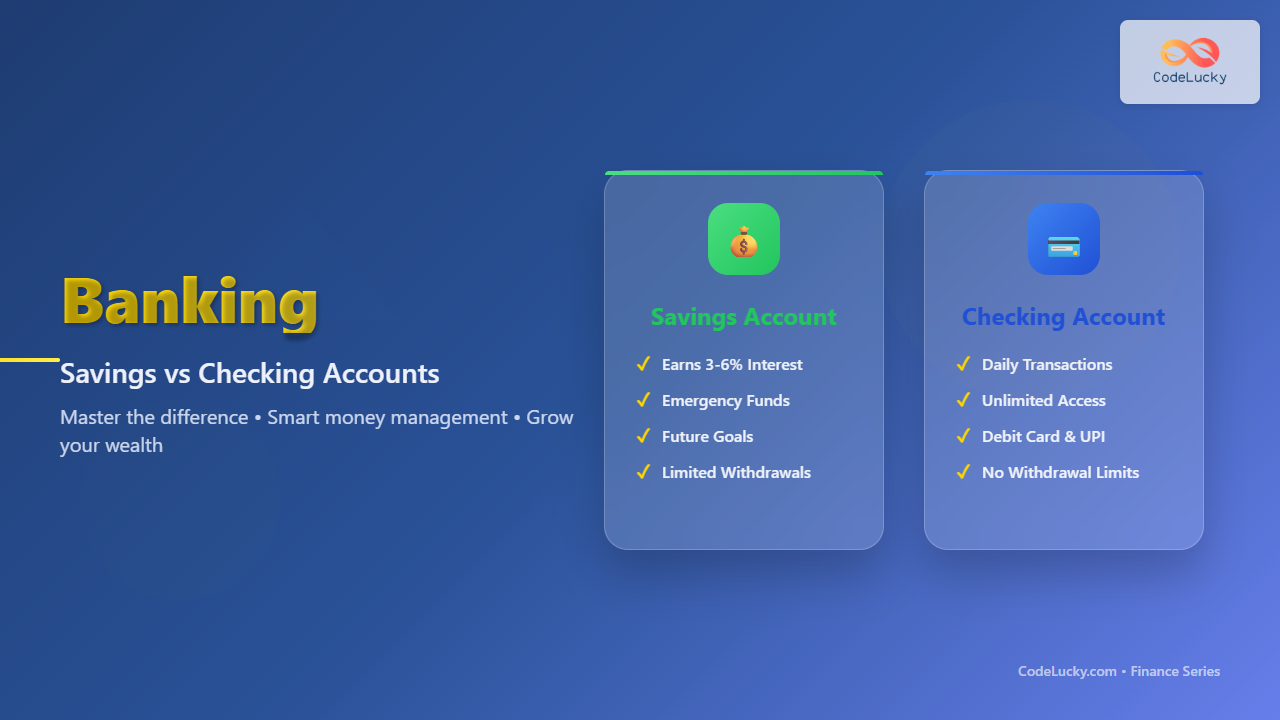
A savings account is designed primarily for storing money you do not intend to spend immediately. It pays interest on your balance, helping your funds grow over time. Banks use these deposits to lend money, rewarding you with an annual interest rate (often compounded monthly).
Key features of a savings account:
- Earns interest on the deposited amount.
- Limited monthly withdrawals (to encourage saving).
- Ideal for emergency funds or future goals.
- Usually linked to a checking account for transfers.
Example: If you deposit ₹50,000 into a savings account earning 4% annual interest, after a year (assuming simple interest), your total becomes ₹52,000 — earning ₹2,000 in interest.

What is a Checking Account?
A checking account (known as a current account in some countries) is meant for daily transactions — receiving salary, paying bills, shopping, and transferring funds. It offers easy, unlimited access but typically earns little to no interest.
Key features of a checking account:
- Supports frequent deposits and withdrawals.
- Comes with a debit card and online banking.
- Usually does not earn interest.
- Ideal for managing everyday expenses and payments.
Example: You receive your monthly salary in a checking account and use it to pay your rent, electricity bill, and groceries — all through debit card, UPI, or online transfers.

Key Differences Between Savings and Checking Accounts
The table below summarizes the major contrasts between these two types of accounts:
| Feature | Savings Account | Checking Account |
|---|---|---|
| Purpose | To save and grow money | To manage daily transactions |
| Interest | Earns interest (3-6%) | Usually no interest |
| Withdrawals | Limited per month | Unlimited |
| Liquidity | Moderate | High |
| Best For | Emergency funds, long-term goals | Daily spending, business payments |

When to Use Each Account
Choosing between savings and checking isn’t about which is better — it’s about how you combine them efficiently.
- Use your checking account for day-to-day needs, receiving income, and paying expenses.
- Use your savings account to set aside money for emergencies, goals, or future purchases like travel or large items.
- Automate transfers between them — deposit your salary into checking, and automatically move a fixed portion to savings monthly.
Example of smart setup:

Interactive Tip: Estimate Your Saving Growth
Try this interactive example to estimate interest on savings. Modify the numbers as you wish:
<script>
function calculateInterest() {
  let amount = prompt("Enter deposit amount (₹):", 50000);
  let rate = prompt("Enter annual interest rate (%):", 4);
  let years = prompt("Enter number of years:", 2);
  let total = amount * (1 + (rate / 100) * years);
  alert("After " + years + " years, you'll have ₹" + total.toFixed(2));
}
calculateInterest();
</script>
Pros and Cons Summary

Final Thoughts
Both savings and checking accounts are financial essentials. The key lies in using them together — let your checking account handle spending and your savings account grow your reserves. By understanding the differences and leveraging automation, you can build a disciplined system that supports both everyday liquidity and future financial stability.
Pro Tip: Many banks now offer hybrid accounts combining the features of both — high-interest checking or linked auto-transfer savings — helping you maximize convenience and returns with minimal effort.
Written for CodeLucky.com — empowering smarter financial decisions.