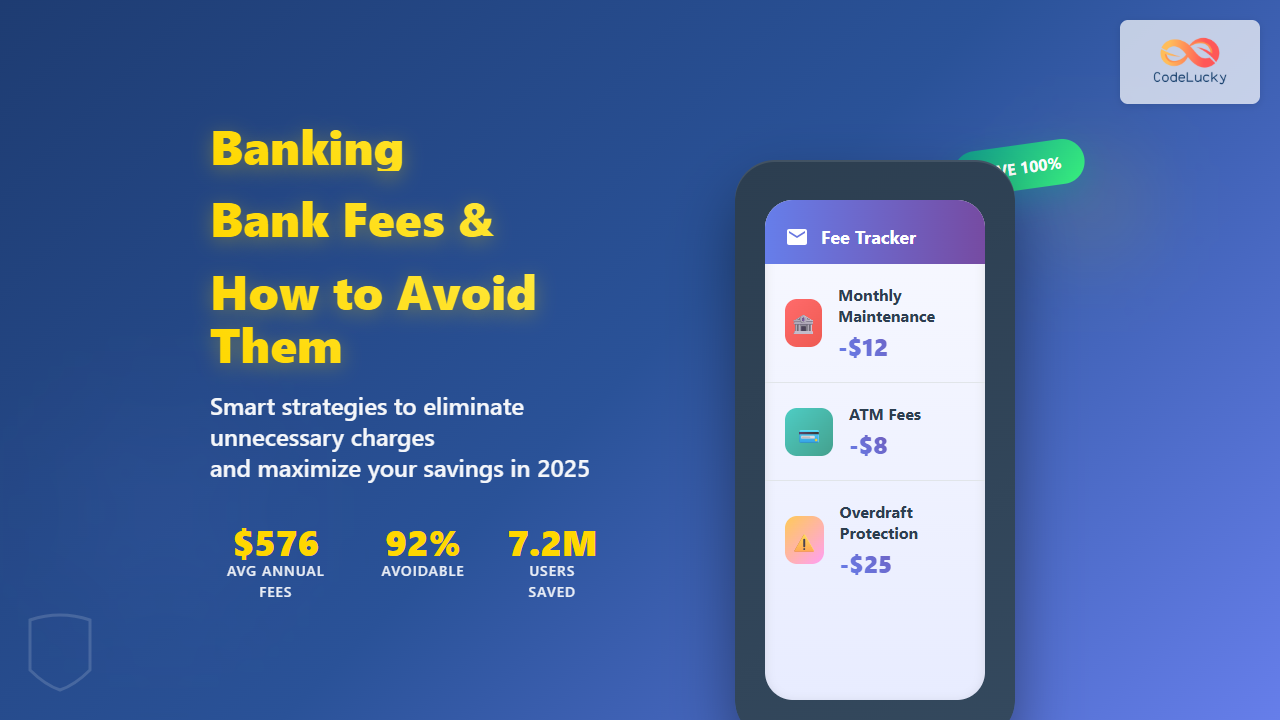
Banking fees have become an unavoidable part of modern financial life—yet many of them can be minimized or completely avoided with a little awareness and smart management. This detailed guide explores what bank fees are, why they exist, and how you can avoid them to save your hard-earned money. Whether you’re using traditional banks or digital neo-banks, understanding how fees work is key to making informed financial decisions.
Understanding What Bank Fees Are
Bank fees are charges financial institutions impose for account services, transactions, or penalties. These fees cover the operational costs of maintaining accounts, payment systems, and customer service. However, not all bank fees are fixed; many depend on user behavior.
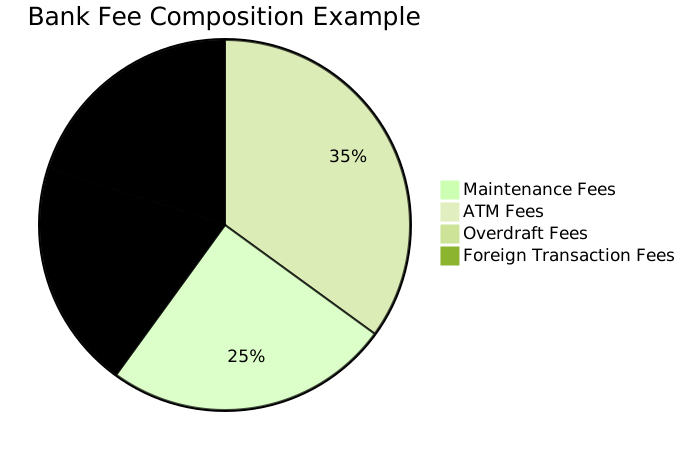
Here’s a breakdown of the major types of fees you might encounter:
- Account maintenance fees: Charged monthly or annually just for keeping your account open.
- ATM fees: Charged for withdrawals outside your bank’s network.
- Overdraft fees: When you spend more than you have in your account.
- Minimum balance fees: If your balance drops below a required threshold.
- Foreign transaction fees: When making purchases in another currency or country.
- Wire transfer fees: For sending or receiving money domestically or internationally.

Why Do Banks Charge Fees?
Banks earn revenue not only from lending but also from service fees. These charges help maintain infrastructure, cover operational costs, and sometimes act as deterrents against risky customer habits (like repeated overdrafts). Digital banks and fintech startups are undermining this model by offering no-fee or low-fee banking services through automation and lower overheads.
Common Examples of Bank Fees and Their Impact
| Type of Fee | Typical Cost | Example Scenario |
|---|---|---|
| Monthly Maintenance Fee | $10–$20 | Charged if average monthly balance falls below $1000. |
| Overdraft Fee | $25–$40 | Triggered when you spend more than your available balance. |
| Foreign Transaction Fee | 2%–3% of transaction | Applied on international card purchases. |
| ATM Fee | $2–$5 per withdrawal | When using an ATM outside your bank’s network. |
How to Avoid Bank Fees
You can avoid most fees with smart account management and a strategic choice of bank products. Here are proven ways to do that:
- Maintain minimum balances: Set reminders to keep required funds in your account to avoid maintenance charges.
- Opt for direct deposits: Many banks waive monthly fees if you have consistent direct deposits.
- Use in-network ATMs: Locate fee-free ATMs using your bank’s mobile app or website before traveling.
- Enable low balance alerts: Get notifications before your balance hits critical levels.
- Choose no-fee accounts: Online banks and credit unions often offer zero monthly fee options.
- Bundle services: Some banks waive fees if you combine checking, savings, and credit products.

Interactive Example: Estimating Your Yearly Bank Fees
Use this simple interactive calculator to estimate how much you might spend on bank fees annually:
Tips for Choosing a Low-Fee Bank
When selecting a new bank, always compare the fee structure, digital services, and ATM access. Consider:
- Does the bank offer a free checking or savings account option?
- What is the minimum balance to waive fees?
- Are there hidden charges in loan or credit card offers?
- Does it support fee-free UPI or mobile wallet transfers (for Indian residents)?

Final Thoughts
Bank fees don’t have to drain your finances. With awareness, planning, and smart banking habits, you can minimize costs and maximize savings. Always review your monthly statements for unexpected charges and reassess your bank relationships yearly. The financial landscape is shifting rapidly in 2025—use that to your advantage by embracing transparent, low-cost banking solutions that fit your lifestyle.