Segmentation in OS: Memory Management Through Logical Address Space Division
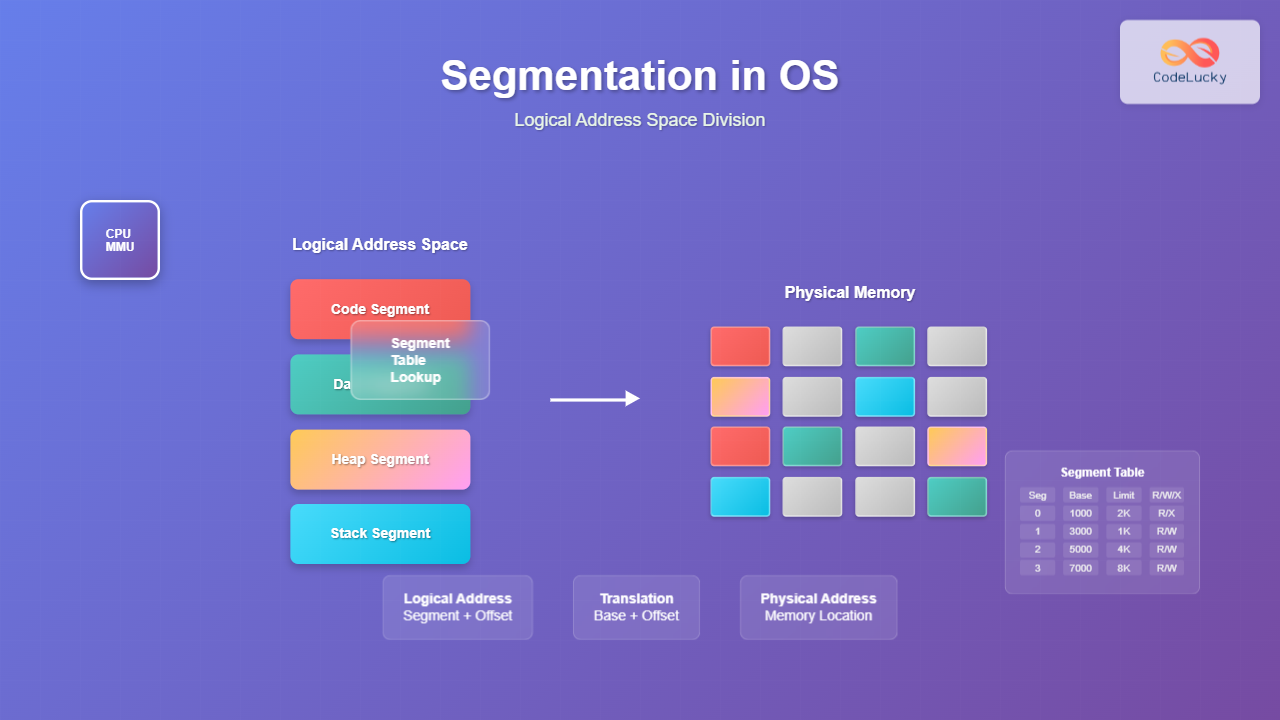
Learn how segmentation divides logical address space into meaningful segments for efficient memory management in operating systems with practical examples and diagrams.

Learn how segmentation divides logical address space into meaningful segments for efficient memory management in operating systems with practical examples and diagrams.
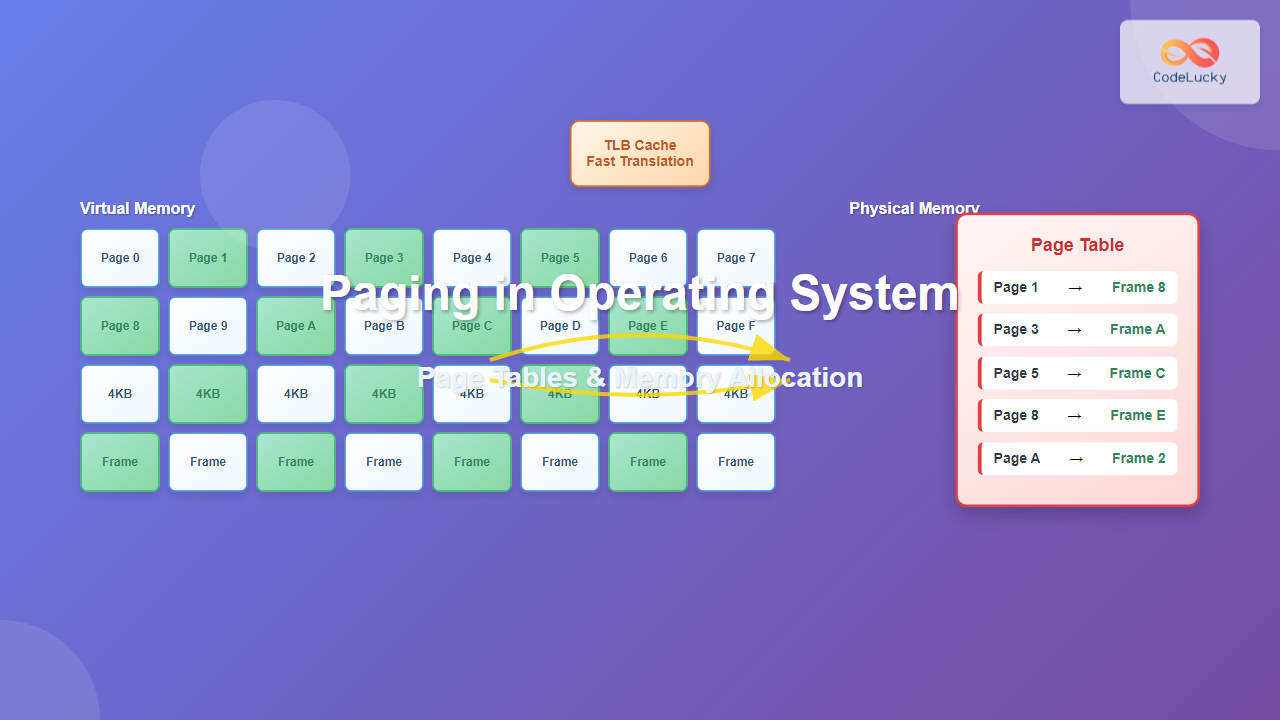
Complete guide to paging in operating systems covering page tables, memory allocation, translation mechanisms, and practical examples with diagrams.
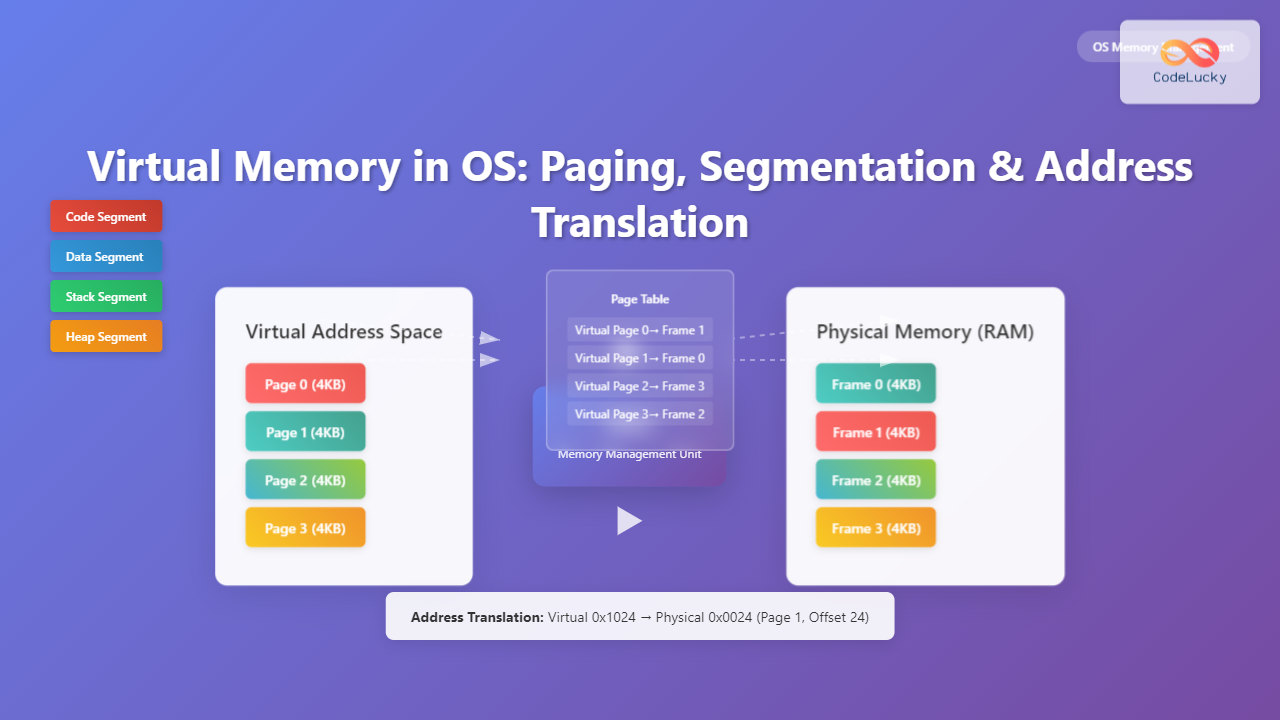
Master virtual memory concepts including paging, segmentation, and address translation with detailed examples, diagrams, and practical implementations in modern operating systems.
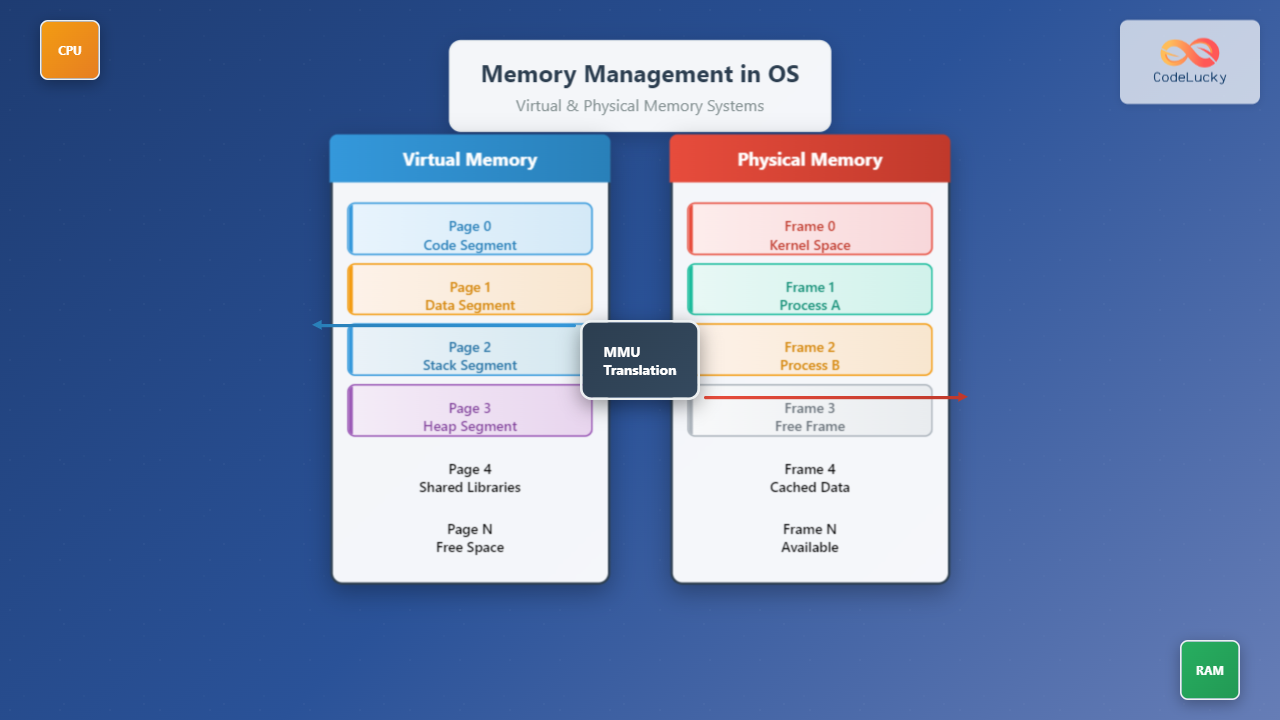
Complete guide to memory management in operating systems covering virtual memory, physical memory, paging, segmentation, and memory allocation strategies with practical examples.
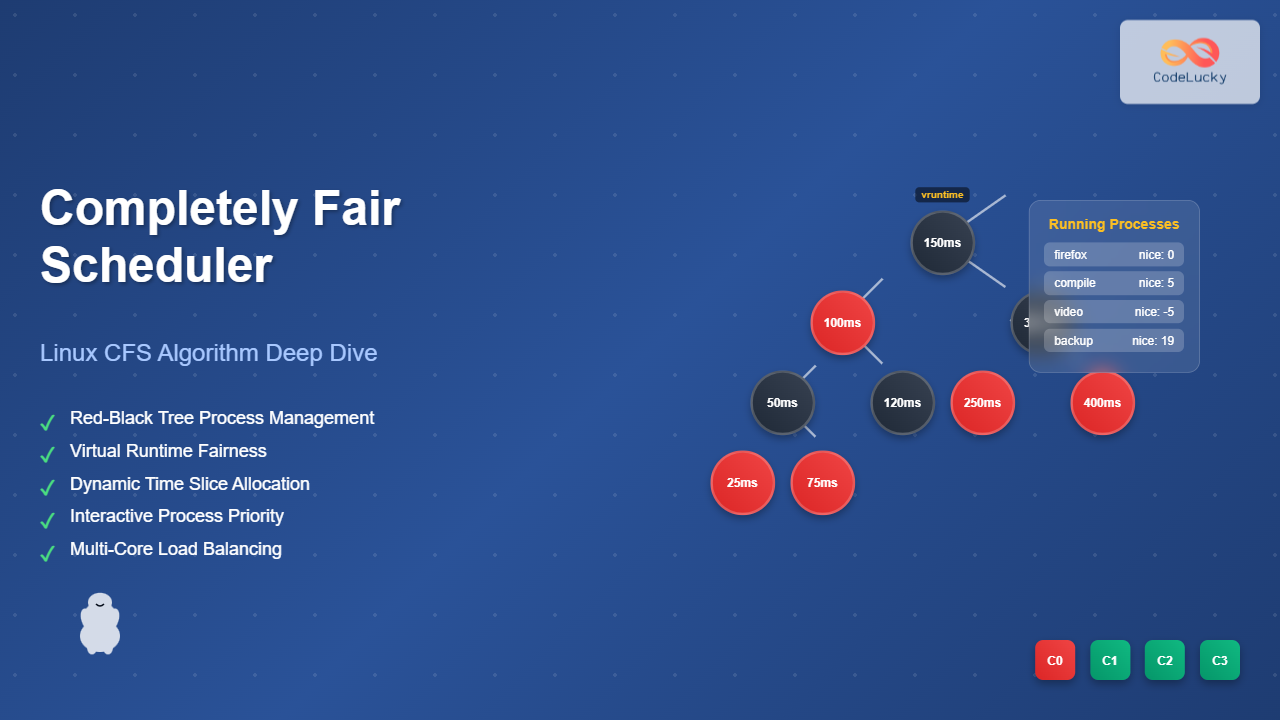
Complete guide to Linux Completely Fair Scheduler (CFS) - understand red-black trees, virtual runtime, time slices, and scheduling decisions with examples.
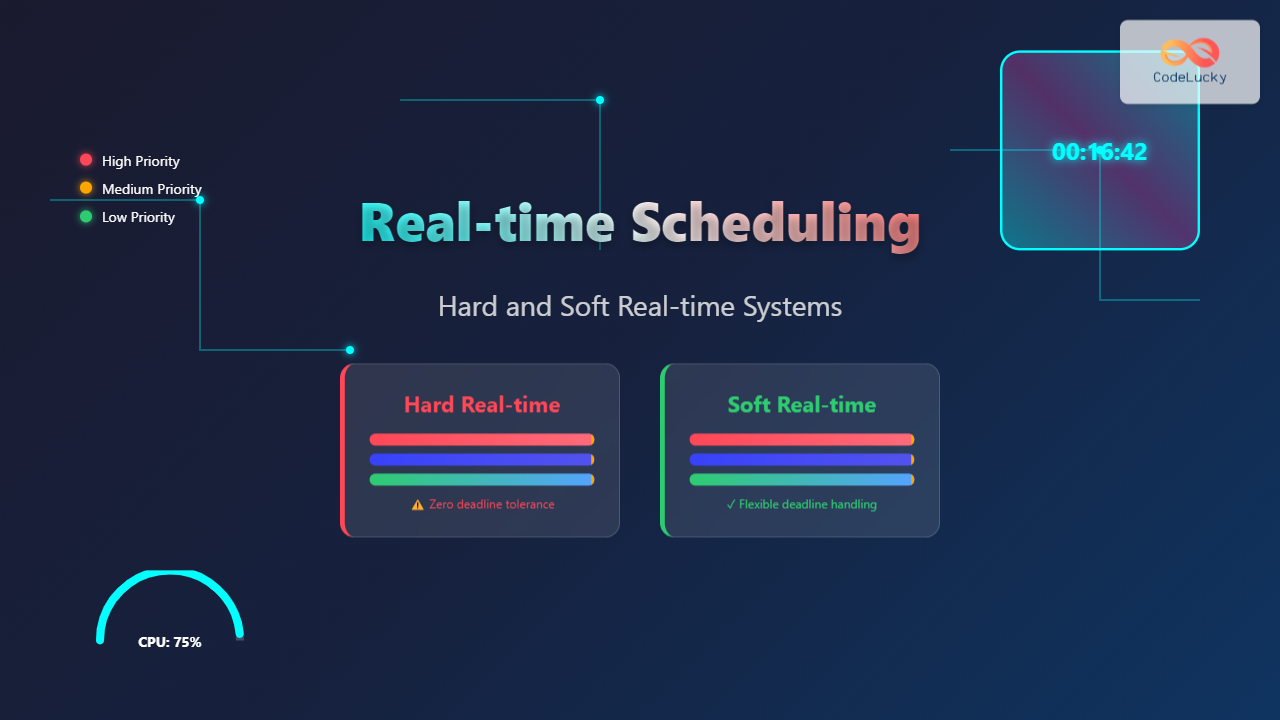
Complete guide to real-time scheduling in operating systems covering hard and soft real-time systems, scheduling algorithms, timing constraints, and practical implementation examples.
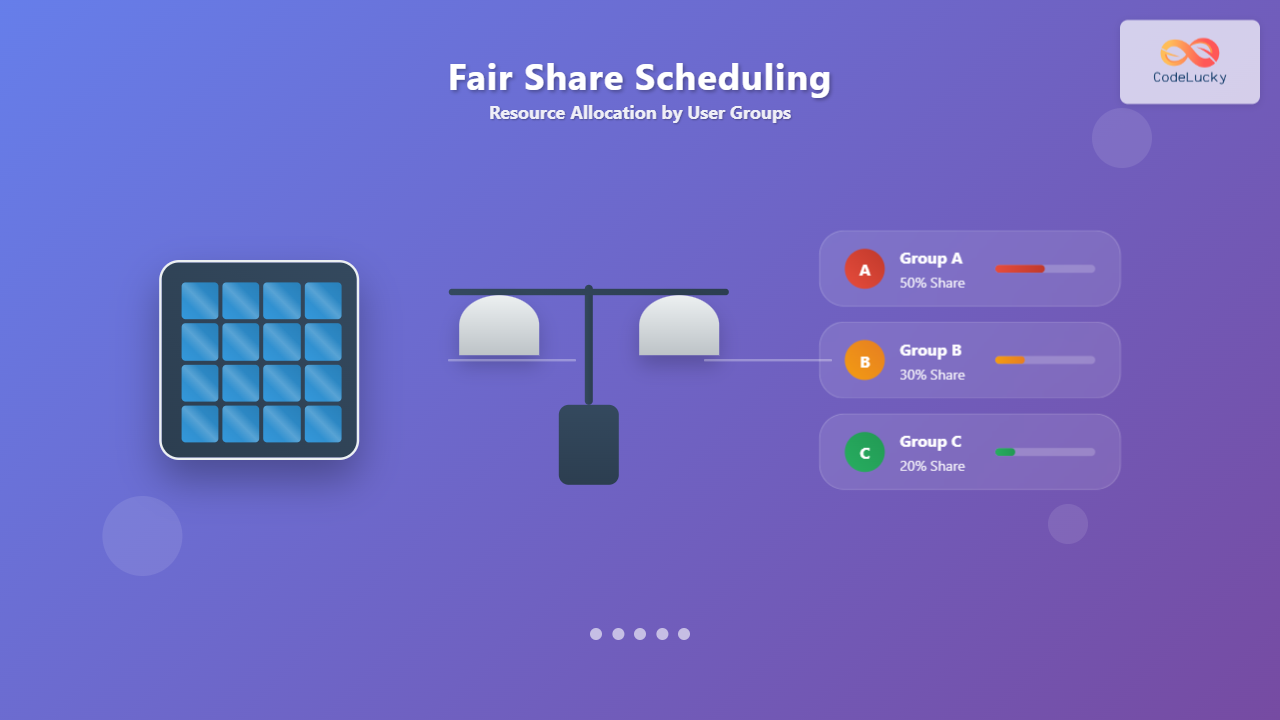
Learn how fair share scheduling ensures equitable CPU resource allocation among user groups, preventing monopolization and improving system performance in multi-user environments.
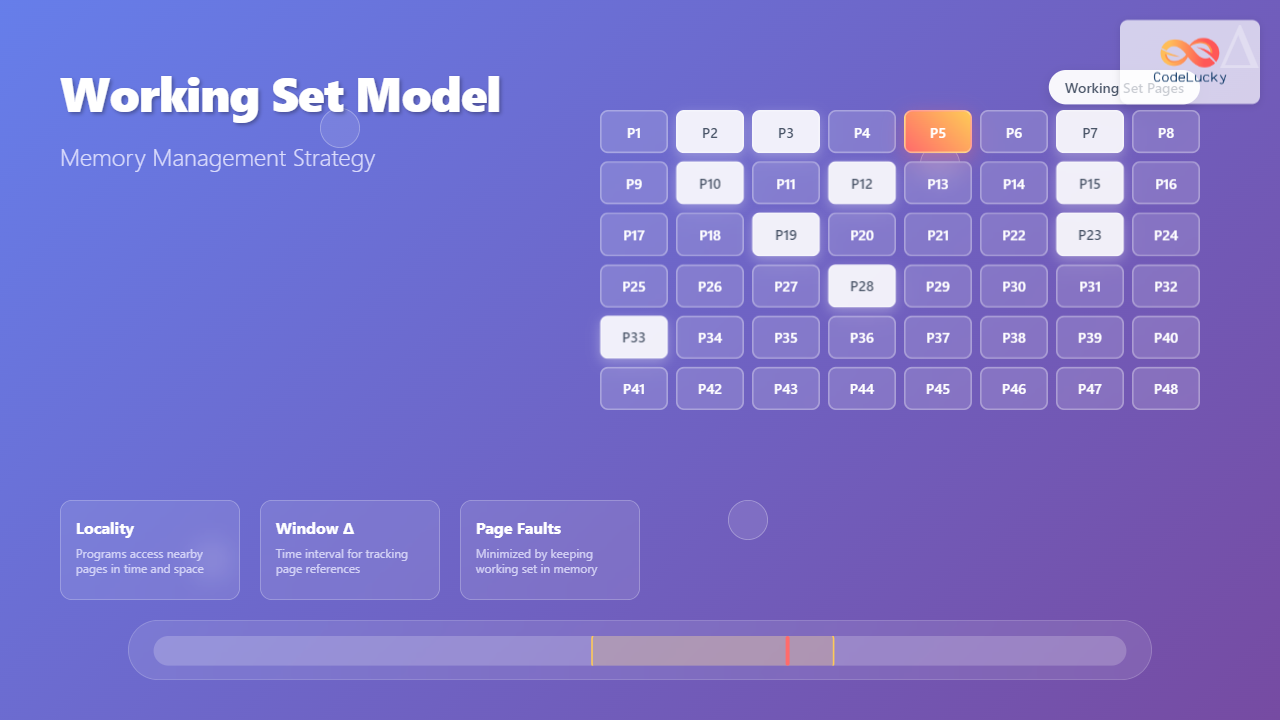
Comprehensive guide to Working Set Model in operating systems - understand locality of reference, page fault reduction, and optimal memory allocation strategies with practical examples.
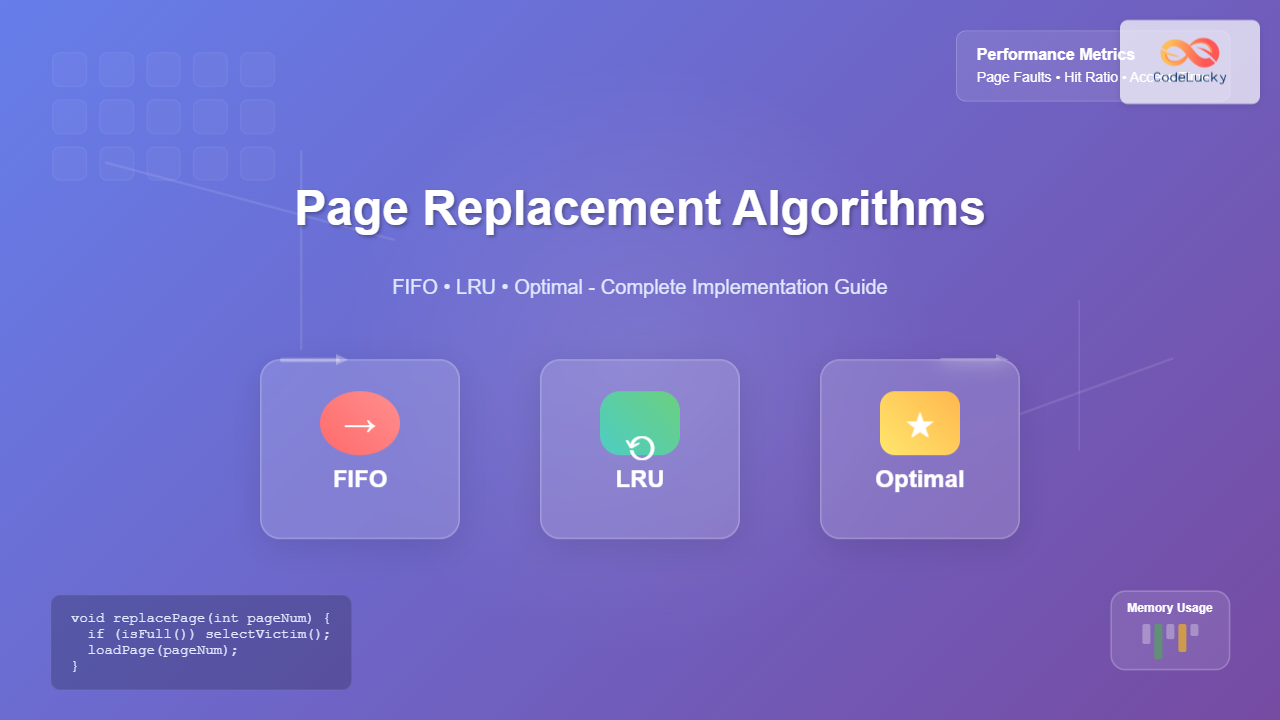
Master page replacement algorithms with detailed explanations of FIFO, LRU, and Optimal algorithms. Includes examples, comparisons, and implementation insights.
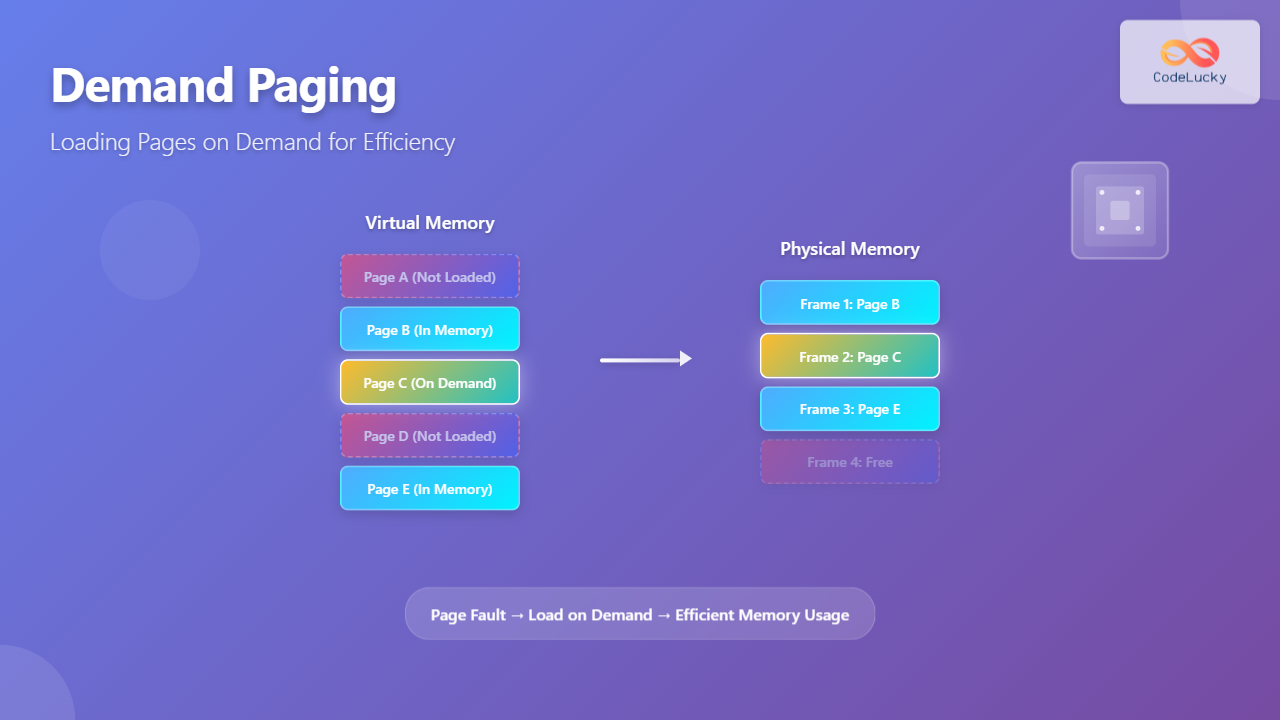
Learn how demand paging revolutionizes memory management by loading pages only when needed, reducing memory usage and improving system performance through lazy loading techniques.