Arrays are one of the most fundamental data structures in computer science. From basic operations like searching and sorting to more advanced manipulations such as rotating, merging, and partitioning, mastering array algorithms is crucial for every programmer. In this article, we will explore essential techniques for array manipulation with clear examples, visually represented outputs, and interactive explanations where necessary.
Why Arrays Are Important
Arrays provide a way to store multiple elements in a continuous block of memory. Their simple structure enables efficient access and manipulation using indices. Many key algorithms in programming operate on arrays: sorting, searching, prefix sums, sliding windows, and dynamic algorithms all rely heavily on array operations.
Common Array Operations
Before delving into advanced algorithms, let’s highlight the most common operations performed on arrays:
- Traversal: Visiting each element sequentially.
- Insertion: Adding new elements at a specific index.
- Deletion: Removing an element from the array.
- Searching: Finding whether an element exists.
- Sorting: Arranging elements in ascending or descending order.
- Rotating: Shifting elements cyclically.
- Merging: Combining two arrays into one.

Algorithm 1: Linear Search
Linear Search is the simplest searching algorithm. It checks each element one by one until the target is found or the array ends.
def linear_search(arr, target):
    for i in range(len(arr)):
        if arr[i] == target:
            return i
    return -1

print(linear_search([10, 20, 30, 40, 50], 30))  # Output: 2
Output:
Index Found → 2
Algorithm 2: Binary Search
Binary Search is far more efficient but works only on sorted arrays. It repeatedly divides the search space in half, ruling out half of the elements each step.
def binary_search(arr, target):
    low, high = 0, len(arr) - 1
    while low <= high:
        mid = (low + high) // 2
        if arr[mid] == target:
            return mid
        elif arr[mid] < target:
            low = mid + 1
        else:
            high = mid - 1
    return -1

print(binary_search([10, 20, 30, 40, 50], 30))  # Output: 2

Algorithm 3: Bubble Sort
Bubble Sort is a simple comparison-based sorting algorithm. It repeatedly steps through the list, compares adjacent elements, and swaps them if they are in the wrong order.
def bubble_sort(arr):
    n = len(arr)
    for i in range(n):
        for j in range(0, n-i-1):
            if arr[j] > arr[j+1]:
                arr[j], arr[j+1] = arr[j+1], arr[j]
    return arr

print(bubble_sort([5, 2, 9, 1, 5, 6]))
# Output: [1, 2, 5, 5, 6, 9]
Example Output:
Step by Step:
Initial: [5, 2, 9, 1, 5, 6]
Pass 1:  [2, 5, 1, 5, 6, 9]
Final:   [1, 2, 5, 5, 6, 9]
Algorithm 4: Array Rotation
Array rotation shifts elements cyclically. For example, rotating [1, 2, 3, 4, 5] left by 2 positions results in [3, 4, 5, 1, 2].
def rotate_array(arr, k):
    k = k % len(arr)
    return arr[k:] + arr[:k]

print(rotate_array([1, 2, 3, 4, 5], 2))
# Output: [3, 4, 5, 1, 2]

Algorithm 5: Merging Two Sorted Arrays
Merging is the process of combining two sorted arrays into a single sorted array. This algorithm is a key step in Merge Sort.
def merge_sorted(arr1, arr2):
    i, j = 0, 0
    merged = []
    while i < len(arr1) and j < len(arr2):
        if arr1[i] < arr2[j]:
            merged.append(arr1[i])
            i += 1
        else:
            merged.append(arr2[j])
            j += 1
    merged.extend(arr1[i:])
    merged.extend(arr2[j:])
    return merged

print(merge_sorted([1, 3, 5], [2, 4, 6]))
# Output: [1, 2, 3, 4, 5, 6]
Algorithm 6: Prefix Sum Array
The Prefix Sum technique precomputes cumulative sums of an array enabling efficient range queries.
def prefix_sum(arr):
    prefix = [0] * (len(arr) + 1)
    for i in range(len(arr)):
        prefix[i+1] = prefix[i] + arr[i]
    return prefix

arr = [2, 4, 6, 8, 10]
prefix = prefix_sum(arr)
l, r = 1, 3
print(prefix[r+1] - prefix[l])  # Output: 18 (4+6+8)
Output Explanation:
Prefix Array: [0, 2, 6, 12, 20, 30]
Query (1,3) → 18
Best Practices for Array Algorithms
- Always prefer efficient algorithms for large arrays (e.g., Binary Search over Linear Search).
- Precompute results such as
prefix sumsorhash mapswhere possible to optimize queries. - Use
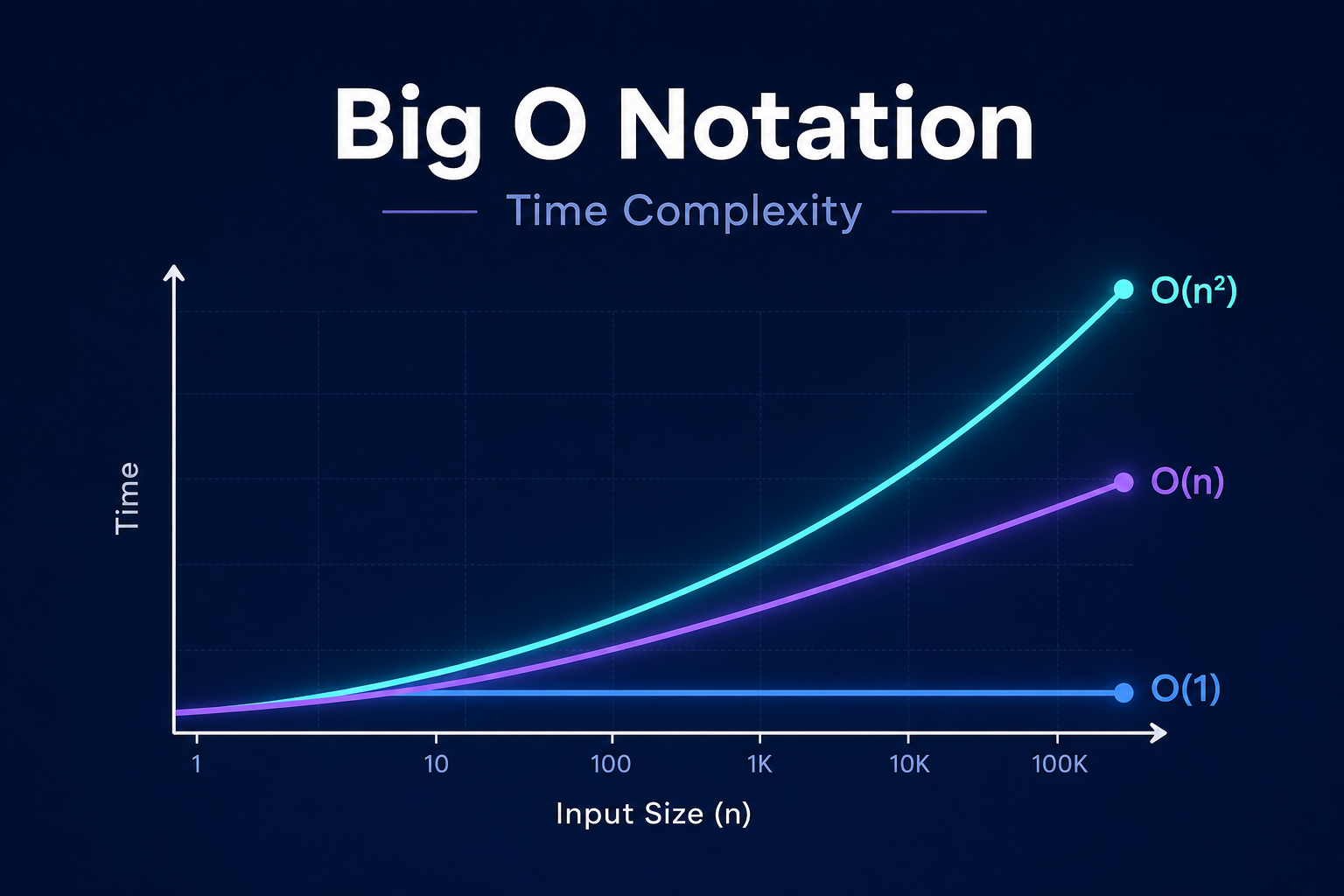
in-place techniquesto save memory where permissible. - For real-time operations, consider the time complexity (O(n log n) vs O(n²)).
Conclusion
Array algorithms form the backbone of computational problem solving. With techniques like searching, sorting, merging, rotating, and prefix sums, one can solve a vast number of coding challenges. Mastering these fundamental operations prepares developers for advanced data structures and algorithmic concepts. Whether it is simple traversals or complex optimizations, proficiency in array manipulations is indispensable for any programmer.