In the digital age, delivering content quickly and securely is paramount for enterprises aiming to provide stellar user experiences. Amazon CloudFront, Amazon Web Services’ (AWS) Content Delivery Network (CDN), is a leading solution designed to efficiently distribute data, videos, applications, and APIs to users globally with low latency and high transfer speeds.
This article explores Amazon CloudFront in depth—covering its architecture, enterprise-grade features, use cases, and practical examples—to help developers and architects leverage it effectively for content delivery acceleration and security.
What is Amazon CloudFront?
Amazon CloudFront is a global CDN service that delivers static and dynamic web content using a worldwide network of edge locations. It acts as a proxy cache that stores (caches) copies of content close to end users. When a user requests data, CloudFront routes the request to the nearest edge location to reduce latency.
Designed for enterprise needs, CloudFront supports:
- High availability and scalability with over 400+ Points of Presence worldwide.
- Security features like AWS Shield for DDoS protection and integration with AWS WAF.
- Customizable content delivery with caching policies, geo restriction, and Lambda@Edge for serverless compute.
- Support for multiple origins such as Amazon S3 buckets, EC2 instances, or custom HTTP servers.
Architecture of Amazon CloudFront
The core components of CloudFront’s architecture include:
- Origin Servers: The backend servers where original content resides — commonly S3 buckets, EC2, or other HTTP servers.
- Edge Locations: Data centers globally spread to cache content closer to users, reducing latency.
- Regional Edge Caches: Intermediate caching layer that stores popular objects for longer durations.
- Users: The end clients requesting content.
Upon a content request, the flow involves DNS resolution to the nearest edge location, cache checks, and retrieval from origin if necessary. This layered caching improves data delivery speeds and reduces load on the origin.
Key Features of AWS CloudFront for Enterprises
- Global Reach: CloudFront’s extensive edge network ensures content is delivered with low latency to users worldwide.
- Security & Compliance: Integrated with AWS Shield Advanced, AWS WAF, SSL/TLS encryption, and real-time metrics and logs via CloudWatch.
- Programmability: Lambda@Edge allows running custom code at CDN edge locations to modify requests and responses dynamically.
- Performance Optimization: Features like HTTP/2, gZIP and Brotli compression, and TCP optimizations improve loading speeds.
- Multi-origin Support: CloudFront can fetch content from multiple origins for complex applications and multi-tier architectures.
- Cost Efficiency: Pay-as-you-go pricing with no upfront fees and options to optimize cache behaviors to reduce origin traffic.
Example: Setting Up Amazon CloudFront with an S3 Origin
This example walks through creating a CloudFront distribution for an Amazon S3 bucket hosting a static website.
// 1. Prepare your S3 bucket with public read access or CloudFront OAI (Origin Access Identity)
// 2. In AWS Console, create a CloudFront distribution:
//    - Select your S3 bucket as Origin
//    - Configure default cache behavior (e.g., allow GET, HEAD requests)
//    - Set Viewer Protocol Policy to Redirect HTTP to HTTPS
//    - Enable logging and geo restrictions if necessary
// 3. Deploy and wait for distribution to propagate
// 4. Access your content securely through the CloudFront domain name
Once deployed, user requests for content like images or HTML pages route through CloudFront edge locations, caching the objects closer to end-users and optimizing load times globally.
Interactive Content Delivery with Lambda@Edge
Lambda@Edge lets you run Node.js or Python code at AWS edge locations to personalize content, authenticate users, or rewrite URLs on the fly without needing to modify your origin server.
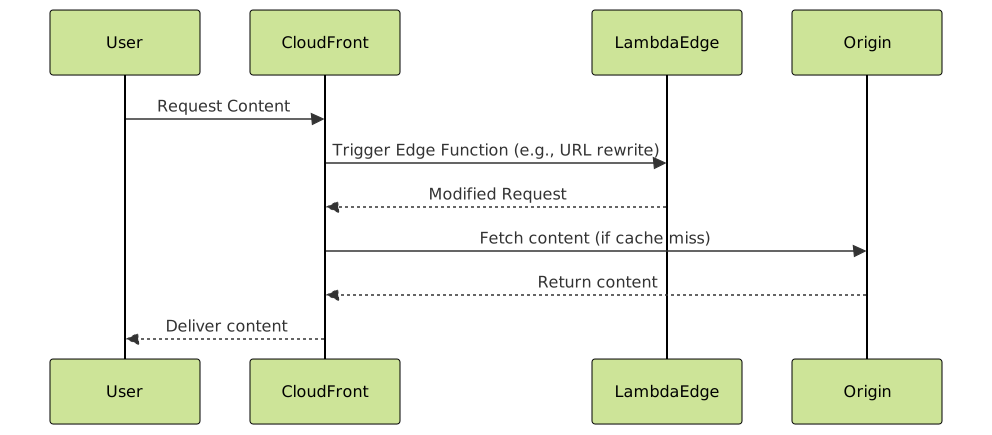
Example use case: Redirect mobile users to a mobile-optimized version of a site directly at the edge. This enhances user experience with minimal latency.
Performance Optimization Techniques
- Cache Control: Customize caching headers and behaviors to maximize cache hits and reduce origin load.
- Content Compression: Use GZIP/Brotli compression to reduce payload size and speed up delivery.
- HTTP/2 & TLS: CloudFront supports HTTP/2 for multiplexed connections and uses TLS for secure content delivery.
Enterprise Use Cases
- Media and Entertainment: Live streaming, video-on-demand with ultra-low latency globally.
- E-Commerce: Faster loading product pages, secure transactions, and regional content restrictions.
- Software Distribution: Deliver large binaries and software updates efficiently worldwide.
- API Acceleration: Secure and accelerate APIs for better client responsiveness and scalability.
Monitoring and Analytics
CloudFront integrates with AWS CloudWatch to provide real-time metrics on cache hit rate, latency, and request count. Logs can be stored in S3 for detailed analysis, helping enterprises track performance and troubleshoot issues quickly.
Comparison with Other CDNs
While many CDNs exist, Amazon CloudFront’s tight integration with the AWS ecosystem, extensive global network, flexibility through Lambda@Edge, and enterprise-grade security set it apart as a robust choice for organizations already invested in AWS or seeking a scalable solution.
Summary
Amazon CloudFront is a powerful, versatile CDN solution ideal for enterprises requiring fast, secure, and scalable content delivery. Its global presence, integration with AWS services, and customizable edge computing capabilities make it an indispensable tool for developers and businesses looking to optimize web performance and security.
Whether serving static websites, streaming video, or accelerating APIs, CloudFront’s enterprise-grade infrastructure helps deliver superior user experiences with reduced latency and enhanced protection against cyber threats.