The Documentation Dilemma in Agile Development
In the world of Agile software development, one of the most persistent challenges teams face is finding the sweet spot for requirements documentation. Too little documentation leads to confusion, rework, and missed expectations. Too much documentation violates Agile principles and slows down delivery. The key lies in understanding what constitutes “just enough” documentation to keep your team aligned and productive.
The Agile Manifesto famously states “Working software over comprehensive documentation,” but this doesn’t mean abandoning documentation entirely. Instead, it emphasizes creating documentation that serves a clear purpose and adds genuine value to the development process.
Understanding “Just Enough” Documentation
Just enough documentation in Agile means creating the minimum viable documentation that enables your team to build the right product efficiently. This approach focuses on capturing essential information while avoiding unnecessary overhead that traditional documentation methods often impose.
The concept revolves around three core principles:
- Purpose-driven content: Every piece of documentation should serve a specific purpose and answer clear questions
- Living documents: Documentation that evolves with the project and remains current throughout development
- Collaborative creation: Documents created through team collaboration rather than isolated writing sessions
Key Components of Agile Requirements Documentation
User Stories: The Foundation of Agile Requirements
User stories form the backbone of Agile requirements documentation. These simple, concise statements capture functionality from the user’s perspective and follow the format: “As a [user type], I want [functionality] so that [benefit].”
Effective user stories include:
- Clear user personas: Specific user types with defined characteristics and needs
- Actionable functionality: Concrete features or capabilities the user requires
- Business value: Clear articulation of why the feature matters
- Acceptance criteria: Specific conditions that must be met for the story to be complete
Acceptance Criteria: Defining “Done”
Acceptance criteria transform user stories from vague ideas into testable requirements. They provide clear boundaries for what constitutes completion and serve as the foundation for both development and testing efforts.
Well-written acceptance criteria should be:
- Specific and measurable: Leave no room for interpretation
- Testable: Enable clear pass/fail validation
- Focused on outcomes: Describe what should happen, not how to implement it
- Comprehensive: Cover normal, edge, and error cases
Definition of Ready and Definition of Done
These team agreements establish clear criteria for when work can begin and when it’s considered complete. The Definition of Ready ensures stories have sufficient detail before entering development, while the Definition of Done establishes quality standards for completed work.
A typical Definition of Ready might include:
- User story written in proper format
- Acceptance criteria defined and reviewed
- Dependencies identified and resolved
- Story sized and estimated
- UI/UX mockups available (if needed)
Lightweight Documentation Techniques
Story Mapping for Product Vision
Story mapping provides a visual representation of the user journey and helps teams understand how individual features fit into the broader product experience. This technique creates a shared understanding without requiring extensive written documentation.
The story mapping process involves:
- Identifying user activities: High-level tasks users perform
- Breaking down into steps: Detailed actions within each activity
- Prioritizing by value: Organizing stories by importance and sequence
- Identifying MVP scope: Determining minimum viable functionality
Conversation Documentation
Agile emphasizes conversation over documentation, but capturing key decisions and insights from these conversations prevents knowledge loss. This doesn’t require formal meeting minutes—simple notes, photos of whiteboard sessions, or brief decision logs suffice.
Visual Documentation
Images, diagrams, and sketches often communicate requirements more effectively than lengthy text descriptions. Consider using:
- Wireframes and mockups: For user interface requirements
- Process flows: For complex business logic
- Architecture diagrams: For technical constraints and dependencies
- Mind maps: For brainstorming and concept relationships
Collaborative Requirements Gathering
Three Amigos Sessions
The Three Amigos approach brings together a business analyst (or product owner), developer, and tester to discuss each user story before development begins. This collaboration ensures all perspectives are considered and reduces the need for extensive written documentation.
During these sessions, teams typically:
- Review the user story and acceptance criteria
- Identify potential implementation approaches
- Discuss testing strategies and scenarios
- Clarify assumptions and dependencies
- Document key decisions and open questions
Example Mapping
Example mapping is a collaborative technique that uses examples to illustrate how features should behave. Teams create simple tables or cards showing different scenarios, making abstract requirements concrete and testable.
The process involves identifying:
- Rules: Business logic that governs feature behavior
- Examples: Specific scenarios that demonstrate the rules
- Questions: Unclear aspects that need further investigation
- Assumptions: Beliefs that need validation
Digital Tools for Agile Documentation
Integrated Development Platforms
Modern development tools integrate requirements management directly into the development workflow. Platforms like Jira, Azure DevOps, and Linear allow teams to manage user stories, acceptance criteria, and documentation alongside code and testing efforts.
Key features to look for include:
- Story linking: Connect requirements to code commits and test cases
- Real-time collaboration: Enable multiple team members to contribute simultaneously
- Version control: Track changes and maintain history
- Integration capabilities: Connect with development and testing tools
Collaborative Whiteboarding Tools
Digital whiteboard platforms like Miro, Mural, and Figma enable remote teams to collaborate on visual requirements documentation. These tools excel at story mapping, example mapping, and collaborative design sessions.
Maintaining Living Documentation
Continuous Refinement
Agile documentation should evolve throughout the project lifecycle. Regular refinement sessions help teams update requirements based on new insights, changing priorities, and emerging user needs.
Effective refinement practices include:
- Regular review cycles: Weekly or bi-weekly sessions to update stories
- Stakeholder feedback integration: Incorporate user and business feedback promptly
- Technical learning incorporation: Update requirements based on implementation discoveries
- Outdated content removal: Delete or archive irrelevant documentation
Documentation Ownership
While Agile emphasizes collective ownership, successful teams often designate specific individuals to maintain different types of documentation. This doesn’t mean exclusive ownership—rather, it ensures someone takes responsibility for keeping critical documents current.
Common Anti-Patterns to Avoid
Over-Documentation
Some teams, particularly those transitioning from traditional methodologies, create excessive documentation in the name of thoroughness. This violates Agile principles and often results in outdated information that misleads rather than guides development efforts.
Signs of over-documentation include:
- Requirements documents longer than 20 pages for typical features
- Detailed technical specifications created before development begins
- Documentation that duplicates information available elsewhere
- Requirements that specify implementation details rather than outcomes
Under-Documentation
Conversely, some teams interpret “working software over comprehensive documentation” as license to avoid documentation entirely. This leads to confusion, rework, and difficulty onboarding new team members.
Warning signs include:
- User stories without acceptance criteria
- No record of important decisions or assumptions
- Inability to explain feature rationale to stakeholders
- Frequent clarification requests during development
Static Documentation
Documentation that isn’t updated as understanding evolves becomes a liability. Teams must actively maintain their requirements documentation to ensure it remains valuable throughout the project.
Measuring Documentation Effectiveness
Quality Metrics
Effective Agile documentation can be measured through various indicators:
- Story clarity: How often developers need clarification during implementation
- Rework frequency: How often completed stories require significant changes
- Testing efficiency: How quickly testers can create comprehensive test cases
- Stakeholder satisfaction: How well delivered features meet expectations
Team Feedback
Regular retrospectives should include discussions about documentation effectiveness. Teams should continuously evaluate whether their current documentation practices support or hinder their development efforts.
Scaling Documentation Practices
Multiple Team Coordination
When multiple teams work on related features, documentation becomes crucial for coordination. However, the principles of “just enough” still apply—focus on information that enables effective collaboration without creating bureaucratic overhead.
Strategies for scaled documentation include:
- Shared glossaries: Common terminology across teams
- API documentation: Clear interface specifications for integration
- Dependency mapping: Visual representation of inter-team dependencies
- Regular sync meetings: Scheduled alignment sessions between teams
Regulatory and Compliance Considerations
Some industries require specific documentation for regulatory compliance. Even in these contexts, teams can apply Agile principles by focusing on the minimum documentation necessary to meet requirements while maximizing development efficiency.
Best Practices for Implementation
Start Small and Iterate
Begin with minimal documentation and gradually add elements based on team needs. This organic approach ensures documentation practices align with actual requirements rather than theoretical ideals.
Involve the Whole Team
Documentation shouldn’t be the responsibility of a single role. Developers, testers, product owners, and other stakeholders should all contribute to creating and maintaining requirements documentation.
Focus on Value
Every piece of documentation should serve a clear purpose. Regularly evaluate whether existing documentation adds value or merely satisfies habit or process requirements.
Embrace Experimentation
Different projects and teams may require different documentation approaches. Encourage experimentation and be willing to adapt practices based on what works best for your specific context.
Conclusion
Mastering requirements documentation in Agile development requires finding the delicate balance between too much and too little information. The goal isn’t to eliminate documentation but to create just enough to enable effective development while maintaining Agile principles of flexibility and responsiveness.
Successful Agile teams understand that documentation is a tool, not an end goal. By focusing on user stories, acceptance criteria, collaborative practices, and living documentation, teams can create requirements that guide development without constraining innovation.
Remember that “just enough” is context-dependent. What works for one team or project may not work for another. The key is to remain flexible, continuously evaluate effectiveness, and adjust practices based on real-world results rather than theoretical ideals.
As you implement these practices, focus on creating documentation that serves your team’s specific needs while honoring the Agile principle of valuing working software over comprehensive documentation. The right balance will enable your team to deliver better software faster while maintaining clear communication and shared understanding throughout the development process.
Related Posts
Agile Documentation: Complete Guide to Living Documentation Strategies
What is Living Documentation in Agile Development? Living documentation represents a paradigm shift from traditional static documentation to dynamic, self-updating...
Confluence: Complete Knowledge Management Guide for Agile Teams
Knowledge management forms the backbone of successful Agile teams, and Confluence stands as one of the most powerful platforms for...
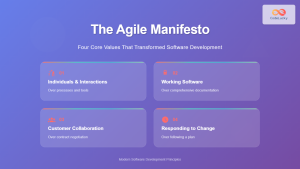
The Agile Manifesto: Four Core Values Explained for Modern Software Development
The Agile Manifesto, published in 2001 by seventeen software development thought leaders, fundamentally transformed how we approach software development. This...

Unit Testing: Best Practices for Agile Development Teams
Unit testing forms the backbone of quality assurance in Agile development environments. As teams embrace rapid iteration cycles and continuous...

Agile Architecture: Designing for Change – Building Flexible Software Systems
In today's rapidly evolving digital landscape, traditional waterfall architecture approaches often fail to meet the dynamic needs of modern software...
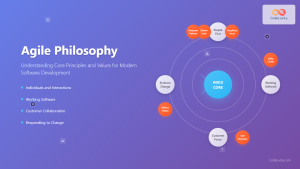
Agile Philosophy: Understanding Core Principles and Values for Modern Software Development
Introduction to Agile Philosophy Agile philosophy represents a fundamental shift in how software development teams approach project management, collaboration, and...
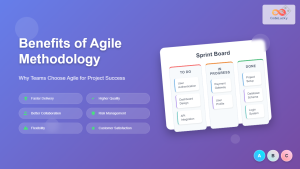
Benefits of Agile Methodology: Why Teams Choose Agile for Project Success
Agile methodology has revolutionized how teams approach project management and software development. Since its introduction through the Agile Manifesto in...
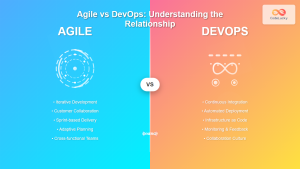
Agile vs DevOps: Understanding the Relationship Between Two Powerful Software Development Methodologies
In today's fast-paced software development landscape, organizations are constantly seeking methodologies that can accelerate delivery while maintaining quality. Two prominent...
What is Agile Methodology: Complete Beginner’s Guide to Modern Software Development
Agile methodology has revolutionized how software development teams work, moving away from rigid traditional approaches to embrace flexibility, collaboration, and...

C Code Documentation: Best Practices and Tools
In the world of software development, writing clean, efficient code is only half the battle. The other crucial aspect is...

The 12 Principles of Agile Development: A Complete Guide to Agile Software Development Success
Agile development has revolutionized the software industry by prioritizing flexibility, collaboration, and customer satisfaction over rigid processes. At the heart...
Agile Training: Complete Guide to Building High-Performance Team Capabilities
Agile training has become the cornerstone of modern software development and project management success. Organizations worldwide are investing heavily in...