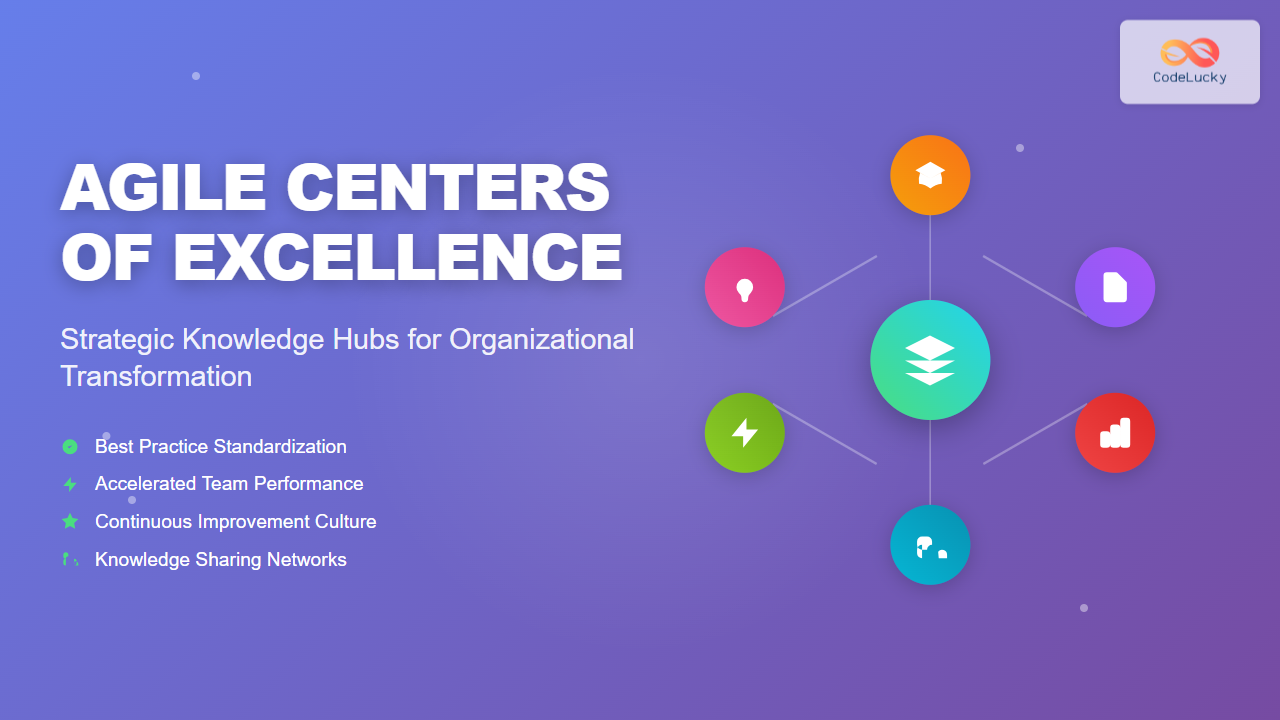
Agile Centers of Excellence (CoEs) represent strategic organizational units designed to serve as knowledge hubs that drive agile transformation, standardize best practices, and accelerate team performance across enterprises. These specialized centers combine expertise, governance, and continuous improvement to create sustainable competitive advantages in today’s rapidly evolving business landscape.
Understanding Agile Centers of Excellence
An Agile Center of Excellence functions as a centralized hub of expertise that promotes, supports, and governs agile practices throughout an organization. Unlike traditional command-and-control structures, agile CoEs operate as servant leadership organizations that empower teams while maintaining strategic alignment and consistency.
The primary distinction between agile CoEs and traditional centers lies in their approach to governance and knowledge sharing. While conventional centers often impose rigid standards and processes, agile CoEs focus on creating adaptive frameworks that evolve based on empirical evidence and continuous feedback loops.
Core Components of Agile Centers of Excellence
Successful agile CoEs incorporate several fundamental components that work synergistically to drive organizational transformation. The knowledge management system serves as the backbone, capturing and distributing insights, lessons learned, and best practices across teams and projects.
Coaching and mentoring programs form another critical component, providing hands-on support to teams transitioning to agile methodologies. These programs typically include both internal coaches and external consultants who bring specialized expertise and objective perspectives to transformation efforts.
Governance frameworks within agile CoEs establish lightweight oversight mechanisms that ensure alignment with organizational objectives while preserving team autonomy. These frameworks emphasize outcomes over outputs and focus on value delivery rather than process compliance.
Strategic Benefits of Agile Knowledge Hubs
Organizations implementing agile CoEs experience significant improvements in multiple dimensions of performance. Time-to-market acceleration represents one of the most measurable benefits, with many organizations reporting 30-50% reductions in product development cycles after establishing effective agile knowledge hubs.
Knowledge standardization and sharing eliminate redundant efforts and prevent teams from repeating common mistakes. This systematic approach to knowledge management creates exponential learning curves where each team’s discoveries benefit the entire organization.
Risk mitigation becomes more effective when agile CoEs establish common practices for identifying, assessing, and responding to project risks. The centralized expertise allows for rapid response to emerging challenges and proactive identification of potential issues.
Quality and Consistency Improvements
Agile CoEs drive quality improvements through standardized practices, shared toolsets, and continuous learning initiatives. Quality metrics typically show marked improvement within six months of CoE implementation, with defect rates decreasing and customer satisfaction scores increasing.
Consistency across teams becomes achievable without sacrificing agility when CoEs establish flexible frameworks rather than rigid processes. This approach allows teams to adapt practices to their specific contexts while maintaining organizational coherence.
Establishing Your Agile Center of Excellence
Creating an effective agile CoE requires careful planning and stakeholder alignment. The initial step involves conducting a comprehensive assessment of current agile maturity levels across the organization, identifying gaps, strengths, and opportunities for improvement.
Leadership commitment proves crucial for CoE success. Executive sponsors must demonstrate unwavering support for the initiative and allocate necessary resources for both initial establishment and ongoing operations. This commitment includes protecting the CoE from organizational politics and providing clear authority to drive change.
Charter development establishes the CoE’s mission, vision, objectives, and scope of authority. The charter should clearly define relationships with existing organizational units and specify how the CoE will measure success and demonstrate value to stakeholders.
Team Composition and Roles
Effective agile CoEs require diverse skill sets and perspectives to address the multifaceted nature of organizational transformation. The team typically includes experienced agile practitioners, process improvement specialists, change management experts, and technical architects.
The CoE director provides strategic leadership and serves as the primary interface with executive leadership. This role requires deep agile expertise combined with strong business acumen and change management skills.
Agile coaches form the operational core of the CoE, working directly with teams to improve practices, resolve impediments, and facilitate continuous improvement. These coaches should possess both technical expertise and strong interpersonal skills to navigate complex organizational dynamics.
Community managers focus on building and nurturing communities of practice that extend the CoE’s reach throughout the organization. They organize knowledge sharing sessions, manage collaboration platforms, and facilitate cross-team learning initiatives.
Knowledge Management Strategies
Effective knowledge management within agile CoEs requires sophisticated approaches that balance accessibility with relevance. The knowledge base should capture not only successful practices but also failures and lessons learned, creating a comprehensive learning resource for teams.
Categorization systems help users quickly locate relevant information while maintaining flexibility for evolving needs. Tag-based systems often prove more effective than hierarchical structures for agile environments where practices and contexts frequently change.
Version control for knowledge assets ensures that teams access current information while preserving historical context. This approach prevents confusion when practices evolve and provides audit trails for compliance requirements.
Knowledge Sharing Mechanisms
Communities of practice represent one of the most effective mechanisms for knowledge sharing within agile CoEs. These self-organizing groups bring together practitioners with common interests or challenges to share experiences and develop solutions collaboratively.
Regular knowledge sharing sessions, such as lunch-and-learn presentations or lightning talks, create opportunities for informal learning and relationship building. These sessions should be structured to encourage participation and provide practical value to attendees.
Mentoring programs pair experienced practitioners with those new to agile methodologies, creating personal learning relationships that complement formal training programs. These relationships often prove more effective than classroom training for developing practical skills and organizational understanding.
Governance and Standards Framework
Agile CoE governance requires a delicate balance between standardization and flexibility. The governance framework should establish clear expectations while allowing teams to adapt practices to their specific contexts and needs.
Minimum viable standards define the essential practices that all teams must follow while leaving room for customization and experimentation. These standards typically focus on outcomes and value delivery rather than prescriptive processes.
Exception handling processes provide mechanisms for teams to deviate from standard practices when circumstances warrant. These processes should be transparent, well-documented, and include feedback loops to inform future standard updates.
Metrics and Measurement
Comprehensive measurement systems help agile CoEs demonstrate value and identify improvement opportunities. Metrics should span multiple dimensions including team performance, organizational outcomes, and transformation progress.
Leading indicators provide early warning signs of potential issues and opportunities for intervention. These might include team velocity trends, impediment resolution times, or training completion rates.
Lagging indicators measure ultimate outcomes such as time-to-market improvements, quality metrics, or customer satisfaction scores. These metrics validate the CoE’s impact and guide strategic decisions about resource allocation and priority setting.
Technology and Tools Infrastructure
Modern agile CoEs leverage technology platforms to scale their impact and reach across distributed organizations. Collaboration platforms enable real-time communication and knowledge sharing among teams regardless of geographic location.
Analytics and reporting tools provide visibility into team performance and organizational trends. These tools should integrate with existing systems to minimize data entry overhead while providing actionable insights for continuous improvement.
Learning management systems support structured training programs and track individual development progress. Integration with knowledge management systems creates seamless learning experiences that combine formal training with practical resources.
Integration Considerations
Technology integration requires careful consideration of existing organizational systems and workflows. The CoE’s technology stack should complement rather than compete with established tools and processes.
Data integration enables comprehensive reporting and analysis across multiple systems. APIs and data connectors facilitate seamless information flow while maintaining data quality and consistency.
Continuous Improvement and Evolution
Agile CoEs must model the continuous improvement principles they promote throughout the organization. Regular retrospectives and feedback sessions help identify areas for enhancement and ensure the CoE remains relevant and valuable.
Experimentation frameworks allow CoEs to test new approaches and practices in controlled environments before broader implementation. These frameworks should include clear success criteria and decision-making processes for scaling successful experiments.
External benchmarking provides perspective on industry trends and best practices. Regular engagement with other organizations and industry experts helps prevent insular thinking and introduces fresh perspectives.
Scaling and Maturity
As organizations mature in their agile journey, CoEs must evolve their focus and approaches. Early-stage CoEs typically emphasize basic training and process establishment, while mature CoEs focus on advanced practices and innovation.
Scaling strategies should consider both horizontal expansion across organizational units and vertical deepening of expertise within existing areas. The optimal balance depends on organizational context and strategic priorities.
Common Challenges and Solutions
Resistance to change represents one of the most significant challenges facing agile CoEs. This resistance often stems from fear of job displacement, skepticism about new methodologies, or past negative experiences with organizational change initiatives.
Communication strategies must address these concerns proactively through transparent messaging, success story sharing, and individual engagement. Regular town halls and feedback sessions provide opportunities to address concerns and build buy-in.
Resource constraints frequently limit CoE effectiveness, particularly in the early stages when value hasn’t been fully demonstrated. Phased implementation approaches can help manage resource requirements while building momentum and credibility.
Organizational Politics and Dynamics
Navigating organizational politics requires diplomatic skills and strategic thinking. CoE leaders must build coalitions of support while avoiding conflicts that could undermine the transformation effort.
Stakeholder management becomes critical when CoEs interface with multiple organizational units that may have competing priorities or different levels of agile maturity. Clear communication and alignment on objectives help prevent conflicts and ensure coordinated efforts.
Success Metrics and ROI Measurement
Demonstrating return on investment (ROI) requires comprehensive measurement approaches that capture both quantitative and qualitative benefits. Financial metrics should include cost savings, revenue improvements, and productivity gains attributable to agile transformation.
Operational metrics focus on process improvements such as cycle time reductions, quality improvements, and customer satisfaction enhancements. These metrics provide evidence of transformation effectiveness and guide continuous improvement efforts.
Cultural metrics assess changes in employee engagement, collaboration effectiveness, and organizational learning capabilities. While more difficult to quantify, these metrics often provide the strongest indicators of long-term transformation success.
Reporting and Communication
Effective reporting strategies tailor messages to different stakeholder audiences while maintaining consistency in core messages. Executive dashboards should focus on strategic outcomes and business impact, while operational reports provide detailed insights for practitioners.
Regular communication cadences ensure stakeholders remain informed and engaged throughout the transformation journey. These communications should celebrate successes, acknowledge challenges, and provide clear visibility into progress and next steps.
Future Trends and Considerations
The evolution of agile CoEs continues to accelerate as organizations gain experience and technology capabilities advance. Artificial intelligence and machine learning increasingly support knowledge management and pattern recognition, enabling more sophisticated insights and recommendations.
Remote and hybrid work models require CoEs to adapt their approaches to distributed team support. Virtual collaboration tools and asynchronous communication methods become essential capabilities for maintaining effectiveness across geographic boundaries.
Integration with emerging methodologies such as DevOps, Design Thinking, and Lean Startup requires CoEs to expand their knowledge base and adapt their frameworks to accommodate multiple complementary approaches.
Establishing an Agile Center of Excellence represents a strategic investment in organizational capability and competitive advantage. Success requires careful planning, strong leadership commitment, and continuous adaptation to evolving needs and circumstances. Organizations that effectively implement and evolve their agile CoEs position themselves for sustained success in increasingly dynamic business environments.
Related Posts
Agile Training: Complete Guide to Building High-Performance Team Capabilities
Agile training has become the cornerstone of modern software development and project management success. Organizations worldwide are investing heavily in...
Agile Transformation: Complete Guide to Organizational Change Management
Agile transformation represents one of the most significant organizational changes companies undertake today. This comprehensive shift from traditional project management...
Agile Philosophy: Understanding Core Principles and Values for Modern Software Development
Introduction to Agile Philosophy Agile philosophy represents a fundamental shift in how software development teams approach project management, collaboration, and...
Agile in Non-Software: Complete Guide to Implementation Beyond IT Applications
Introduction to Agile Beyond Software Development While Agile methodologies originated in software development, their core principles of flexibility, collaboration, and...
Agile Maturity: Complete Guide to Assessing Team Progress and Organizational Growth
Agile maturity represents the evolutionary journey of teams and organizations as they develop their agile capabilities, practices, and mindset. Understanding...
Agile Operations: Complete Guide to Streamlining Business Processes with Modern Methodologies
Agile Operations represents a transformative approach to managing business processes that combines the flexibility of agile methodologies with operational excellence....
Agile Governance: Mastering the Balance Between Control and Flexibility in Modern Organizations
Agile governance represents one of the most critical challenges facing modern organizations today. As businesses strive to remain competitive in...
Scrum of Scrums: Complete Guide to Coordinating Multiple Agile Teams
When organizations scale their Agile practices beyond a single team, coordinating multiple Scrum teams becomes a critical challenge. Scrum of...
Cultural Transformation: Building Agile Culture in Modern Organizations
Understanding Agile Culture: The Foundation of Organizational Success Cultural transformation in agile organizations goes far beyond adopting new methodologies or...
Confluence: Complete Knowledge Management Guide for Agile Teams
Knowledge management forms the backbone of successful Agile teams, and Confluence stands as one of the most powerful platforms for...
Scaling Agile Adoption: Complete Guide to Enterprise-Wide Transformation Success
Scaling Agile adoption from a single team to an entire enterprise represents one of the most challenging yet rewarding transformations...
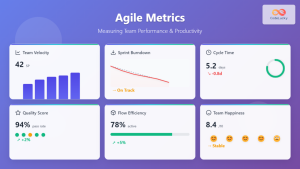
Agile Metrics: Complete Guide to Measuring Team Performance and Productivity
Measuring team performance in agile environments requires a strategic approach that goes beyond traditional project management metrics. Agile metrics provide...