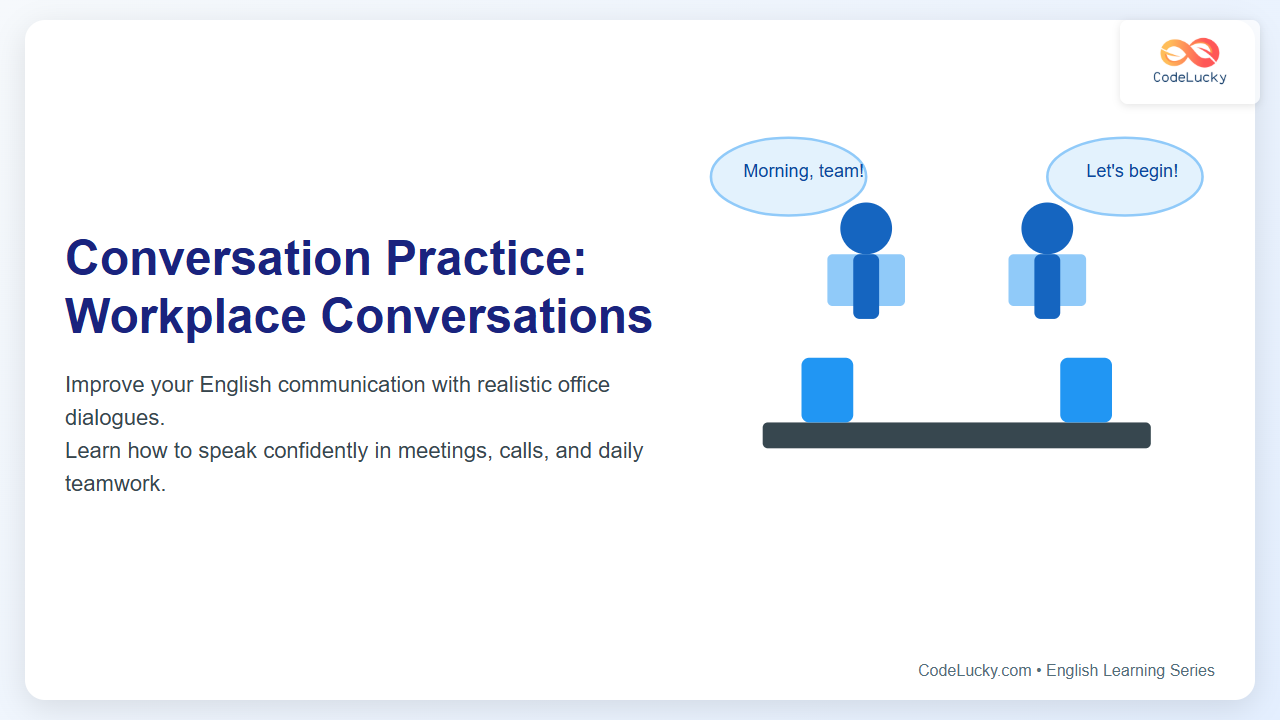
Conversation Practice: Workplace Conversations is one of the most essential modules for English learners who wish to thrive in professional settings. Whether you’re working in a multinational company or a startup, effective communication can define your success. This guide will take you through real-life workplace dialogues, vocabulary, phrases, and interactive examples to help you gain fluency, confidence, and clarity while speaking English at work.
Why Workplace Conversations Matter
In a workplace, clear communication builds trust, avoids misunderstandings, and improves teamwork. From morning greetings to presentations, your ability to hold meaningful dialogue in English helps you appear more confident and professional. Practicing real scenarios ensures that your English skills are not only grammatically correct but naturally fluent.
- Encourages collaboration – Better conversation skills help you cooperate efficiently with colleagues and managers.
- Improves professionalism – Using formal yet friendly English creates a positive impression.
- Boosts career growth – Fluent English often connects you with global opportunities.
Common Types of Workplace Conversations
English conversations at work can generally be categorized into specific functional areas. Here are the most common ones you should master:
- Greetings and Small Talk – Morning greetings, short polite exchanges, or conversations before meetings.
- Team Meetings – Sharing opinions, giving updates, and agreeing or disagreeing politely.
- Client Calls – Formal discussions with customers or partners, often requiring respectful and concise communication.
- Emails and Reports – While written, verbal clarification about these often happens in meetings or check-ins.
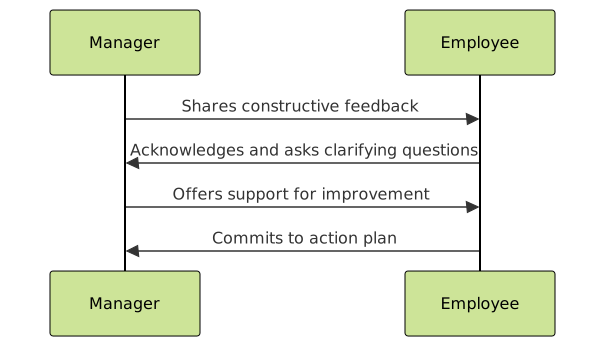
- Feedback Sessions – Giving and receiving constructive feedback politely.
Example 1: Greeting a Colleague
Here’s how a simple conversation at the start of a workday sounds:
Sarah: Good morning, Raj! How are you today?
Raj: Morning, Sarah. I’m great, thanks! How about you?
Sarah: Doing well, just getting ready for the client presentation. Are you joining?
Raj: Yes, I’ll be there. Let’s make it a good one!
Key Phrases:
- Good morning / Good afternoon
- How are you today?
- I’m getting ready for…
- Let’s make it a good one!
Example 2: Speaking in a Team Meeting
Team meetings often require confidence and clarity. Here’s a sample exchange:
Manager: Let’s discuss the progress on the new website project.
Priya: The homepage design is complete. We’re now working on responsiveness for mobile devices.
Manager: Excellent. Can we expect a test version by Friday?
Priya: Yes, we’re on track for that deadline.
Useful Expressions for Meetings:
- We’re currently working on…
- We’re on track for…
- Can we expect…
- That’s an excellent update.
Visual Flow of Workplace Conversations

Example 3: Handling a Difficult Conversation
Sometimes, workplace conversations involve clarifying misunderstandings or giving feedback carefully.
Ravi: Hi Maria, I noticed a few changes in the report format. Could you explain why we switched templates?
Maria: Yes, Ravi. The new template aligns with our updated brand guidelines.
Ravi: Got it! I’ll make sure future reports follow this format. Thanks for clarifying.
Key Polite Phrases:
- Could you explain why…?
- I noticed that…
- I’ll make sure to…
- Thanks for clarifying.
Interactive Practice: Fill-in-the-Blanks
Try completing this conversation to test your understanding:
A: __________ morning, Jenny! How was your weekend?
B: It was great, thanks! __________ yours?
A: Mine was relaxing. Are you ready for the __________ meeting?
B: Yes, I’ve prepared the slides already.
Possible Answers: Good, How about, project.
Workplace Communication Etiquette
Understanding professional tone and etiquette helps maintain harmony at work. Here’s a quick guide:

- Be polite: Use words like “please,” “thank you,” and “excuse me.”
- Be clear: Avoid long, confusing sentences.
- Be concise: Get to the point while staying respectful.
Example 4: Workplace Complaint Conversation
Here’s how to handle a complaint scenario respectfully:
Employee: I’m finding it hard to meet deadlines because of frequent unscheduled meetings.
Supervisor: I understand your concern. Let’s look at the calendar and adjust meeting times to avoid conflicts.
Employee: That would really help. Thank you for considering.
Smart Phrases to Use:
- I understand your concern.
- Let’s look at possible adjustments.
- Thank you for considering.
Flow of Feedback Conversation
Example 5: Polite Email Follow-up (Spoken)
In some cases, follow-ups are done verbally before sending an email.
Tina: Hi Alex, just checking in — did you get a chance to review the proposal I shared last week?
Alex: Hi Tina, yes, I did. I’ll send you my feedback by tomorrow morning.
Tina: Perfect, thanks for letting me know!
Recommended Daily Practice Routine
To enhance your workplace English fluency, dedicate 20–30 minutes daily to these exercises:
- Practice role-play scenarios with a friend or online AI tool.
- Record yourself speaking during mock meetings.
- Read English business blogs aloud for pronunciation.
- Write summaries of your day in English.
Final Tips for Fluent Workplace Conversations
- Listen actively: Focus on understanding, not just replying.
- Adapt your tone: Be formal in meetings and friendly during casual chats.
- Ask questions: It shows engagement and helps you understand better.
- Keep learning: Collect new expressions and apply them naturally.
By mastering these practical English conversation examples and techniques, you’ll be prepared for almost any situation at work, from greetings to negotiations. Start small, practice often, and you’ll soon communicate with the confidence of a native speaker.