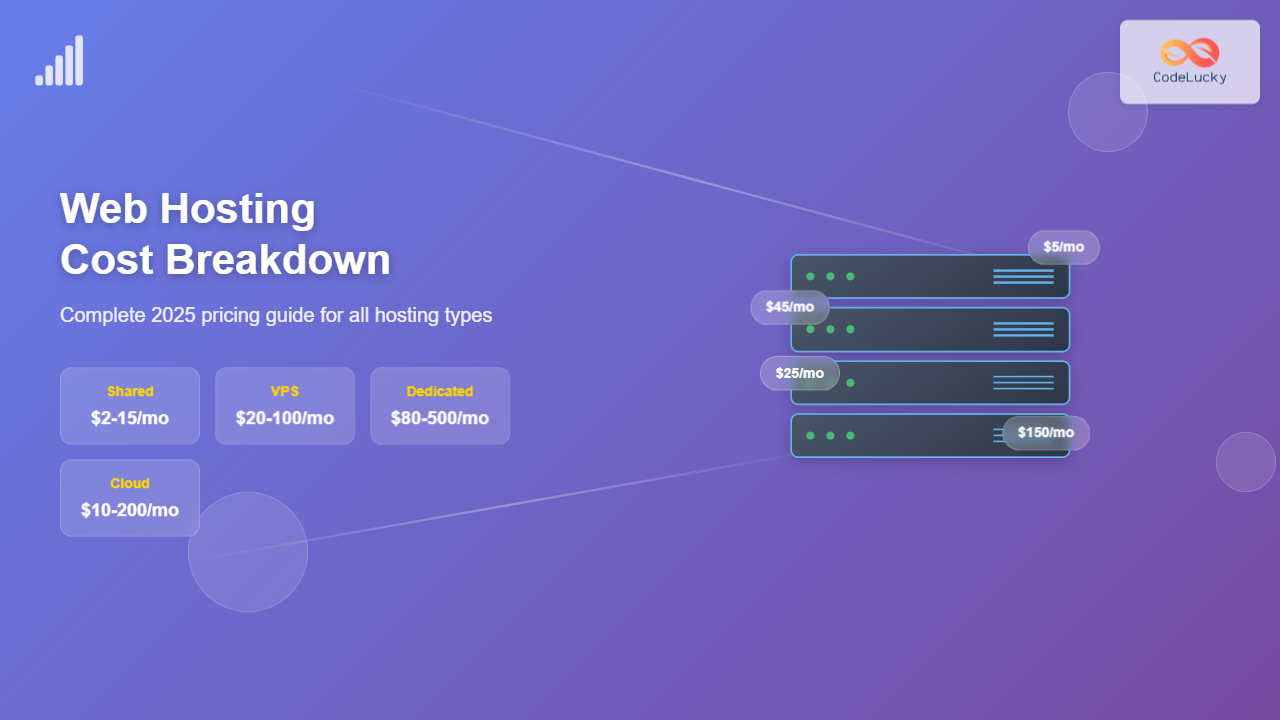
Understanding web hosting costs is crucial for anyone launching a website, whether you’re a blogger, small business owner, or enterprise developer. With hosting options ranging from $2 to $500+ per month, choosing the right plan can significantly impact your budget and website performance.
Web Hosting Types and Average Costs
Web hosting costs vary dramatically based on the type of hosting service you choose. Let’s break down the main categories and their typical price ranges:

Shared Hosting Pricing Breakdown
Shared hosting is the most affordable option, where multiple websites share server resources. Here’s what you can expect to pay:
Budget Shared Hosting ($2-5/month)
- Storage: 10-50 GB SSD
- Bandwidth: 100-500 GB monthly
- Email accounts: 5-25
- Domains: 1-5 websites
- Best for: Personal blogs, small portfolios
Premium Shared Hosting ($6-15/month)
- Storage: 100 GB – Unlimited SSD
- Bandwidth: Unlimited or high limits
- Email accounts: Unlimited
- Domains: Unlimited websites
- Additional features: Free SSL, daily backups, CDN
- Best for: Small to medium businesses, multiple sites
VPS Hosting Cost Analysis
Virtual Private Server (VPS) hosting offers dedicated resources within a shared physical server, providing better performance and control than shared hosting.
| VPS Type | RAM | Storage | CPU Cores | Monthly Cost |
|---|---|---|---|---|
| Entry Level | 1-2 GB | 25-50 GB SSD | 1-2 | $20-35 |
| Mid-Range | 4-8 GB | 80-160 GB SSD | 2-4 | $40-80 |
| High-Performance | 16+ GB | 320+ GB SSD | 6+ cores | $100-200+ |
Managed vs Unmanaged VPS Costs
- Unmanaged VPS: $20-60/month (you handle server management)
- Managed VPS: $25-100/month (provider handles updates, security, monitoring)
- Cost difference: Typically $5-40 more for managed services
Dedicated Server Hosting Expenses
Dedicated servers provide exclusive access to all server resources, offering maximum performance and customization options.

Entry-Level Dedicated Servers ($80-150/month)
- CPU: Intel Core i3/i5 or AMD equivalent
- RAM: 8-16 GB
- Storage: 1-2 TB HDD or 250-500 GB SSD
- Bandwidth: 10-100 TB
High-Performance Dedicated Servers ($200-500+/month)
- CPU: Intel Xeon or AMD EPYC processors
- RAM: 32-128+ GB
- Storage: Multiple TB NVMe SSD arrays
- Bandwidth: Unlimited or very high limits
Cloud Hosting Pricing Models
Cloud hosting offers scalable resources with flexible pricing structures, making it ideal for websites with varying traffic patterns.
Major Cloud Providers Cost Comparison
| Provider | Basic Instance | Storage (per GB) | Bandwidth (per GB) | Monthly Estimate |
|---|---|---|---|---|
| AWS EC2 | $8.50 (t3.micro) | $0.10 | $0.09 | $15-50 |
| Google Cloud | $6.11 (e2-micro) | $0.04 | $0.12 | $10-40 |
| Microsoft Azure | $7.30 (B1ls) | $0.05 | $0.087 | $12-45 |
Cloud Hosting Cost Factors
- Compute hours: Pay for actual server uptime
- Storage usage: Charges based on data stored
- Bandwidth: Data transfer in and out
- Additional services: Load balancers, databases, CDN
WordPress Hosting Specialized Pricing
WordPress hosting is optimized specifically for WordPress sites, offering enhanced performance and WordPress-specific features.
Managed WordPress Hosting Tiers
- Starter ($3-10/month): 1 site, 10-25 GB storage, basic optimization
- Professional ($15-25/month): 3-10 sites, 50-100 GB storage, staging environments
- Business ($30-50/month): 25+ sites, 200+ GB storage, advanced caching
Hidden Costs and Additional Fees
Beyond base hosting costs, several additional expenses can significantly impact your total hosting budget:
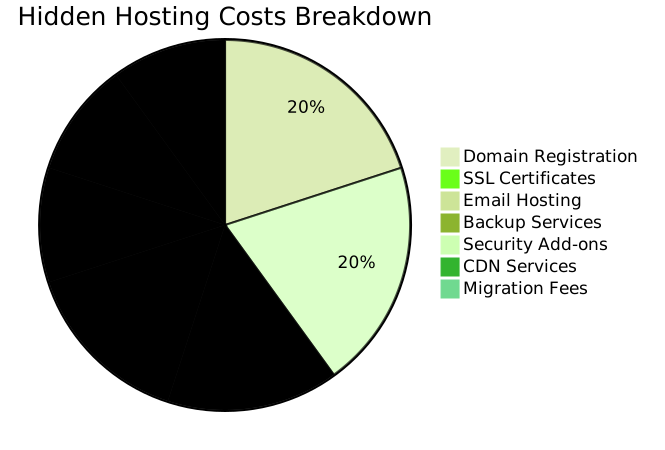
Common Additional Costs
- Domain registration: $10-50/year depending on extension
- SSL certificates: Free to $200/year (premium certificates)
- Professional email: $1-5 per mailbox/month
- Automated backups: $2-10/month
- Security scanning: $10-50/month
- CDN services: $5-50/month based on usage
- Site migration: $50-200 one-time fee
Cost Optimization Strategies
Smart hosting decisions can save hundreds of dollars annually without compromising performance:
Money-Saving Tips
- Annual billing: Save 10-30% by paying yearly instead of monthly
- Promotional pricing: Take advantage of new customer discounts
- Resource monitoring: Start small and scale up as needed
- Bundle services: Combine hosting, domain, and email for discounts
- Compare renewal rates: Introductory prices often increase significantly
Right-Sizing Your Hosting Plan
Choosing the appropriate hosting level based on your actual needs prevents overpaying:

Regional Pricing Variations
Hosting costs vary significantly by geographic region and provider location:
Global Hosting Price Differences
- North America: Premium pricing, excellent infrastructure
- Europe: Competitive rates, strong data protection compliance
- Asia-Pacific: Growing market with moderate pricing
- Emerging markets: Lower costs but potentially limited support
Long-Term Cost Planning
Understanding how hosting costs evolve helps in budget planning and prevents unexpected expenses:
Cost Escalation Factors
- Traffic growth: Increased bandwidth and resource needs
- Feature additions: Additional services and security requirements
- Renewal pricing: Promotional rates expire after initial terms
- Inflation impact: Annual price increases of 3-8%
Making the Right Choice
Web hosting costs range from budget-friendly shared hosting at $2/month to enterprise-grade dedicated servers exceeding $500/month. The key is matching your hosting choice to your actual needs rather than overbuying resources you won’t use.
Consider starting with a quality shared hosting plan if you’re launching a new website, then scaling up as your traffic and requirements grow. Always factor in hidden costs like domains, SSL certificates, and email hosting when calculating your total hosting budget.
Remember that the cheapest option isn’t always the most cost-effective in the long run. Investing in reliable hosting with good support can save money by preventing downtime, security issues, and the need for frequent migrations.