Welcome to CodeLucky’s English Learning Series! In this detailed guide, we’ll take you through a complete vocabulary revision for beginners. Whether you want to improve your conversational English, expand your understanding of words, or prepare for exams, this guide is your one-stop solution. Let’s make word learning interactive, visual, and fun!
Why Vocabulary Revision Matters
Vocabulary is the foundation of effective communication. The more words you know, the more clearly you can express your thoughts. Revising vocabulary helps in:
- Improving your reading and writing skills.
- Understanding spoken English easily.
- Building confidence in speaking.
- Learning synonyms and antonyms naturally.
Types of Vocabulary for Beginners
English learners often find vocabulary grouped by purpose or context. Here’s a simple classification:

- Basic Words: These are used in almost every conversation (e.g., come, go, eat, have).
- Daily Use Words: Linked to home, school, or work (e.g., chair, table, pen, phone).
- Topic-Based Words: Related to fields like food, travel, or weather.
- Synonyms and Antonyms: Learn opposites and similar words to diversify your vocabulary.
Word Formation and Memory Tricks
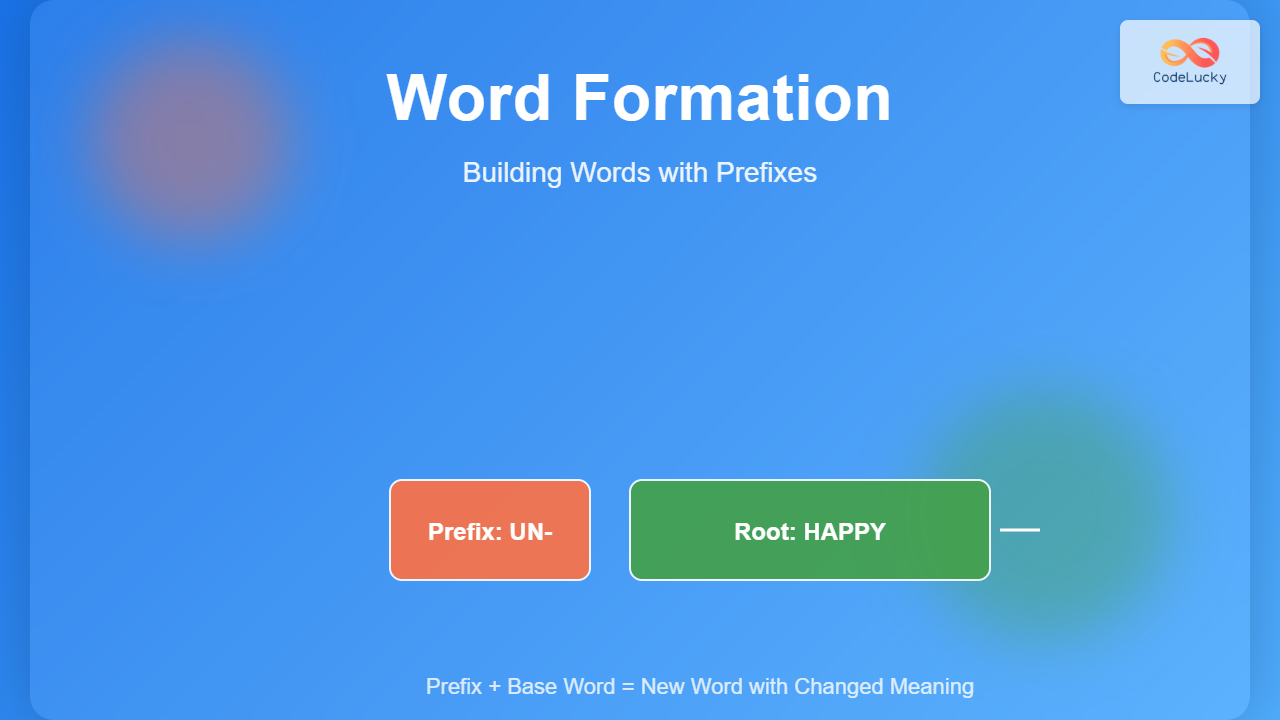
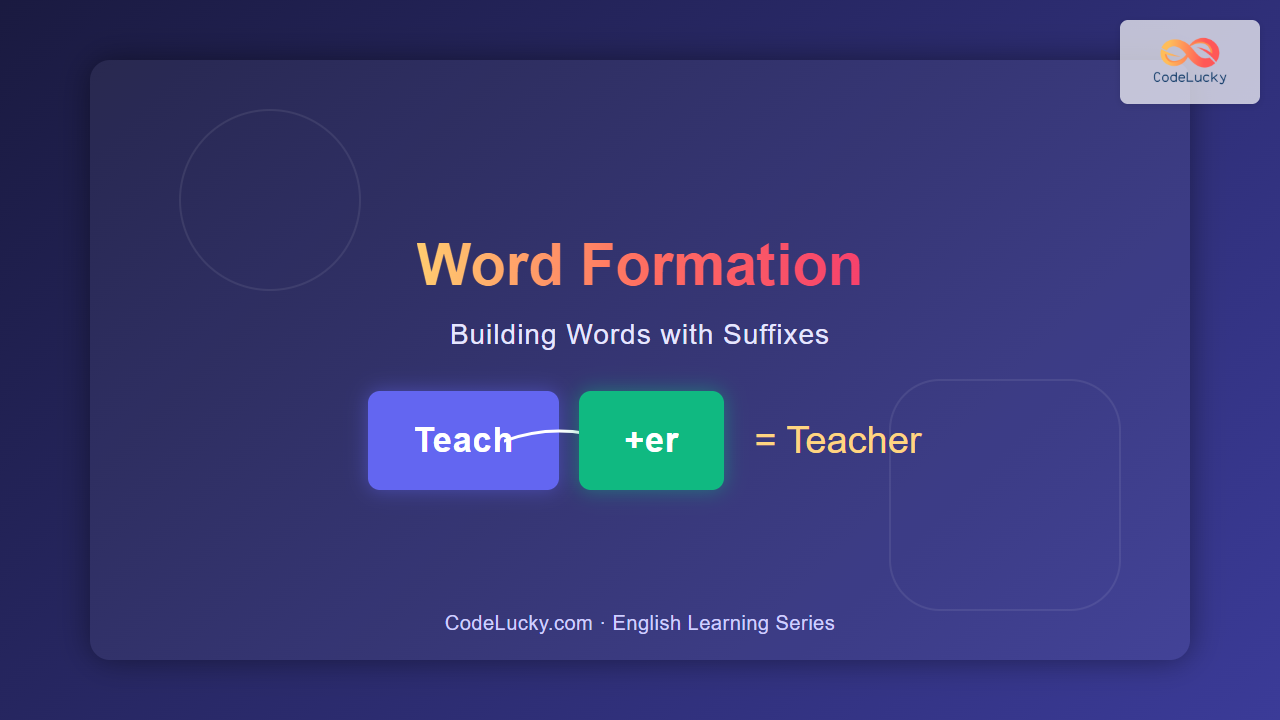
To make your revision easier, notice how words are formed. Understanding prefixes, suffixes, and roots helps remember new words faster.

Memory tip: Group words by patterns. For instance:
- Un-: unhappy, unfair, uncertain
- Re-: redo, rewrite, recheck
- -ful: careful, powerful, helpful
Interactive Practice Activities
Try these quick interactive tasks to make revision active:
- Word Match: Match the word to its meaning.
- Flashcards: Write the word on one side, definition and example on the other.
- Sentence Challenge: Use each new word in a short sentence.
- Word Families: Link noun, verb, adjective, and adverb forms.
Example:
| Word Type | Example |
|---|---|
| Noun | Beauty |
| Adjective | Beautiful |
| Adverb | Beautifully |
| Verb | Beautify |
Visual Vocabulary Groups
Visual learning boosts memory retention. Here’s a simple visualization of topic-based vocabulary:

Common Vocabulary Mistakes to Avoid
While revising, watch for these common errors:
- Confusing similar words (e.g., affect vs. effect).
- Using the wrong prepositions (e.g., depend on, not depend of).
- Memorizing without using the words in context.
Practical Examples for Revision
Here are some thematic examples to practice with:
1. Weather Vocabulary
Hot, Cold, Warm, Cool, Rain, Thunder, Lightning, Humid
Example: It’s humid today, and the sky looks cloudy.
2. Food Vocabulary
Bread, Rice, Vegetables, Fruits, Spices, Meal, Cook
Example: She likes spicy food and eats rice every day.
3. Daily Routine Vocabulary
Wake up, Brush, Bath, Work, Lunch, Rest, Sleep
Example: I wake up early and go for a short run before breakfast.
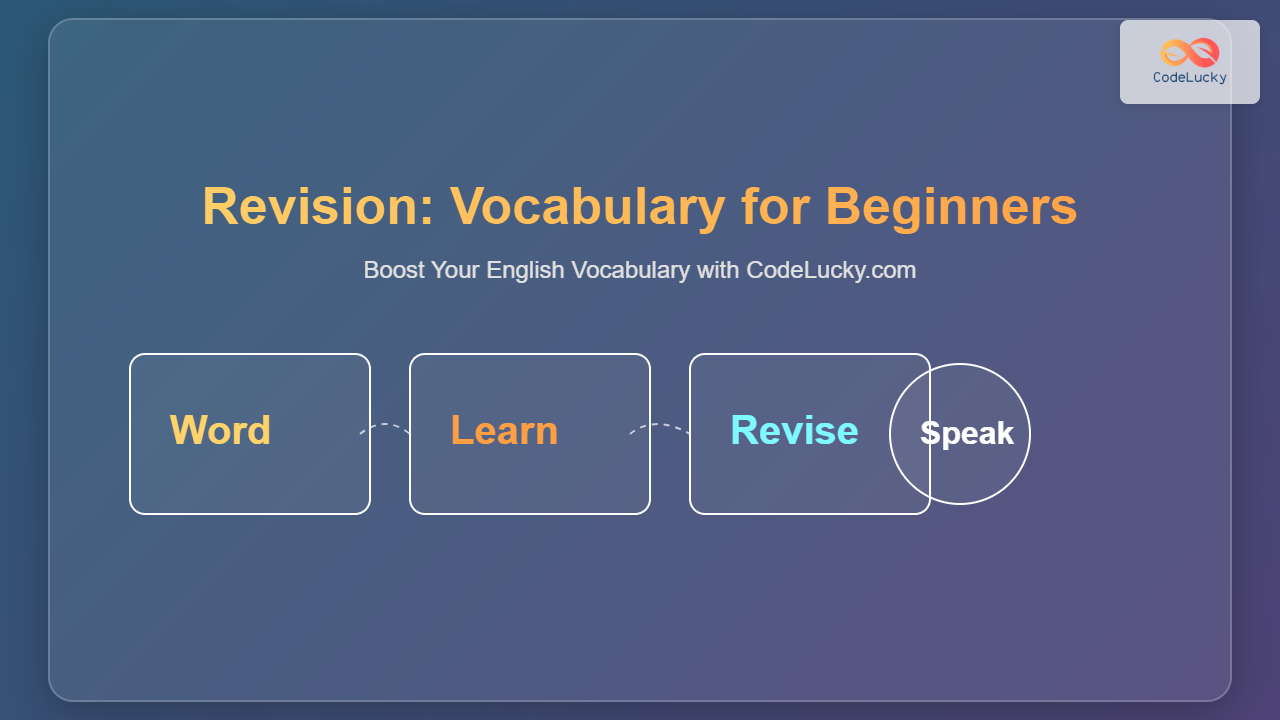
Vocabulary Learning Flow
Use this simple process to effectively revise and grow your vocabulary:

Interactive Self-Check Quiz
Try this self-test:
- Write five words related to food and make one sentence using each.
- List three words with the prefix “re-”.
- Find the antonyms of happy, fast, and easy.
- Convert “care” into its adjective, adverb, and noun forms.
Building Long-Term Vocabulary Memory
The key to remembering vocabulary is spaced repetition. Review words multiple times over days and use them in real-life communication. Practice by reading short stories, watching English shows with subtitles, and keeping a personal word diary.

Conclusion
Vocabulary revision for beginners doesn’t have to be boring — make it visual, interactive, and practical. Keep learning in small, consistent steps, and soon you’ll notice improved fluency and expression. Bookmark this guide by CodeLucky.com and revisit it whenever you want a quick recap or inspiration to learn new words!
Remember: The more you use a word, the more naturally it becomes part of your active English!