Homophones and confusing words are a common stumbling block for learners of English. Words that sound the same or look similar can easily change the entire meaning of a sentence. This article dives deep into homophones, near-homophones, and other confusing vocabulary pairs — complete with context-rich examples and visual learning diagrams — to help you use them with confidence.
What Are Homophones?
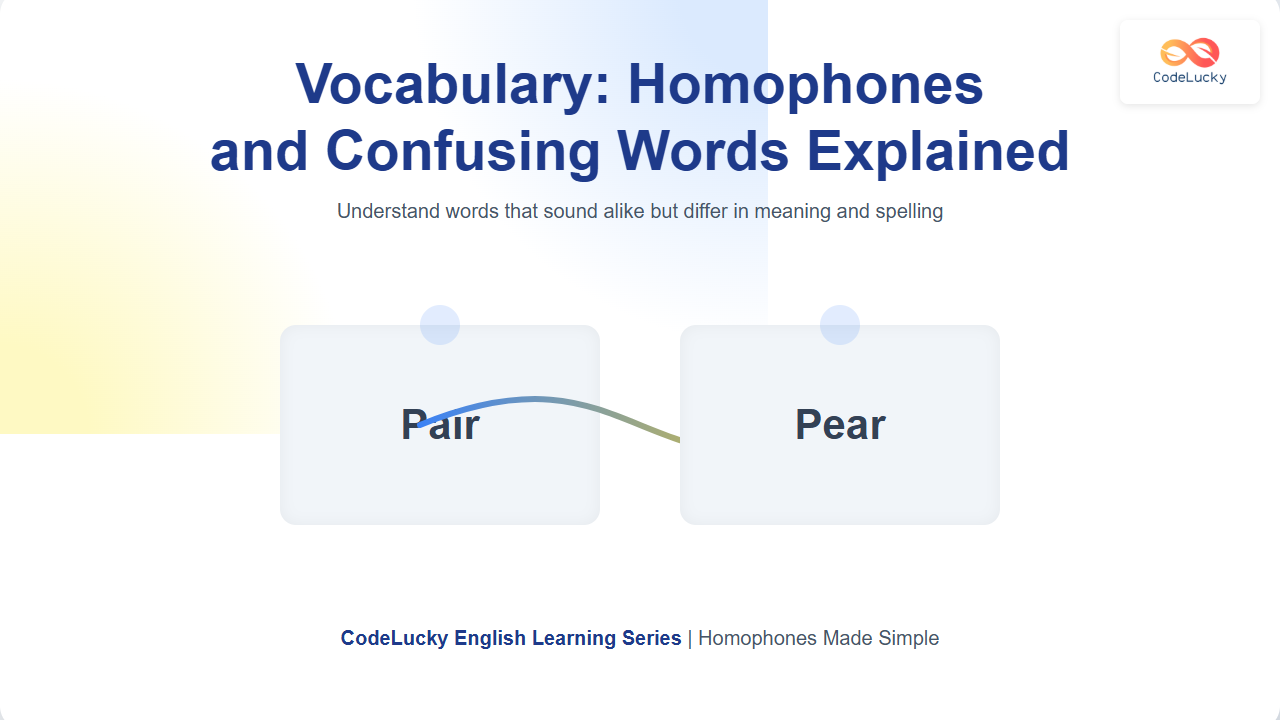
A homophone is a word that sounds the same as another word but has a different meaning and spelling. The pronunciation remains identical (or very close), yet the spellings and usage differ completely. Understanding them improves both your listening and writing accuracy.

Examples of Common Homophones
| Word 1 | Word 2 | Meaning & Example |
|---|---|---|
| pair | pear | Pair = two of something; Pear = a fruit. Example: I bought a pair of shoes and a juicy pear. |
| sea | see | Sea = body of salt water; See = to look at something. Example: I see the sea every morning. |
| flour | flower | Flour = powdered grain; Flower = blossom of a plant. Example: She sprinkled flour while arranging a flower vase. |
| right | write | Right = correct or direction; Write = to record words. Example: It’s right to write daily. |
Why Homophones Matter in Communication
Incorrect usage of homophones can cause embarrassing misunderstandings. For instance, confusing “their” and “there” can make even a well-written message look careless. In spoken English, clarity comes from context — but in writing, correct spelling is everything.
Interactive Example (Try It Yourself)
Select the correct homophone for the following sentences:
- I want to a new phone.
- We walked through the to reach the cabin.
- She will her friends at the café.
Tip: Try reading sentences aloud — sound-based repetition helps you identify which word fits contextually.
Commonly Confusing Word Pairs (Not Always Homophones)
Some words are not homophones but look or sound similar enough to confuse learners. These are confusable pairs — learn to separate their meanings and contexts.

Examples of Confusing Word Pairs
| Word 1 | Word 2 | How to Remember |
|---|---|---|
| affect | effect | Affect is a verb (to influence), Effect is a noun (a result). Example: The weather affects your mood; its effect can be noticeable. |
| lose | loose | Lose = misplace; Loose = not tight. Example: Don’t lose your loose change. |
| than | then | Than = comparison; Then = sequence of time. Example: She’s taller than me, but I arrived earlier then. |
| accept | except | Accept = to agree; Except = excluding. Example: I accept everyone except latecomers. |
Visual Understanding: Homophones and Lookalikes

How to Master Homophones and Confusing Words
- Context Practice: Always use new words in complete sentences to understand their purpose.
- Audio Learning: Listen to native speakers. Hearing correct pronunciation helps you map sound to spelling.
- Visual Mnemonics: Create mental images. For example, visualize a flower blooming when spelling “flower.”
- Mini Tests: Test yourself with online quizzes or pronunciation games.
- Writing Exercises: Keep a vocabulary notebook listing confusing pairs with examples.
Quick Comparison Summary
| Category | Key Feature | Example |
|---|---|---|
| Homophones | Same sound, different meaning | Right / Write |
| Heterographs | Different spelling, same sound | To / Two / Too |
| Homonyms | Same spelling & sound, different meaning | Bat (animal) / Bat (sports) |
| Confusing Words | Look or sound similar but unrelated meanings | Affect / Effect |

Conclusion
Mastering homophones and confusing words is not just about memorizing spellings — it’s about understanding context, pronunciation, and meaning. With practice, you’ll be able to write and speak English with clarity and confidence. Return to this list whenever confusion strikes, and keep expanding your vocabulary steadily!
Next in the CodeLucky English Learning Series: “Phrasal Verbs Made Easy — Common Everyday Expressions Explained.”