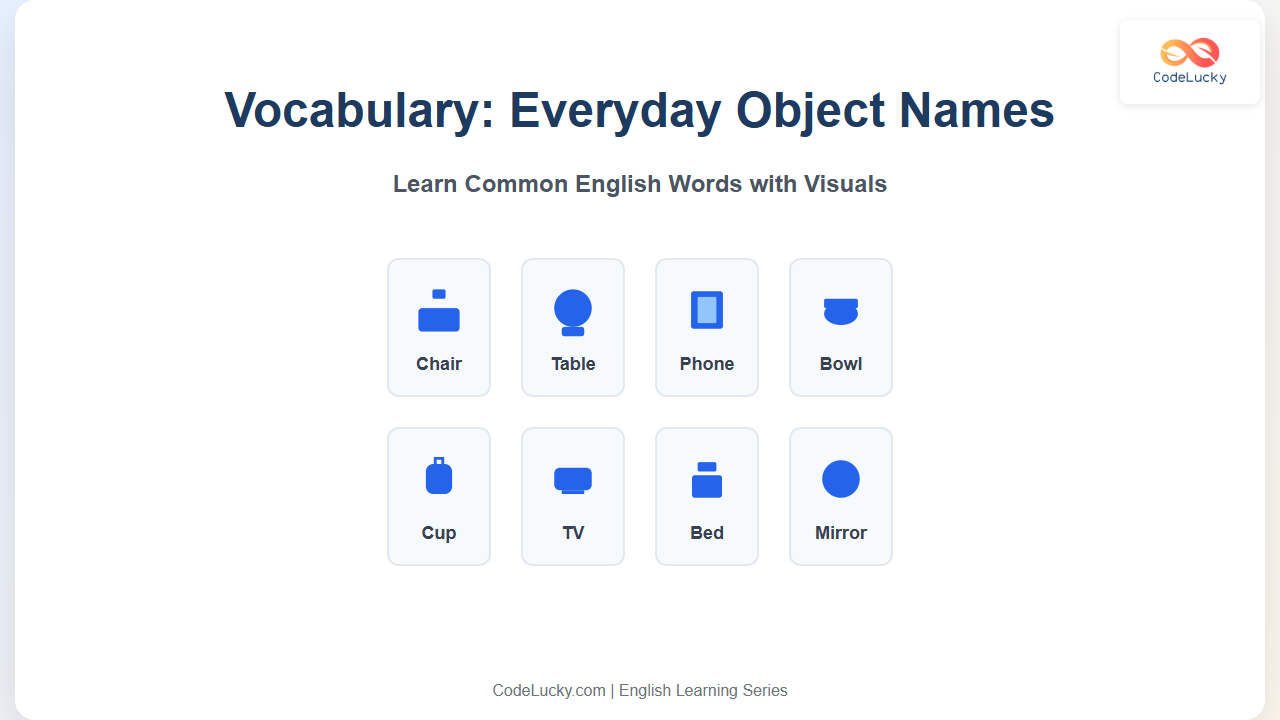
Vocabulary: Everyday Object Names for English Beginners is a practical guide created to help new English learners recognize and remember common words used in daily life. Whether you are learning English as a second language or refreshing basic vocabulary, knowing the names of everyday things helps you speak confidently and naturally in real conversations.
Why Learning Everyday Object Vocabulary Matters
Everyday vocabulary forms the foundation of your English communication skills. When you know the right terms for everyday items around you, speaking, reading, and understanding English becomes much easier. These are the words you’ll use at home, school, work, or while shopping — practically everywhere!
Common Household Objects
The household is the best place to start learning object names. Below are some common items categorized by rooms.
Kitchen Objects
- Spoon – Used for eating or stirring food.
- Plate – A flat dish used to serve food.
- Cup – Used for drinking tea, coffee, or water.
- Fridge – Keeps food and drinks cold.
- Stove – Used for cooking meals.
Living Room Objects
- Sofa – A comfortable seat for sitting or relaxing.
- Television (TV) – Used to watch shows or news.
- Table – Used to place items or eat on.
- Lamp – Gives light to the room.
- Clock – Tells time.

Bedroom Objects
- Bed – Where you sleep or rest.
- Pillow – Placed under your head while sleeping.
- Blanket – Keeps you warm.
- Closet – Used to store clothes.
- Mirror – Used to see your reflection.
Objects We Use at Work or School
- Notebook – Used for writing notes.
- Pen – Writes words and sentences.
- Computer – For typing, research, and communication.
- Chair – For sitting at a desk.
- Folder – Keeps papers organized.
Objects You Find Outside
Outdoors vocabulary helps describe what you see when traveling or walking outside.
- Car – Used for traveling on roads.
- Bicycle – A two-wheeled vehicle powered by pedals.
- Tree – A big plant with leaves and branches.
- Bench – A seat often found in parks.
- Streetlight – Gives light at night along the road.
Interactive Vocabulary Practice
Try this quick interactive memory task: look around your room and list five items in English. Then, try making a simple sentence using each word.
- Find an object. Example: mirror.
- Say aloud: “This is a mirror.”
- Use it in context: “I look in the mirror every morning.”
Practicing with real objects around you reinforces memory faster than rote learning.

Fun Ways to Learn Everyday Object Vocabulary
- Label method: Stick small labels with English names on everyday items around your home.
- Flashcards: Use paper or digital flashcards to practice daily.
- Picture association: Imagine an image when hearing the word to make recall easier.
- Mini games: Ask “What’s this?” with friends or in class.

Everyday Object Quiz (Try It!)
Match the word with its correct category:
| Word | Category |
|---|---|
| Spoon | __________ |
| Bench | __________ |
| Computer | __________ |
| Blanket | __________ |
| Streetlight | __________ |
Hint: Kitchen, Park, Office, Bedroom, Street
Tips for Remembering Vocabulary
- Group similar words — example: all furniture items together.
- Use new words in short phrases daily.
- Review your list once every evening.
- Watch short English videos showing common objects at home.
- Use apps or flashcards to test yourself weekly.

Conclusion
Learning the names of everyday objects is a simple but powerful step toward mastering English vocabulary. When practiced consistently using interactive methods, visual grouping, and real-life associations, it strengthens both memory and confidence. Start small — five words a day — and soon your vocabulary will grow naturally with your surroundings.