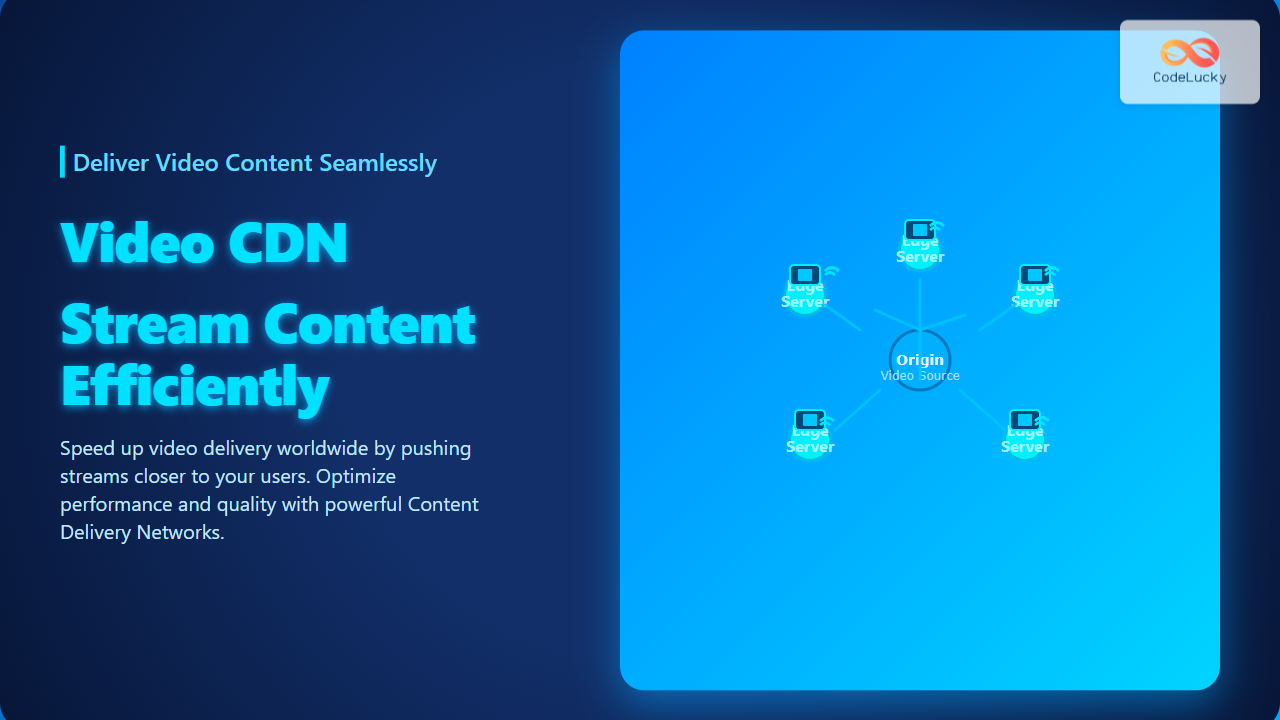
Delivering video content efficiently on the internet is crucial for providing seamless, high-quality streaming experiences to users across the globe. Video CDN (Content Delivery Network) technology plays a pivotal role in accelerating video delivery, reducing latency, and scaling streams even during high traffic. This comprehensive article unpacks how Video CDNs operate, why they’re indispensable for modern streaming, and how developers and businesses can leverage them to optimize user experience.
What is a Video CDN?
A Video CDN is a specialized Content Delivery Network designed specifically to handle the storage, caching, and distribution of video content. Unlike general-purpose CDNs focused on static site resources, Video CDNs optimize for large media files and streaming protocols to support live broadcasts, on-demand video, and adaptive bitrate streaming. They consist of a distributed network of edge servers located globally that cache video assets closer to end users.
Why Use Video CDN for Streaming?
- Reduced Latency: By caching video files at edge servers near users, a Video CDN drastically reduces streaming lag and buffering times.
- Scalability: It supports millions of simultaneous viewers by distributing traffic load across many servers.
- Higher Video Quality: Adaptive bitrate streaming is supported, automatically adjusting video quality based on user bandwidth.
- Improved Reliability: Redundant caching and multiple server locations increase availability and decrease downtime risks.
How Does Video CDN Work? Step-by-Step
Here’s how a typical Video CDN streaming process unfolds:
- Content Upload: Original video content is uploaded and stored in an origin server or cloud storage.
- Encoding & Packaging: Video files are encoded into multiple bitrates and packaged for streaming formats (HLS, DASH).
- Caching at Edges: When a user requests a video, the CDN pulls content from origin and caches it on the closest edge server.
- Content Delivery: The edge server streams video chunks to the user device, adjusting bitrate dynamically.
- Playback & Monitoring: User watches content with minimal buffering; analytics gather performance and viewer data.

Popular Streaming Protocols Supported by Video CDN
To optimize video delivery across devices and network conditions, Video CDNs support streaming protocols such as:
- HLS (HTTP Live Streaming): Apple’s streaming protocol widely supported on iOS and browsers.
- DASH (Dynamic Adaptive Streaming over HTTP): An open standard used for adaptive streaming.
- RTMP (Real-Time Messaging Protocol): Commonly used for live streaming pipelines (ingestion phase).
Example: Simple Video Streaming with Video CDN
Consider an example where a streaming website uses a Video CDN to deliver an on-demand video:
<video controls width="640" height="360">
  <source src="https://cdn.examplecdn.com/videos/sample-video.m3u8" type="application/x-mpegURL">
  Your browser does not support the video tag.
</video>
Here, the video source is served via the CDN domain cdn.examplecdn.com. When the video plays, the Video CDN edge servers deliver video chunks closest to the user, minimizing lag and buffering.
Visual Architecture of a Video CDN Live Streaming Setup
For live streaming, the process includes video capture, encoding, origin ingestion, CDN distribution, and user playback.

Key Considerations for Optimizing Video CDN Use
- Geographic Distribution: Select a CDN provider with edge servers strategically placed near your target audience.
- Adaptive Bitrate Streaming: Use streaming formats that support bitrate switching to cater to different network speeds.
- Content Security: Implement DRM, token authentication, and HTTPS delivery to protect your video content.
- Monitoring & Analytics: Leverage CDN dashboards and analytics to track performance and viewer engagement.
Interactive Conceptual Demo
Use the following simple interactive snippet to visualize how CDN caching helps reduce latency for repeated requests:
<button onclick="requestVideo()">Request Video Stream</button>
<p id="output"></p>

<script>
  const cache = {};
  function requestVideo() {
    const output = document.getElementById('output');
    const userLocation = 'NYC';
    if(cache[userLocation]) {
      output.textContent = "Video served from CDN cache near " + userLocation + ". Loading instantly!";
    } else {
      output.textContent = "Cache miss: Fetching from origin server...";
      setTimeout(() => {
        cache[userLocation] = true;
        output.textContent = "Now cached in CDN edge near " + userLocation + ". Next requests load instantly.";
      }, 2000);
    }
  }
</script>
Conclusion
Video CDN technology is essential for delivering high-quality, scalable, and reliable video streaming across the internet. By caching content close to users and supporting modern streaming protocols with adaptive bitrate, Video CDNs ensure minimal buffering and superior viewing experiences. Developers and businesses should carefully architect their streaming solutions with Video CDN integration to maximize performance, security, and reach globally.
Start leveraging Video CDN solutions today to future-proof your video delivery and keep viewers engaged with smooth, uninterrupted streaming experiences.