Verbs are the heart of every sentence. They describe actions, occurrences, and states of being. Without verbs, language would stand still — quite literally! In this tutorial, you will learn everything about verb forms in English, focusing on the base form, past form, and past participle. You’ll also discover patterns, irregularities, and practical examples that help solidify the concept.
1. What Is a Verb?
A verb expresses an action, an event, or a state. For example:
- Action: run, write, play
- Event: happen, occur, take place
- State: be, seem, exist
Every verb can appear in different forms depending on tense (time), aspect, and grammatical construction. The three foundational forms are:
- Base Form
- Past Form
- Past Participle

2. The Base Form of Verbs
The base form is the original, dictionary form of the verb. It’s the version you look up when learning vocabulary. It’s used in:
- Present simple tense (except with he/she/it): “They eat apples.”
- Infinitives with to: “to eat”, “to read”.
- Imperatives: “Go home!”, “Read this book.”
Examples:
| Verb | Base Form | Used In Sentence |
|---|---|---|
| to work | work | They work hard. |
| to go | go | Let’s go for a walk. |
| to write | write | I need to write faster. |
3. The Past Form of Verbs
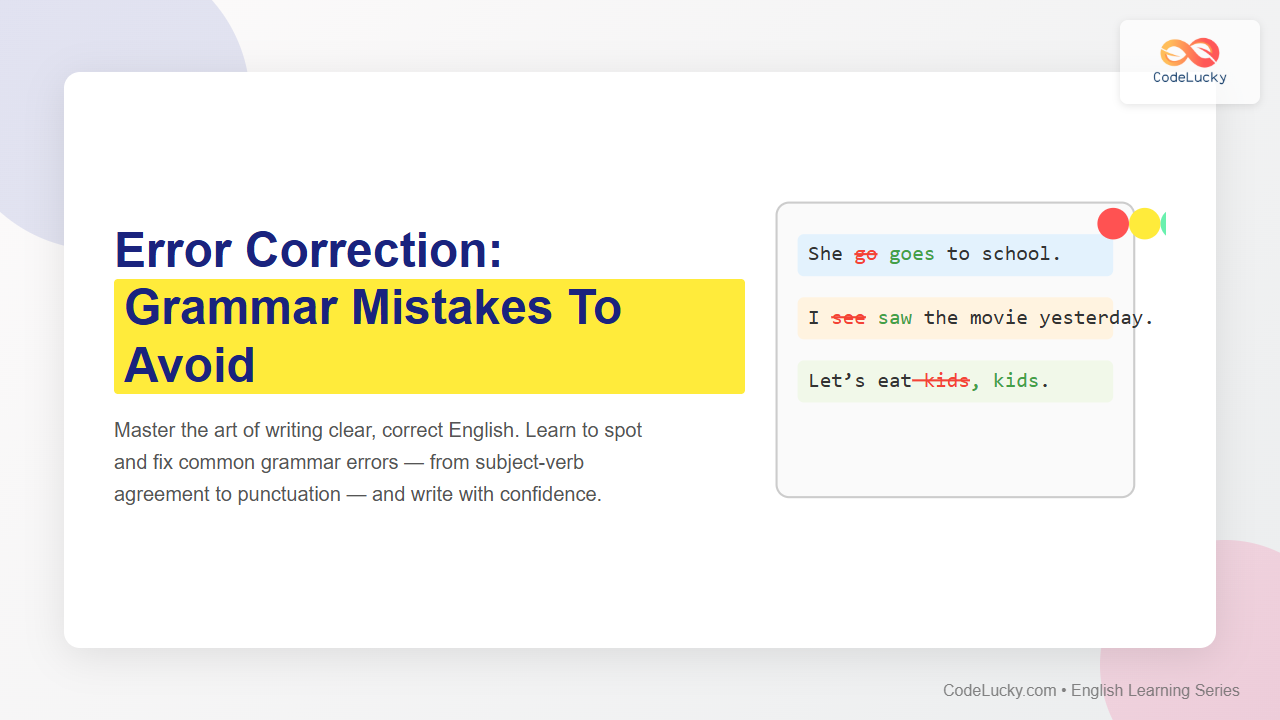
The past form (also called the simple past) describes actions that happened and finished in the past. It is often formed by adding -ed to the base form, though many verbs are irregular.
Examples:
| Verb | Base Form | Past Form | Sentence Example |
|---|---|---|---|
| walk | walk | walked | She walked to school yesterday. |
| go | go | went | They went shopping last weekend. |
| see | see | saw | He saw a rainbow this morning. |

Regular Verbs Pattern
Regular verbs form the past by adding -ed:
- play → played
- clean → cleaned
- jump → jumped
Irregular Verbs Pattern
Irregular verbs have unique past forms that don’t follow a pattern:
- go → went
- buy → bought
- hold → held
4. The Past Participle
The past participle is the third form of the verb, often used in perfect tenses and passive voice. It looks the same as the past form for regular verbs but differs for irregular ones.
Used in:
- Present perfect: has/have + past participle → “I have eaten.”
- Past perfect: had + past participle → “She had finished her work.”
- Passive voice: be + past participle → “The cake was baked by John.”
| Verb | Base Form | Past Form | Past Participle | Example |
|---|---|---|---|---|
| eat | eat | ate | eaten | I have eaten already. |
| do | do | did | done | He has done his homework. |
| write | write | wrote | written | She has written a letter. |

5. Common Verb Form Patterns (Visual Summary)

6. Interactive Exercise for Practice
Try filling in the blanks below. Check if your verbs’ past and past participle forms are correct.
- I have _______ (go) to the market today.
- She _______ (finish) her project yesterday.
- They have _______ (see) that movie already.
Answers: 1. gone 2. finished 3. seen
7. Verb Form Quick Reference Table
| Base Form | Past Form | Past Participle |
|---|---|---|
| go | went | gone |
| come | came | come |
| take | took | taken |
| make | made | made |
| run | ran | run |
8. Tips to Remember Verb Forms
- Practice in sets: Learn verbs in groups that sound similar (e.g., sing–sang–sung).
- Notice patterns: Regular verbs will always end with -ed.
- Make flashcards: One side for base form, the other for the two past forms.
- Read widely: Exposure naturally strengthens verb retention and correct usage.
9. Summary
The three verbal pillars — base form, past form, and past participle — are core to mastering English. Once you grasp how they interact with time and grammar, your ability to write and speak fluently grows exponentially. Regular practice, pattern observation, and contextual learning are the keys to full mastery.
Continue exploring more English grammar lessons on CodeLucky.com for practical and structured learning experiences.