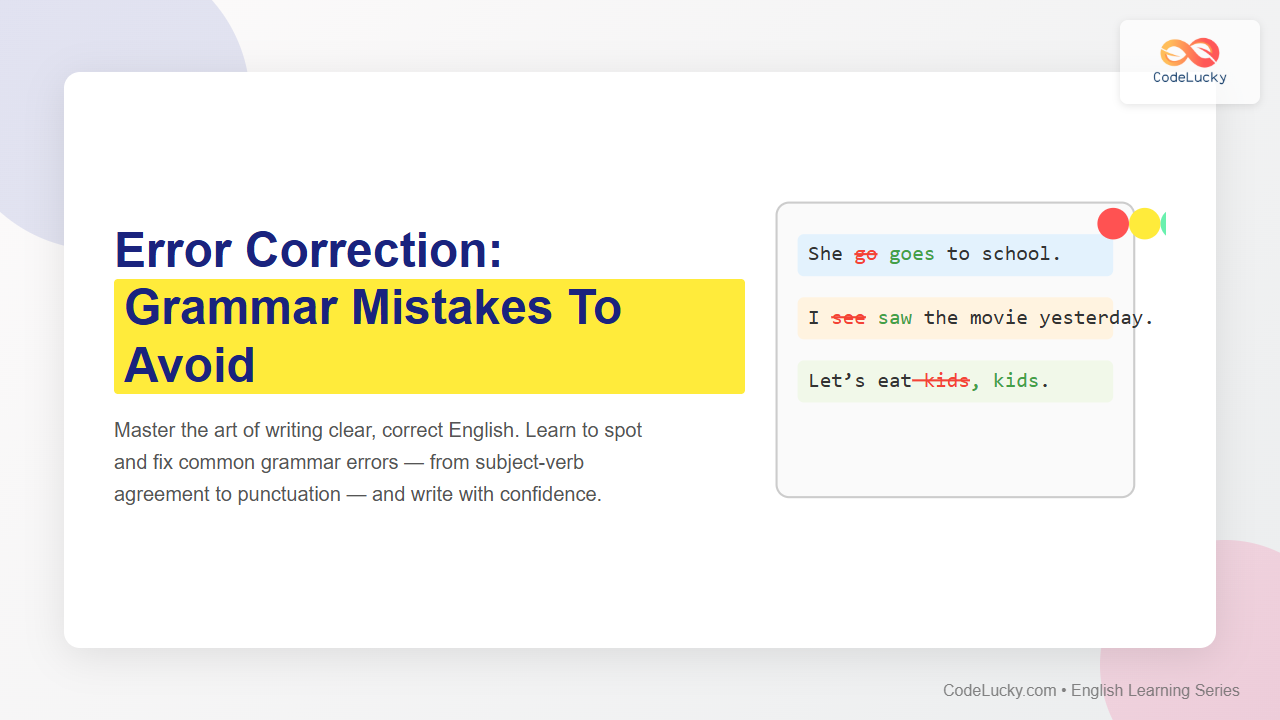
Verbs form the heartbeat of every sentence. They express action, existence, or state of being—without them, a sentence cannot function. Whether you’re learning English for communication, exams, or content creation, understanding verbs gives structure and meaning to everything you say or write.
What Is a Verb?
A verb is a word that shows an action or a state of being.
- Action verbs – express what someone or something does. Example: run, jump, read, build.
- State of being verbs – show condition or existence. Example: is, am, are, was, were.
Example Sentences:
1. She runs every morning.
2. They are happy today.
3. I believe in positive thinking.
How Verbs Function in a Sentence
A sentence often revolves around its verb. The verb tells us what the subject is doing or what state it is in.

Example: “Riya plays guitar.”
Here, “Riya” is the subject, “plays” is the verb, and “guitar” is the object.
Types of Verbs in English
Verbs can be divided into several categories based on their use and function:
- Main Verbs – show actual action or being (eat, run, be).
- Helping Verbs – assist the main verb (is, has, will, should).
- Transitive Verbs – take an object (She wrote a letter.).
- Intransitive Verbs – don’t take an object (He sleeps.).
- Regular Verbs – add “-ed” in past form (play → played).
- Irregular Verbs – change unpredictably (go → went).
Simple Rules for Using Verbs
1. Match Verb with Subject
The verb must agree with its subject in number (singular or plural).
She runs fast. (Singular)
They run fast. (Plural)

2. Understand Verb Tenses
English verbs change their form to show different time expressions — past, present, and future.
| Tense | Example |
|---|---|
| Past | I ate an apple yesterday. |
| Present | I eat an apple every day. |
| Future | I will eat an apple tomorrow. |

3. Use the Correct Verb Form (Regular vs. Irregular)
Regular verbs follow a pattern, whereas irregular verbs must be memorized since they do not follow rules.
| Verb Type | Base | Past | Past Participle |
|---|---|---|---|
| Regular | Play | Played | Played |
| Irregular | Go | Went | Gone |
4. Watch for Helping Verbs
Helping verbs (auxiliary verbs) define tense, mood, and voice of the main verb. Some common helping verbs are: is, are, was, were, have, has, had, do, does, will.
She is reading a book. (Present continuous)
They have completed the task. (Present perfect)

5. Practice Consistency in Verb Tense
Keep verb tenses consistent in your sentence or paragraph unless there is a clear time change.
✗ She was eating and then goes to sleep. ❌
✓ She was eating and then went to sleep. ✅
Interactive Practice: Identify the Verb
Try spotting the verbs below:
1. He drives to work every day.
2. We were watching a movie last night.
3. They build houses for charity.
Ask yourself: What word tells what action or state the subject is showing?
Summary Table of Core Verb Rules
| Rule | Description | Example |
|---|---|---|
| Subject-Verb Agreement | Verb matches the subject’s number. | He runs, They run. |
| Tense Consistency | Same tense used for related actions. | She worked hard and won the prize. |
| Regular Verbs | Add -ed for past form. | Talk → Talked |
| Irregular Verbs | Change unpredictably. | Go → Went |
Conclusion
Verbs power every English sentence, revealing what’s happening, who is involved, and when the action takes place. By mastering verb forms, tenses, and agreement rules, you gain the foundation for clear, correct, and confident English communication.
Next Lesson: Learn about the different Tenses and how verbs transform across time in our English Learning Series on CodeLucky.com.