
In today’s fast-paced digital world, a single viral post or sudden spike in user interest can catapult your website from obscure to overwhelming in minutes. Managing these traffic spikes effectively is crucial to maintaining user experience, preventing downtime, and safeguarding your reputation. This article presents a comprehensive guide to preparing for viral content surges by utilizing scalable infrastructure, pragmatic architecture decisions, and real-world solutions.
Understanding Traffic Spikes and Viral Content
A traffic spike is a sudden and substantial increase in website visitors over a short period, often triggered by viral content, marketing campaigns, or unexpected media exposure. Viral content—be it a blog post, video, or social media shoutout—can exponentially increase visitor counts, sometimes by thousands or millions.
Handling these spikes requires both proactive planning and reactive capability to scale resources dynamically, ensuring seamless performance without crashing.
Key Challenges During Traffic Spikes
- Server Overload: Too many requests overwhelm servers, causing errors and slowdowns.
- Database Bottlenecks: Increased reads/writes can slow or crash databases.
- Bandwidth Saturation: Limited network capacity can throttle traffic flow.
- Resource Exhaustion: CPU, memory, or I/O limits can be maxed out.
Traffic Spike Management Strategies
Effective spike management balances scalability, performance, and cost-efficiency. Below are proven strategies, with examples and visualizations.
1. Autoscaling Infrastructure
Implement cloud providers’ autoscaling groups (AWS EC2 Auto Scaling, GCP Instance Groups, Azure VM Scale Sets) to adjust the number of active servers automatically based on demand.

This architecture ensures that when traffic surges, new instances spin up automatically, increasing capacity. When demand drops, resources scale down to save costs.
2. Load Balancing
A load balancer evenly distributes incoming traffic across multiple servers, preventing any single server from becoming a bottleneck.

Examples of load balancers include AWS ELB, NGINX, HAProxy, or cloud provider solutions.
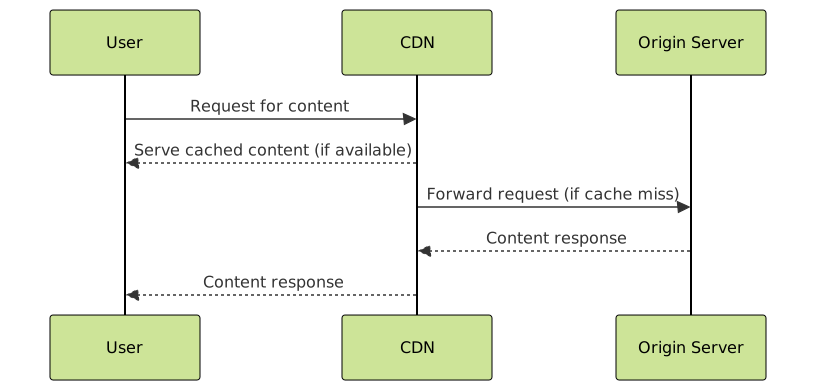
3. Caching Layers
Reducing backend processing by caching static assets or dynamic content can dramatically offload servers. Use Content Delivery Networks (CDNs) like Cloudflare or Akamai to cache assets globally closer to users.
For dynamic content caching, consider:
- In-memory caches: Redis, Memcached
- Application-level caching: HTTP cache headers, page or fragment caching
4. Database Optimization and Scaling
High traffic puts pressure on databases. Techniques to manage this include:
- Read Replicas: Offload read queries to replicas to reduce main DB load.
- Query optimization: Indexing, eliminating N+1 queries, using efficient joins.
- Connection pooling: Manage DB connections efficiently.
- Sharding or partitioning: Split large databases into smaller, more manageable parts.
5. Queueing and Rate Limiting
To prevent overload, rate limit user requests and buffer traffic with message queues (RabbitMQ, AWS SQS) for background jobs.

This ensures smooth processing without crashing under pressure.
6. Monitoring and Alerting
Proactive traffic spike management requires real-time monitoring with tools such as Prometheus, Grafana, Datadog, or New Relic. Set alerts for:
- CPU, memory usage
- Request latency
- Error rates
- DB performance
Example: Handling a Viral Blog Post Traffic Spike
Consider a news site that publishes an article going viral, shooting web traffic from 1,000 to 100,000 visitors within minutes.
- Setup autoscaling: Instances increase as traffic rises.
- Load balancer: Routes traffic across servers.
- Cache at CDN level: Images and static assets served from cache.
- Database read replicas: Handles increased read queries.
- Queue background jobs: Email notifications or comments processed asynchronously.
- Alerting: Operations team notified if thresholds exceed.
This layered approach ensures availability and performance even under extreme load.
Interactive Traffic Spike Simulation (Concept)
Imagine a simple form where you can simulate spikes by submitting the number of concurrent users and seeing how your backend components scale in response (conceptual JavaScript logic below):
// Simulated traffic spike handler
function simulateTrafficSpike(concurrentUsers) {
  const baseServers = 2;
  const maxUsersPerServer = 1000;

  let neededServers = Math.ceil(concurrentUsers / maxUsersPerServer);
  neededServers = Math.max(baseServers, neededServers);

  return `Traffic: ${concurrentUsers}, Servers needed: ${neededServers}`;
}

console.log(simulateTrafficSpike(5000)); // Output: Traffic: 5000, Servers needed: 5
This basic model helps visualize scaling decisions based on traffic forecasts.
Conclusion
Preparing for viral content caused traffic spikes means designing your web infrastructure to be scalable, resilient, and efficient. By combining autoscaling, load balancing, caching, optimized databases, and intelligent traffic management, websites can maintain excellent user experience despite sudden surges. Proactive monitoring and alerting complete the feedback loop needed for operational success.
Start small with caching and rate limiting, then progressively adopt autoscaling and database replicas, tailoring your strategy to your audience and traffic patterns.