Coding interviews are not only about testing technical knowledge but also about evaluating time management skills. Even strong programmers can underperform if they fail to allocate time wisely across different rounds and problems. Effective time management ensures you not only solve the problem but also communicate your thought process clearly within limited time constraints.
Why Time Management Matters in Coding Interviews
Interviews generally give you 30 to 45 minutes to solve one or two problems. Within this time, you must read the problem carefully, brainstorm approaches, analyze complexity, implement a working solution, and run through test cases. Poor time management often leads to:
- Incomplete solutions even if you understood the problem.
- Spending too long on brute force before shifting to an optimized solution.
- Failing to explain trade-offs due to rushing at the end.
Key Principles of Efficient Problem Solving
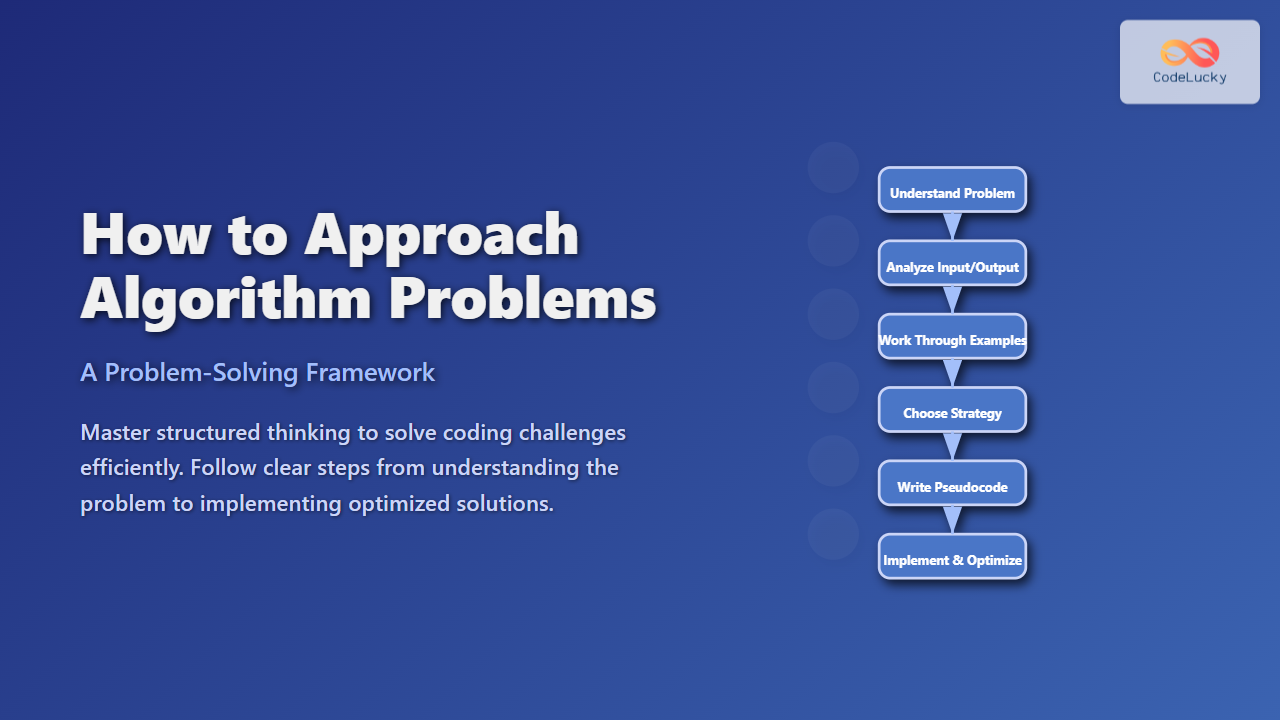
Many top candidates follow structured steps that balance speed with clarity. You can visualize time management strategy as a flow:

- Read Carefully: Spend 1-2 minutes dissecting requirements instead of rushing into code.
- Brainstorm Smartly: Think of multiple approaches but avoid overthinking.
- Choose Wisely: Pick an approach that balances simplicity and efficiency given the constraints.
- Code Cleanly: Write modular, bug-free code within time boundaries.
- Validate Early: Run sample test cases as you implement, not after everything is complete.
Time Allocation Framework
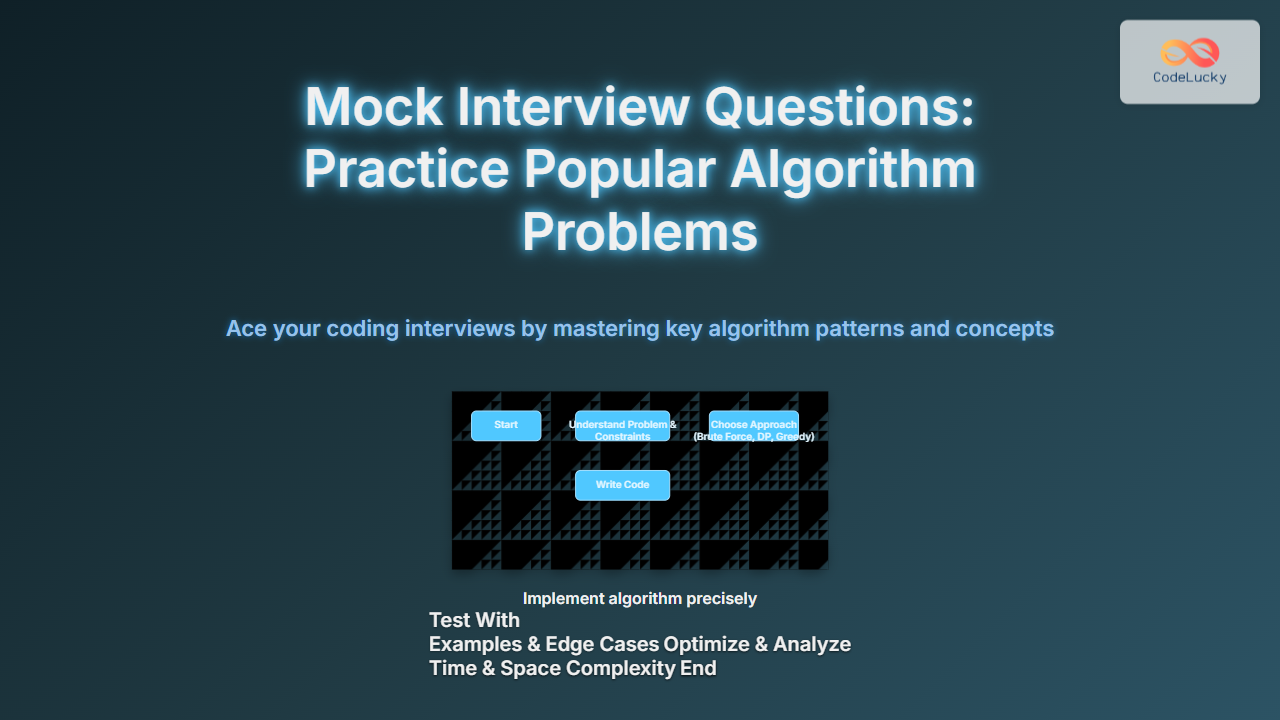
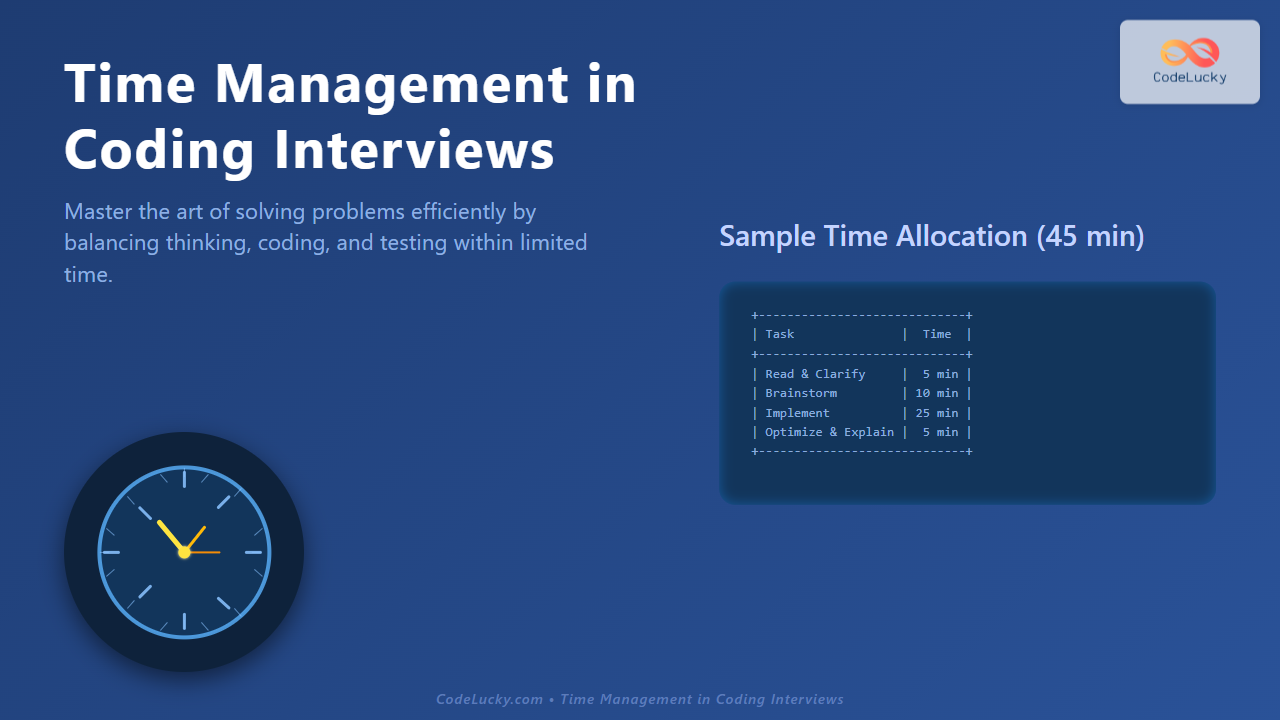
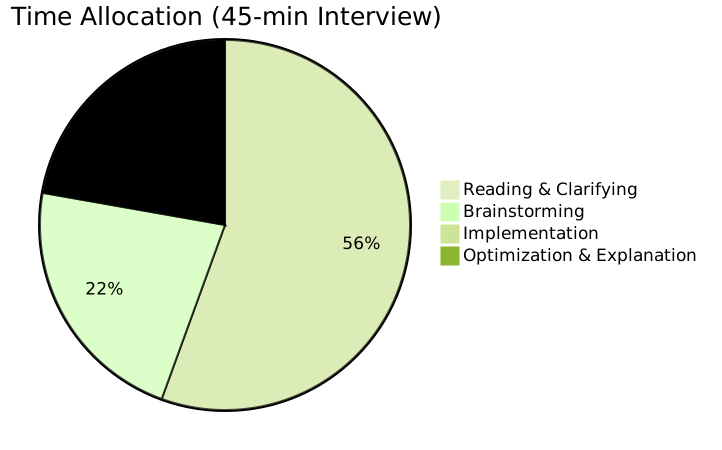
A golden rule for a 45-minute coding interview is the 5-10-25-5 rule:
- 5 minutes: Read the problem and clarify constraints.
- 10 minutes: Brainstorm possible approaches and select the best one.
- 25 minutes: Implement the solution with working test cases.
- 5 minutes: Optimize, polish edge cases, and explain trade-offs.
Example: Balancing Thinking vs Coding
Imagine you are asked to solve a classic problem:
Find the maximum subarray sum in an integer array.
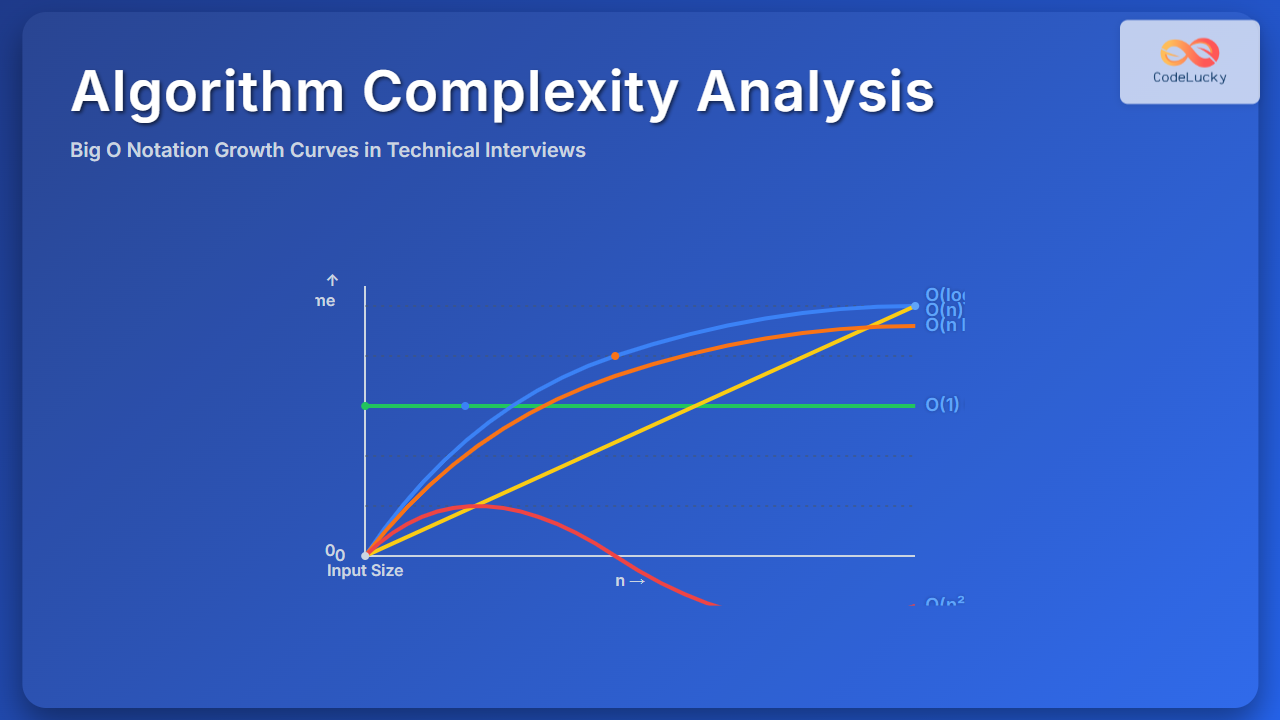
A brute force method would require three nested loops with O(n³) complexity. Instead of spending too much time coding brute force, you should outline it quickly and then transition to Kadane’s algorithm with O(n) complexity.
Python Example
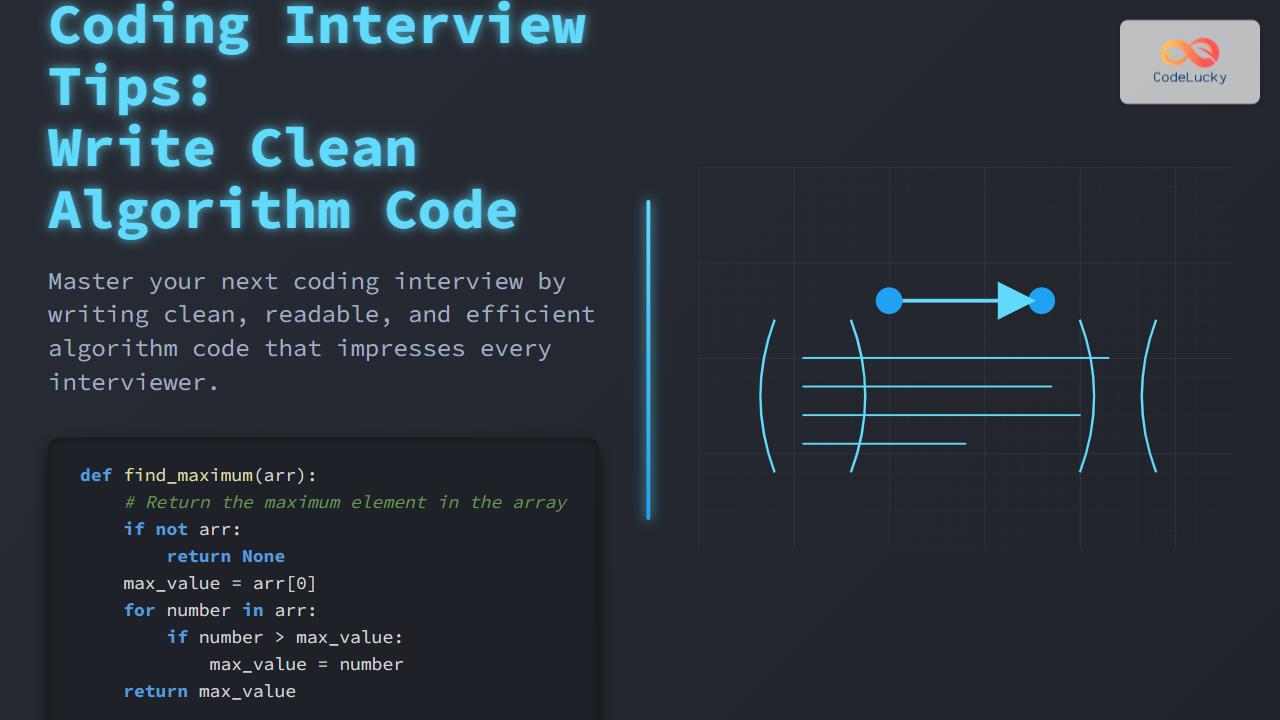
def max_subarray(nums):
    max_sum = nums[0]
    curr_sum = nums[0]
    for i in range(1, len(nums)):
        curr_sum = max(nums[i], curr_sum + nums[i])
        max_sum = max(max_sum, curr_sum)
    return max_sum

print(max_subarray([-2,1,-3,4,-1,2,1,-5,4]))
Output:
6
Here, the maximum sum subarray is [4, -1, 2, 1]. By directly moving to Kadane’s algorithm, you save implementation time and avoid unnecessary debugging.
Interactive Exercise: Practice Under Time
Try solving this problem within 15 minutes:
Given an array of meeting time intervals consisting of start and end times, determine if a person could attend all meetings.
You can start coding in your local environment with a timer running. After 15 minutes, evaluate whether you were able to finish both coding and testing. This exercise simulates real interview pressure.
Strategies to Save Time
- Write pseudocode if unsure about syntax before coding final version.
- Communicate thought process while implementing instead of waiting until the end.
- Use descriptive variable names to make code self-explanatory.
- Check edge cases early to prevent last-minute rush.
Common Pitfalls to Avoid

Most candidates fail not because they don’t know the algorithm, but because they spend too long in unstructured problem-solving and leave no time to explain or optimize.
Final Tips on Interview Time Management
- Practice with online judges under strict time limits to build speed.
- Simulate interviews with peers to improve communication flow.
- Always keep track of time—mentally divide the interview into checkpoints.
- If stuck, explain approach and outline partial solutions rather than staying silent.
Time management in coding interviews is a skill just like algorithms—it improves with deliberate practice. Structured thinking, disciplined time allocation, and effective communication will not only make you faster but also leave a strong impression on your interviewer.