Speaking fluently in English isn’t about knowing thousands of words—it’s about learning how to expand your sentences naturally. Sentence expansion helps you express complete thoughts, sound confident, and avoid short, abrupt answers. In this guide, we’ll explore simple, structured techniques to build longer sentences for smoother and more authentic communication.
Why Sentence Expansion Matters in Speaking
Short and choppy sentences make you sound unsure. Expanded sentences, on the other hand, add clarity and rhythm to your speech. They help you:
- Connect ideas and sound more logical.
- Add emotion and details to keep listeners engaged.
- Develop confidence while speaking in front of others.
The Foundation: Basic Sentence Structure
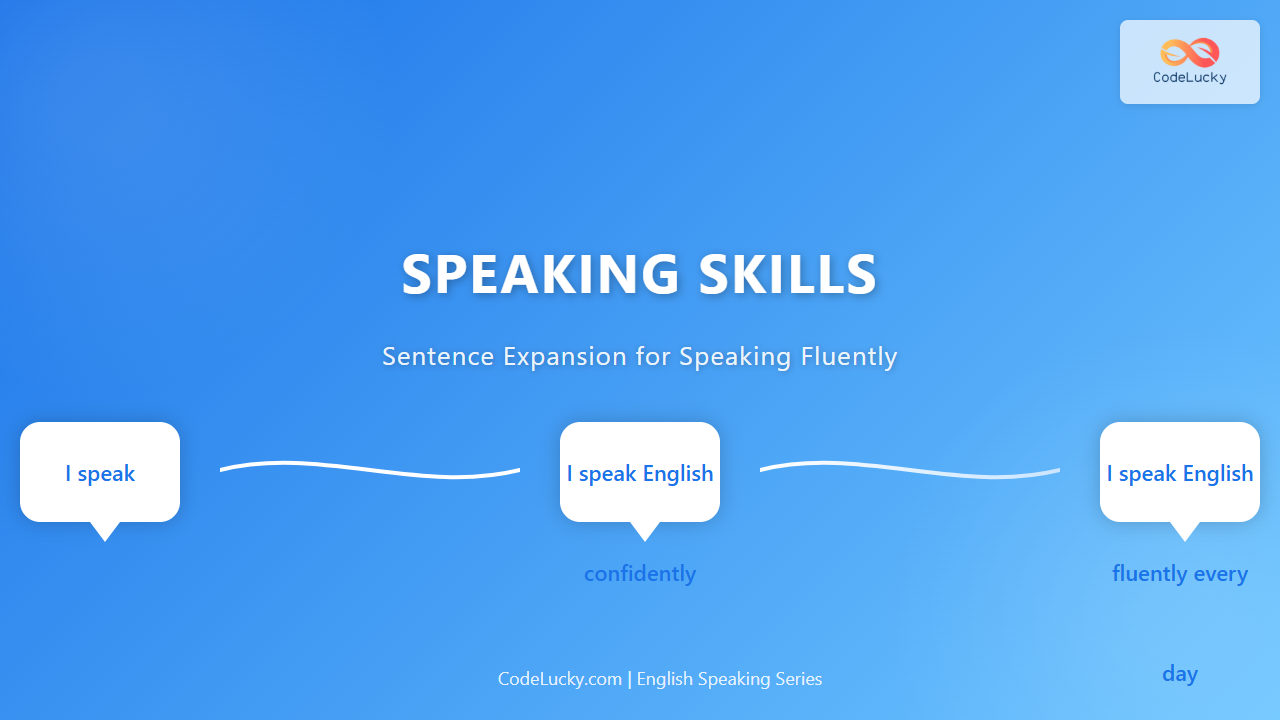
Every English sentence has three main parts: Subject, Verb, and Object. Start with a complete idea and then add detail.

For example:
- Basic: I study English.
- Expanded: I study English every morning before work to improve my speaking skills.
Techniques for Sentence Expansion
1. Add Details with WH Questions
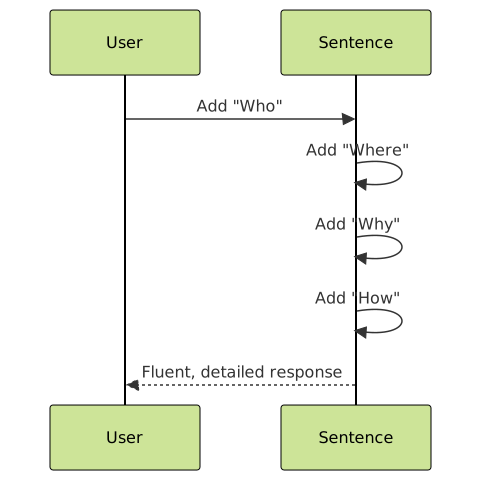
Expand any simple sentence by answering WH-questions—Who, What, When, Where, Why, and How.
Example:
| Question | Expansion |
|---|---|
| Who? | I study English with my friend. |
| When? | I study English every morning. |
| Where? | I study English at the library. |
| Why? | I study English to get a better job. |
| How? | I study English by listening to podcasts. |
Combine them naturally:
“I study English with my friend at the library every morning to get a better job by listening to podcasts.”
2. Use Linking Words
Conjunctions connect ideas for smoother speech. Use words like and, because, but, although, since, and so.
Example:
- Original: I like coffee. I drink it every morning.
- Expanded: I like coffee because it helps me stay awake every morning.
3. Add Descriptive Details
Include adjectives, adverbs, or phrases that describe your subject or activity in detail.
Example: “I live in a city.” → “I live in a beautiful, lively city near the hills.”
4. Use Relative Clauses
Relative clauses link additional information about a noun using words like who, which, that.
Example: “The teacher who helped me improve my grammar is very kind.”

5. Include Examples or Reasons
This makes your speech sound more persuasive and complete.
Example: “I read books.” → “I read books to learn new ideas, for example, about personal development and travel.”
Interactive Practice: Sentence Expansion Challenge
Try expanding the short sentences below. Use details, conjunctions, or clauses to make them longer and more fluent:
- I eat breakfast.
- She goes to school.
- They play football.
- He reads books.
Interactive Tip: Record your answers and play them back. Notice your tone, pauses, and confidence level improving as you expand your sentences.

Common Mistakes to Avoid
- Don’t overcomplicate sentences with too many ideas at once.
- Avoid memorizing long phrases. Focus on building naturally connected ideas.
- Always check if your sentence still makes sense after adding details.
Practice Routine for Fluency
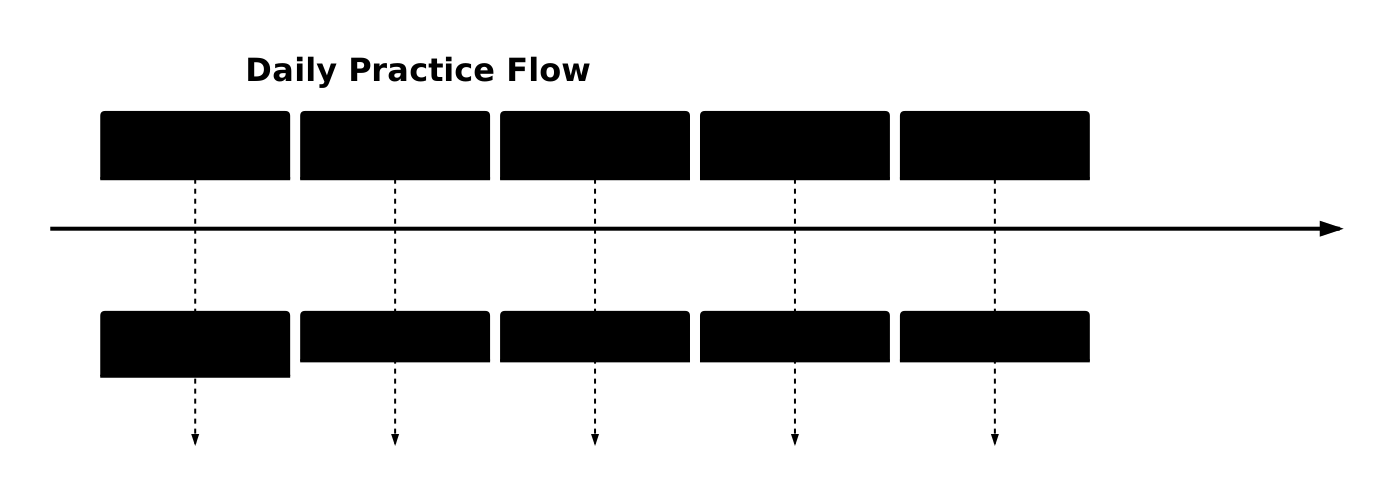
Follow this 5-step daily routine to improve your speaking skills through sentence expansion:
- Pick a short English sentence.
- Add one detail using WH-questions.
- Link with a conjunction to another idea.
- Describe it with adjectives/adverbs.
- Speak it aloud and record your voice.
Summary: From Simple to Fluent
Sentence expansion transforms hesitant speech into fluent English. By gradually adding details, linking ideas, and practicing consistently, you’ll express yourself naturally and confidently in conversations, interviews, or presentations.
Key takeaway: Start small—expand one sentence a day, and soon you’ll think and speak fluently without pausing to translate your thoughts.