Effective speaking skills are the foundation of confident communication. Whether you’re describing a person, a breathtaking place, or an everyday object, your words can paint vivid pictures in your listener’s mind. This article from CodeLucky.com dives deep into how you can use descriptive language to make your speech more expressive, accurate, and engaging.
1. Why Descriptive Speaking Matters
Describing things well helps you connect better with listeners. It adds clarity, emotion, and imagination to your conversation. Instead of saying “It was nice,” you can say “The beach glowed gold as the sun set beyond the waves.” Notice how the second one creates an image.
2. The Basic Formula for Descriptions
Before speaking, think about three key questions:
- Who or what are you describing?
- What details make it unique?
- How do you feel about it?
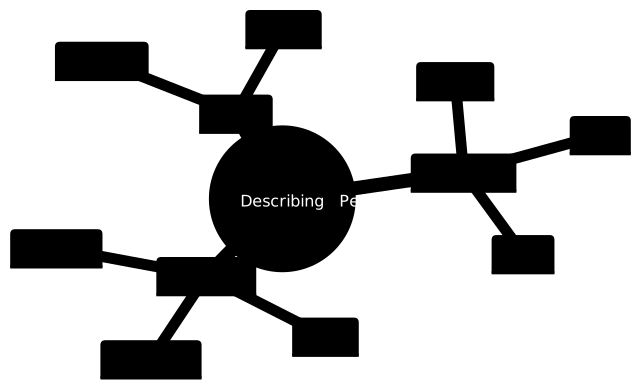
The following diagram shows a simple model you can follow:

3. Describing People
When describing people, focus on physical appearance, personality traits, and behavior. The goal is not just to list features but to express how those features define the person.
Example:
Simple: She is tall and kind.
Improved: She is tall with an easy smile that makes everyone feel comfortable instantly.
Useful Adjectives by Category:
| Physical | Personality | Behavior |
|---|---|---|
| Tall, Elegant, Sturdy | Friendly, Confident, Curious | Polite, Energetic, Thoughtful |
4. Describing Places
When describing a place, guide your listener as if you’re taking them on a tour. Use spatial order (left to right, near to far) and sensory language — sight, sound, smell, and touch.
Example:
Simple: The cafe is cozy.
Improved: The small cafe smells of fresh coffee and warm bread, with soft jazz playing in the background and people chatting quietly by the window.
Framework for Place Description:
5. Describing Things
Objects can be described using their appearance, function, material, and sometimes the emotion they evoke. For instance, rather than saying “a chair,” say “a wooden chair with smooth arms, worn slightly by years of use.”
Checklist for Describing Objects:
- What is it used for?
- What does it look or feel like?
- Does it have a story or emotional value?

6. Interactive Practice: Try It Yourself
Use this quick speaking template to practice:
Step 1: Choose someone or something you know.
Step 2: Answer —
   - What do they/it look like?
   - What makes them/it special?
   - How do you feel about them/it?
Step 3: Combine your answers into a short paragraph.
Example Practice:
“I have a small wooden desk by my window. It’s scratched but reliable, and I’ve written all my best ideas on it.”
7. Tips for Natural Speaking
- Use comparisons (like, as, similar to).
- Add transition words (besides, meanwhile, in contrast) for flow.
- Practice in front of a mirror or voice recorder.
- Listen to fluent speakers and note how they build their sentences.

8. Common Mistakes to Avoid
- Giving only lists without connection.
- Using too many adjectives that confuse the listener.
- Speaking in robotic tone without emotion.
9. Building Long-Term Descriptive Skill
Improving description takes consistent practice. Read short stories, listen to podcasts, and try to retell what you experience using detailed language. Notice objects around you and describe them aloud—it trains your brain to think visually and express smoothly.
10. Final Thoughts
Mastering the art of describing people, places, and things is not just about vocabulary—it’s about observation and connection. Speak what you see, feel, and imagine. The more you practice, the more naturally vivid your language will become.
Written by CodeLucky.com’s English Learning Team — helping you communicate with clarity and creativity.