Learning to speak about past and future events in English is a key step toward fluent and confident communication. Whether you’re narrating a story, describing what you did yesterday, or sharing your weekend plans, your ability to express time clearly makes conversations natural and engaging.
This guide from CodeLucky.com will walk you through how to talk about the past and the future with proper grammar, structured examples, and practice interaction ideas. You’ll also find visual diagrams to make understanding time relationships easier.
Understanding Time in English Speaking
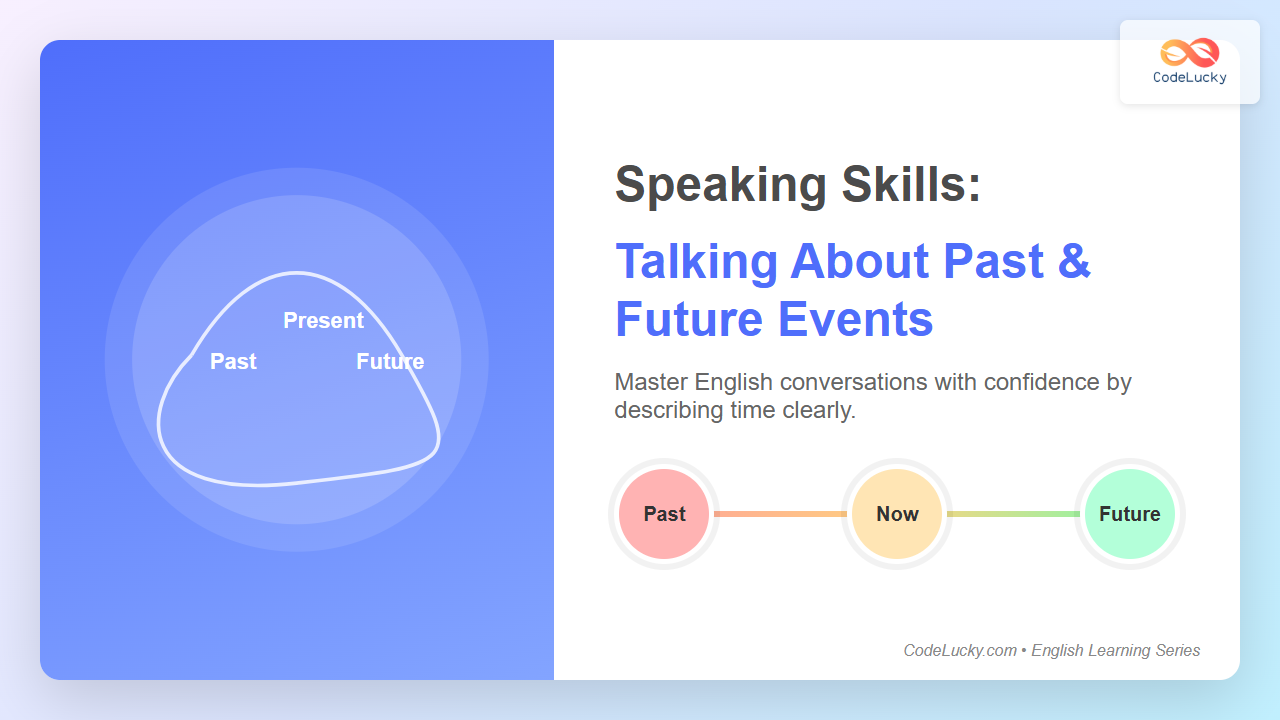
When speaking English, we use verb tenses to show whether something happened before, is happening now, or will happen later. This is called tense consistency — keeping our time reference clear and logical.

The diagram shows how English time expressions move smoothly from past → present → future. Now let’s explore each one in detail.
Talking About Past Events
When describing something that has already happened, we usually use these tenses:
- Simple past – for completed actions.
Example: I watched a movie last night. - Past continuous – for actions happening over a period in the past.
Example: I was studying when the phone rang. - Past perfect – for an action completed before another in the past.
Example: I had finished dinner before you arrived.
These structures help you narrate stories, experiences, and life events.
Structure of Past Sentences
Example sentence pattern:I + visited + the museum + last Sunday.
Interactive Practice: Tell Your Story
Try this exercise:
- Think of something fun you did last weekend.
- Write three sentences using simple past.
- Share aloud or record yourself telling the story naturally.
This builds rhythm and improves memory recall while speaking.
Talking About Future Events
Now, let’s focus on how to talk about upcoming actions or plans. English gives many ways to express the future depending on certainty and intention.
- Will + verb – for predictions or spontaneous decisions.
Example: I will call you tonight. - Be going to + verb – for intentions or plans.
Example: I’m going to start a new course. - Present continuous – for scheduled future events.
Example: I’m meeting my friend tomorrow.
Structure of Future Sentences

Interactive Speaking Task: Future Vision
Try it yourself:
- Write down one goal you plan to achieve next month.
- Say it aloud using “will” and again using “going to.”
- Notice the slight difference in intention — “going to” shows planning, “will” shows commitment or prediction.
Combining Past and Future in Conversation
In real conversations, we often move naturally from what happened to what will happen. This connection helps form smooth storytelling and logical discussions.
Example conversation:
👩 A: What did you do yesterday?
👨 B: I met a client and discussed our new project.
👩 A: Sounds exciting! When will you start it?
👨 B: We're going to launch it next month.
Notice how past tense turns into future tense smoothly. It’s a natural progression that keeps your listener engaged.

Common Mistakes to Avoid
- Mixing past and present tense in one idea incorrectly: ❌ I go there yesterday.
- Forgetting time words: use yesterday, last night, tomorrow, next week for clarity.
- Using “will” incorrectly for planned actions — prefer “going to.”
Quick Grammar Reference Table
| Tense | Usage | Example |
|---|---|---|
| Simple Past | Completed action | I watched a show. |
| Past Continuous | Action in progress in past | I was cooking dinner. |
| Past Perfect | Action before another past event | I had left before it rained. |
| Simple Future (will) | Prediction / spontaneous plan | I will text you later. |
| Going to Future | Planned action | I’m going to clean the room. |
| Present Continuous for future | Scheduled event | I’m traveling next week. |
Time Expressions You Should Know
- Past: yesterday, last week, two days ago
- Present: now, today, currently
- Future: tomorrow, next week, soon

Practice Template for Learners
Here’s a quick template to practice daily:
- Write 3 sentences about what you did yesterday.
- Write 3 sentences about what you will do tomorrow.
- Read them aloud clearly twice a day.
Repetition and daily articulation help you form fluent speaking habits. This builds both vocabulary confidence and tense accuracy.
Conclusion: Speak Naturally with Time in Mind
Speaking about past and future events shows you understand the flow of time in English conversations. By mastering these tenses, linking ideas, and using timeline words, you’ll deliver stories and plans with confidence and clarity.
Keep practicing the patterns shared above, try interactive exercises, and gradually expand your examples. With consistent speaking practice, your fluency will improve rapidly.
Written by CodeLucky.com – Helping learners speak English with skill and clarity every day.