Speaking about daily routines is one of the most common and useful topics in English learning. Whether you are introducing yourself, practicing small talk, or attending a job interview, being able to describe your daily life clearly shows confidence and fluency.
This guide from CodeLucky.com will teach you how to talk about your day naturally — from waking up to going to bed — using correct vocabulary, sentence structures, and interactive examples.
1. Why Talking About Daily Routines Matters
Daily routines help organize conversation around familiar concepts — time, activities, and feelings. It’s also a perfect way to master verb tenses, especially the simple present tense and adverbs of frequency.
- Simple Present Tense: Used for actions we do every day. Example: “I brush my teeth every morning.”
- Adverbs of Frequency: Words like always, usually, sometimes, never — they show how often something happens. Example: “I usually drink coffee at 8 a.m.”
2. Common Vocabulary for Daily Routines
To describe your day, learn these key activity phrases:
- Wake up, get up, brush my teeth, take a shower
- Have breakfast, go to work/school, check emails
- Take a break, eat lunch, go shopping
- Go home, have dinner, watch TV, go to bed
Example: “I wake up at 6:30 a.m., take a shower, and then have breakfast with my family.”
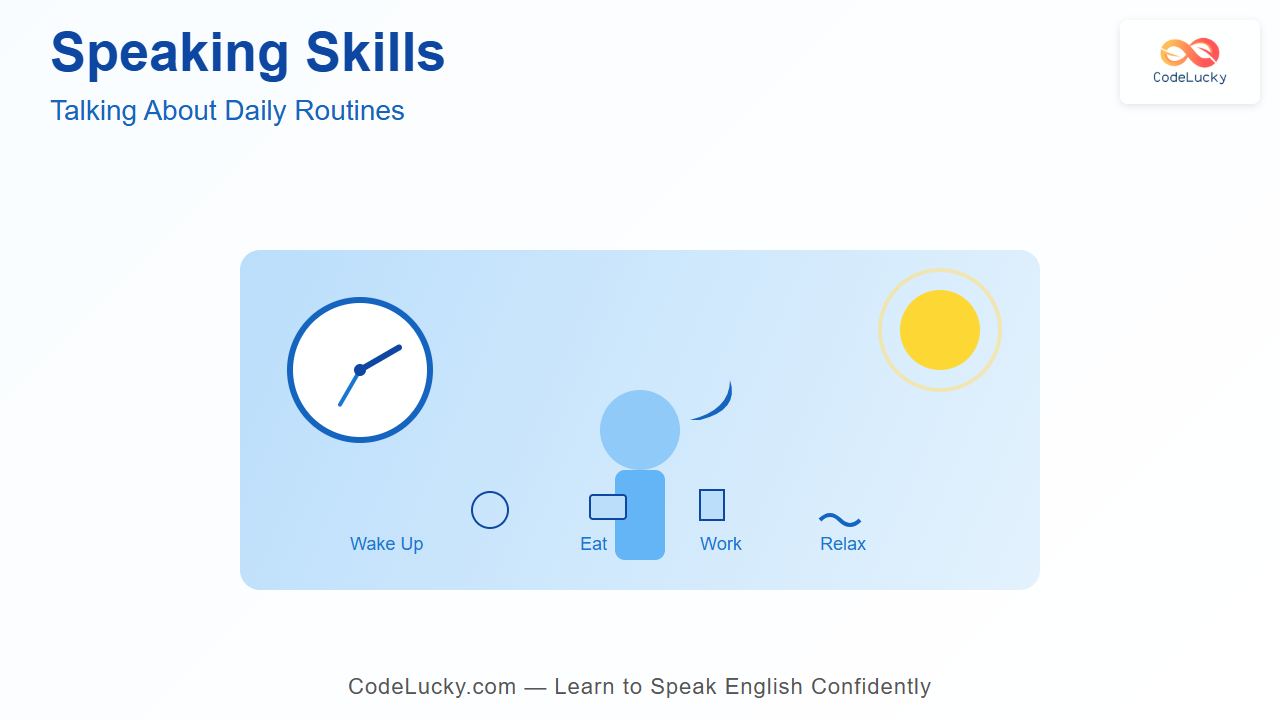
3. Timeline of a Sample Daily Routine
This diagram visually represents a typical daily routine with time flow for better understanding.

4. How to Structure Sentences Naturally
Follow this structure to speak naturally about your routines:
- Subject + Verb + Object + Time
Example: “I read the newspaper in the morning.” - Use sequence connectors like first, then, after that, finally.
Example: “First I wake up, then I exercise, after that I take a shower, and finally I have breakfast.”

5. Daily Routine Vocabulary with Frequency Adverbs
| Frequency Adverb | Meaning | Example Sentence |
|---|---|---|
| Always | 100% of the time | I always drink green tea after breakfast. |
| Usually | About 80% of the time | I usually go to bed at 11 p.m. |
| Sometimes | About 50% of the time | I sometimes take a walk after dinner. |
| Rarely | Less than 10% of the time | I rarely eat junk food. |
| Never | 0% of the time | I never miss my morning exercise. |
6. Interactive Speaking Practice
Try this simple interactive exercise. Read and practice speaking aloud:
Task: Fill in the blanks with your own routine.
1. I wake up at _______.
2. I usually _______ after breakfast.
3. In the evening, I _______ before dinner.
4. I go to bed at _______ every night.
Record yourself and listen. Notice your pronunciation and rhythm — this reflective practice improves fluency quickly.
7. Variations for Different Contexts
The way you talk about daily routines changes slightly depending on context:
- Formal Situation: “I usually begin my workday by checking project emails.”
- Casual Situation: “I grab a quick coffee and scroll social media.”
- Interview Context: “I start early to ensure I’m organized for the day’s tasks.”
8. Advanced Expression Tips
Once comfortable with simple sentences, try adding linking words and emotions to make your speech sound natural and engaging.
- Use connecting expressions: “After finishing my work, I relax by listening to music.”
- Add feelings: “I enjoy walking in the park after a busy day.”
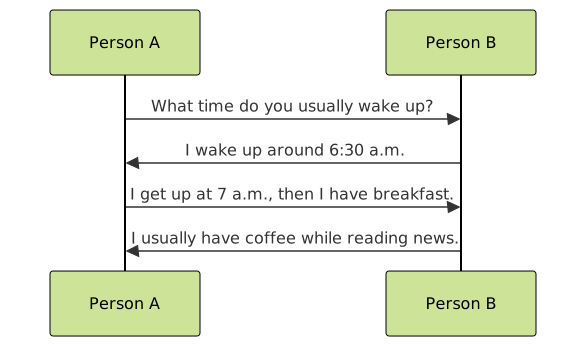
9. Dialogue Example: Talking About Routines
Example Conversation:
A: What time do you usually wake up?
B: I wake up around 6:30 a.m. How about you?
A: I get up at 7 a.m., then I have breakfast with my family.
B: That sounds nice! I usually have coffee while reading the news.
10. Daily Routine Comparison for Practice
Compare your weekday and weekend routines to expand vocabulary and flexibility.

11. Practical Tips to Improve Speaking Skills
- Use voice recording apps to track progress and identify repeated mistakes.
- Mirror practice: Speak in front of a mirror for better pronunciation and expression control.
- Shadow native speakers: Listen and imitate natural rhythm and sentence stress.
- Daily journal routine: Say your daily plan aloud every morning to build confidence.
12. Real-Life Application
Use your daily routine conversation skills in small talk, interviews, or social introductions. It’s also a reliable way to create first connections in English-speaking environments.
Example: “I usually start my mornings with meditation. It helps me focus better during work.”
Conclusion
Learning to talk about your daily routine is an essential foundation for fluent English speaking. With practice, clear structure, and confidence, this topic becomes a versatile conversation starter in work, study, or travel situations.
Keep practicing daily, update your vocabulary, and try new ways to describe your life in English. As CodeLucky.com always says — fluency grows from practice, not perfection.