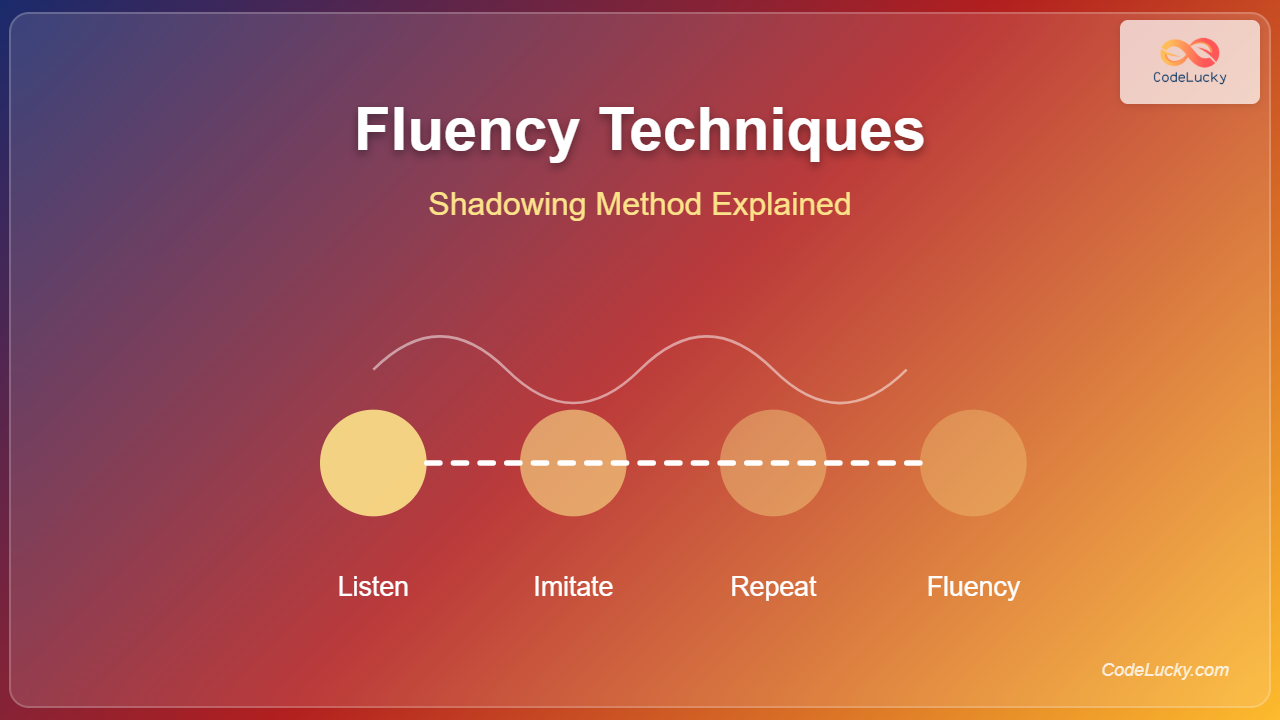
Fluency Techniques: Shadowing Method Explained
The Shadowing Method is one of the most effective techniques used by language learners to achieve natural fluency and confidence in speaking English. It combines listening, repetition, and imitation in real time — making your brain and mouth work together to produce accurate, rhythmical speech.
What Is the Shadowing Method?
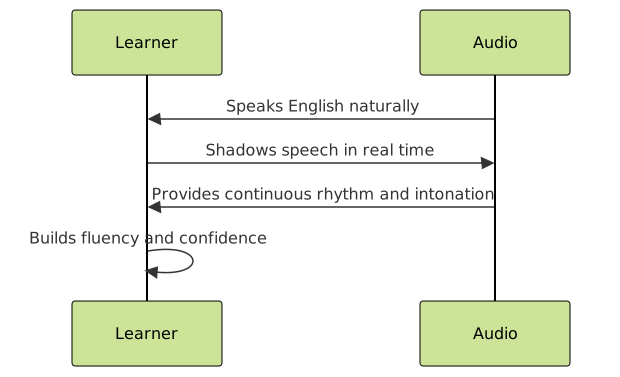
The Shadowing Method involves listening to a piece of spoken English (like audio, podcast, or video) and speaking at the exact same time as the speaker — imitating their pronunciation, intonation, and natural flow.
Instead of repeating after the audio, you speak along with it, just a fraction of a second behind. This trains your ear, mouth, and mind to process English more natively.

Why the Shadowing Method Works
This technique helps overcome hesitation, accent fear, and slow translation habits by rewiring your brain to think and speak in English directly. It targets three parts of language processing:
- Listening comprehension: You train your ears to catch native pronunciation and rhythm.
- Speech production: You develop muscle memory for accurate sounds and phrases.
- Fluency flow: You learn to keep speaking without stopping for translation.
How to Practice Step-by-Step
Follow these steps to effectively use the shadowing method:
- Select short, clear audio. Begin with YouTube short speeches, interviews, or language-learning podcasts of 1–2 minutes.
- Listen once without speaking. Focus on meaning and context. Understand what’s being said.
- Shadow the audio. Play it again and try to speak along with the speaker exactly as they talk.
- Repeat several times. Each repetition helps improve rhythm, pronunciation, and confidence.
- Record yourself. Compare your version with the speaker. Note where pronunciation or pace differs.
Example: Practicing Shadowing in English
Suppose you pick an English dialogue from a daily conversation:
Audio: “Good morning! How are you today?”
You (Shadowing): “Good morning! How are you today?”
As you shadow the audio, focus on matching the speaker’s tone, pace, and intonation. After several sessions, increase difficulty by choosing faster or more complex clips — like short TED Talks or news anchors.
Visual Overview of Mind and Mouth Coordination

Interactive Exercise (Try It Yourself)
Here’s a simple interactive exercise idea:
1. Pick a YouTube video of 1 minute in length.
2. Play it at 0.8x speed using playback controls.
3. Start shadowing audibly.
4. Gradually increase speed to normal.
5. Repeat daily for 10 minutes.
Track your progress by marking how much of the video you can shadow perfectly without missing words.
Tips for Effective Shadowing Practice
- Use subtitles only in the beginning, then remove them.
- Focus on rhythm more than individual words.
- Practice with varied accents (American, British, Indian, etc.).
- Make shadowing sessions short but regular.
- Pair with reading and vocabulary expansion for faster results.

Common Mistakes to Avoid
- Speaking too early: Always understand the audio first.
- Choosing audio that’s too hard: Start simple and move up gradually.
- Focusing only on speed: Prioritize clarity and natural sound.
- Skipping repetition: Repetition turns new speech patterns into habits.
Conclusion
The Shadowing Method is more than just mimicking — it’s a brain-training exercise that bridges the gap between listening and speaking. With consistent practice, it turns hesitant learners into fluent communicators. Whether you’re preparing for IELTS, improving your accent, or simply aiming to sound natural, shadowing daily for 15 minutes can transform your spoken English dramatically.
Start small, shadow regularly, and let English rhythm become second nature to you. 🌟