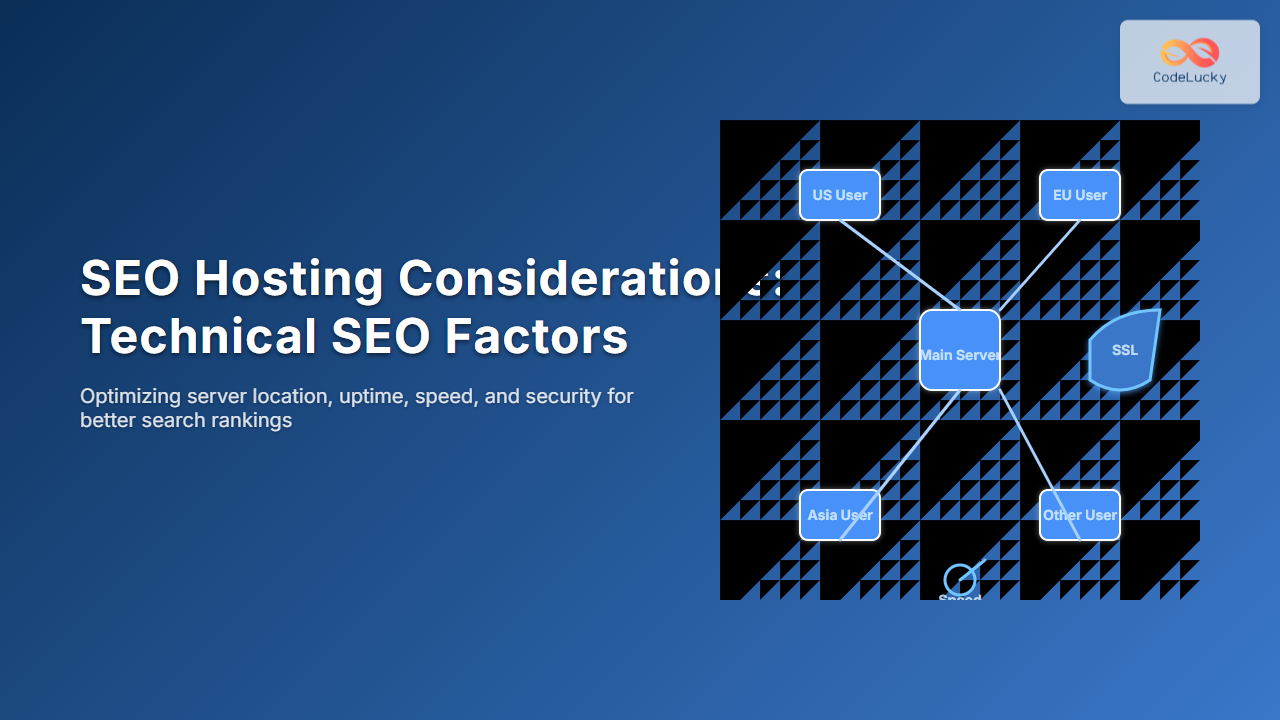
Selecting the right hosting environment is a fundamental yet often underestimated pillar of a successful SEO strategy. The technical SEO factors involved in hosting directly impact a website’s crawlability, speed, security, and overall user experience – all crucial for ranking higher in search engines. This detailed guide on SEO Hosting Considerations explores essential technical factors and best practices to optimize your hosting setup for SEO success.
Why Hosting Matters for SEO
While content quality and backlinks are core SEO drivers, hosting influences how search engines access and understand your site. Slow or unreliable hosting can lead to:
- Reduced crawl budget utilization
- Higher bounce rates from users
- Lower page speed scores, negatively impacting rankings
- Potential security risks from unpatched servers
Investing in a technically sound hosting environment lays the groundwork for efficient SEO performance.
Key Technical SEO Hosting Factors
1. Server Location and Its Impact on Site Speed & Geo Targeting
Server proximity to your target audience reduces latency and page load times, enhancing user experience and SEO. For example, if your main audience is in Germany, hosting your website on a Frankfurt-based server helps deliver content faster.

2. Uptime and Reliability
Search engines prefer websites with consistent uptime. Hosting providers typically advertise their uptime guarantees (e.g., 99.9%). Downtime not only frustrates visitors but also risks losing search engine ranking due to inaccessible pages during crawl attempts.
- Best practice: Select a hosting service with at least 99.9% uptime.
- Monitor uptime with tools like Uptime Robot or Pingdom.
3. Page Load Speed Optimization
Speed is a confirmed ranking factor. Hosting choices affect speed through server hardware, bandwidth, and caching support. Key components include:
- Fast server response times (TTFB).
- Use of HTTP/2 protocol for faster resource loading.
- Support for CDN (Content Delivery Network) integration.
- Server-side caching to reduce dynamic request times.
Example of server response impact:
Client Request --> Server (processing time) --> Response Delivered
Faster server = reduced processing time = faster page loading
4. SSL Certificates and HTTPS
Security is a lightweight ranking factor. HTTPS is essential for SEO and user trust. Hosting providers often offer free SSL certificates via Let’s Encrypt or through paid certificates.
Technical impact: Secure connections protect data integrity and improve visitor confidence, reducing bounce rate.

5. Server Configuration and Crawlability
Proper server settings help search engine bots crawl your site effectively:
- Robots.txt file accessible and correctly configured.
- Use of canonical URLs to avoid duplicate content issues.
- Redirects (301) properly set up at server level to maintain link equity.
- Support for gzip compression to speed transfer of resources.
Examples of Hosting Impact on SEO Metrics
Example 1: Page Speed Difference Based on Hosting Quality
| Hosting Type | Average Time to First Byte (TTFB) | Overall Page Load | SEO Impact |
|---|---|---|---|
| Shared Hosting (Budget) | 800ms | 5s+ | Possible ranking drop due to slow load |
| Managed WordPress Hosting | 150ms | 2s | Positive ranking influence |
| Cloud Hosting with CDN | 100ms | 1.5s or less | Strong SEO advantage |
Example 2: Crawl Budget Utilization with Server Downtime
If a crawler visits your site during frequent downtimes, it wastes crawl budget on unavailable pages instead of indexing fresh content. Over time, this reduces indexing frequency and visibility in SERPs.
Interactive Consideration: Hosting Choice Decision Flow

Best Practices for SEO-Friendly Hosting Setup
- Regularly monitor site speed, uptime, and server response times.
- Implement SSL to enable HTTPS on all pages.
- Use CDN to serve global audiences efficiently.
- Configure server response headers for caching and compression.
- Ensure robots.txt and sitemap.xml are accessible and accurate.
Conclusion
Technical SEO factors in hosting directly influence how search engines index and rank a site. Detailed attention to server location, uptime, speed, security, and configuration will boost the website’s SEO health and user experience. Choosing the right hosting with these technical considerations is a foundational step toward higher search visibility and sustained organic growth.