Sentence Formation: Asking for Information Effectively is one of the most essential skills in spoken and written English. Whether in daily conversations, business emails, or classroom discussions, knowing how to ask for information clearly can transform how you communicate. This article will guide you through sentence patterns, question types, tone usage, and advanced techniques for effective inquiry.
Why Learning to Ask Questions Matters
Asking questions helps gather information, clarify doubts, and build relationships. In English communication, the way you structure a question affects how polite, professional, or curious you sound. A well-formed sentence shows confidence and respect for the listener’s time.
Basic Structure of Questions
Every question in English generally follows this structure:
Question word + Auxiliary Verb + Subject + Main Verb + (Object/Complement)?
Example:
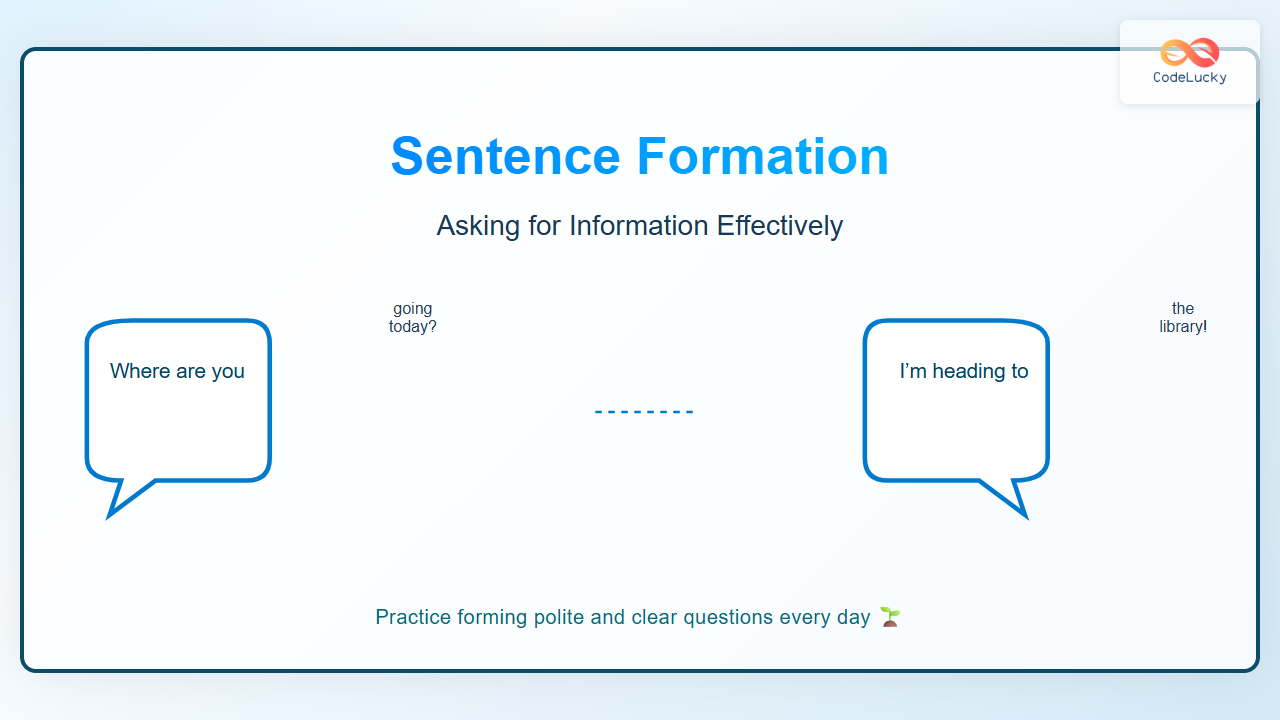
- Where are you going?
- What do you need?
- When did they leave?
Visual Question Structure Flow

This structure ensures your question is grammatically correct and easily understood.
Types of Questions for Asking Information
1. Wh-Questions
Used when you need detailed information. These questions start with words like who, what, when, where, why, and how.
- Who is your favorite author?
- Where did you learn English?
- How can I reach the nearest metro station?
2. Yes/No Questions
These questions can be answered with “yes” or “no.” Their structure begins with an auxiliary or modal verb.
- Are you ready for the meeting?
- Do you like coffee?
- Can I help you with that?
3. Indirect Questions for Politeness
Indirect questions sound more formal and polite. They often begin with phrases like Could you tell me… or Do you know…
Example:
- Direct: Where is the library?
- Indirect: Could you tell me where the library is?

Tone and Context in Asking Questions
Your tone can change the meaning of a question completely. When you ask questions politely, you maintain professionalism and friendliness. Here are some tone enhancers:
- Use modal verbs (could, would, might) for softer tone.
- Add courteous phrases such as please and may I.
- Avoid demanding structures like “Tell me…” in formal situations.
Interactive Tip:
Try this mental exercise — convert direct questions into polite ones:
| Direct Question | Polite Question |
|---|---|
| Where is my file? | Could you tell me where my file is, please? |
| What time does the movie start? | Do you happen to know what time the movie starts? |
| Is this your bag? | Would you mind telling me if this is your bag? |
Common Mistakes in Question Formation
Even fluent speakers occasionally make small errors. Here are frequent mistakes and how to correct them:
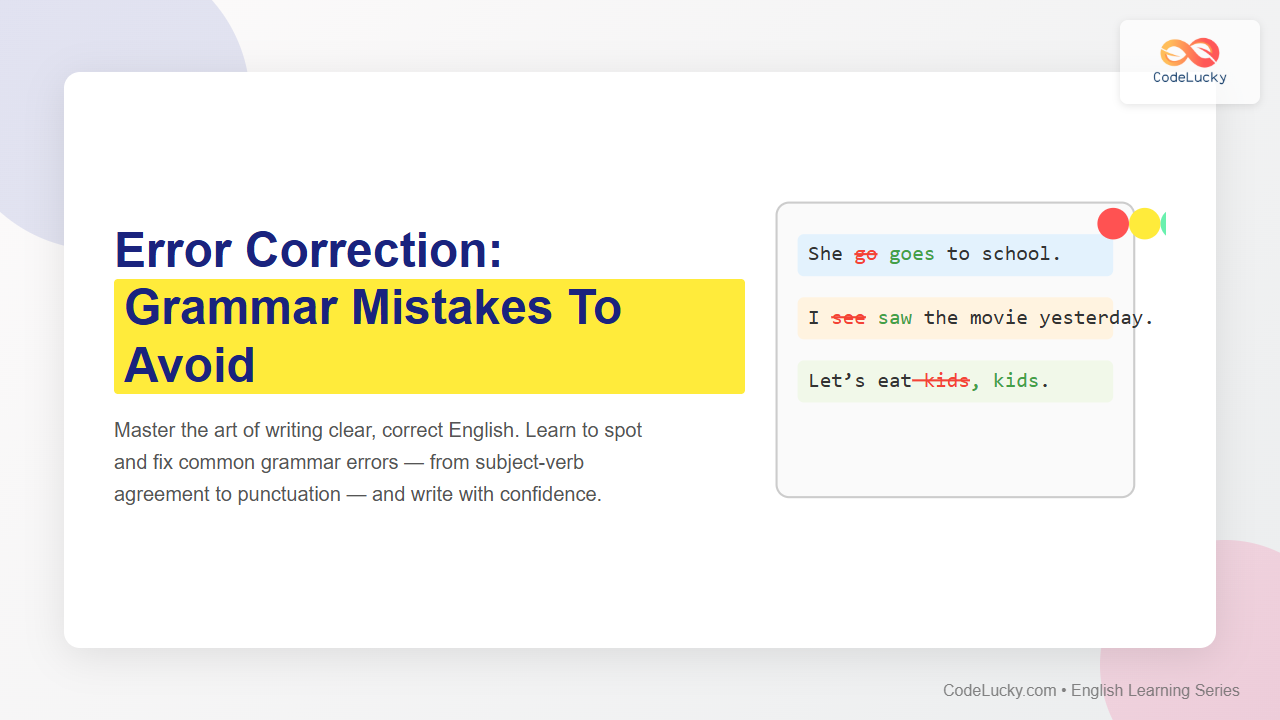
- Error: “Where you are going?” — Correct: “Where are you going?”
- Error: “He is who?” — Correct: “Who is he?”
- Error: Missing auxiliary verb — “You going?” → Correct: “Are you going?”

Using Tag Questions for Confirmation
Tag questions help confirm information or invite agreement. They’re useful in casual conversations.
- You’re coming to the party, aren’t you?
- She finished the work, didn’t she?

Practicing Sentence Formation
Consistent practice helps internalize patterns. Try these activities:
- Listen to interviews and identify how questions are formed.
- Convert statements into questions (e.g., “You like tea.” → “Do you like tea?”).
- Record yourself asking questions and assess tone and clarity.
Quick Reference: Question Formation Formula
| Type | Formula | Example |
|---|---|---|
| Wh-Question | Wh-word + Aux + Subject + Verb | Where do you live? |
| Yes/No Question | Aux + Subject + Verb | Do you play football? |
| Indirect Question | Intro phrase + Question clause | Could you tell me what time it is? |
| Tag Question | Statement + Tag | You’re free today, aren’t you? |
Conclusion
Mastering sentence formation for asking information effectively strengthens both spoken and written English. It shows professionalism, empathy, and cultural awareness. Start small — refine one question type each week and use it in real conversations. Over time, you’ll notice how your interactions become smoother and more engaging.
Practice regularly, listen actively, and apply these patterns naturally in your day-to-day conversations for lasting improvement.