Scrum events form the backbone of the Scrum framework, providing structured opportunities for inspection, adaptation, and collaboration throughout each sprint. These time-boxed ceremonies ensure teams maintain focus, transparency, and continuous improvement while delivering valuable software increments.
Understanding and effectively implementing these four core Scrum events—Sprint Planning, Daily Scrum, Sprint Review, and Sprint Retrospective—is crucial for any team looking to maximize their agile transformation success.
What Are Scrum Events?
Scrum events are formal meetings that create regularity and minimize the need for undefined meetings. Each event serves a specific purpose within the Scrum framework and has a maximum time limit to ensure efficiency. These events provide opportunities for the Scrum Team to inspect and adapt their work, processes, and collaboration patterns.
The four main Scrum events work together to create a continuous cycle of planning, execution, review, and improvement. They establish a rhythm for the team and stakeholders while maintaining transparency throughout the development process.
The Four Essential Scrum Events
1. Sprint Planning
Purpose: Sprint Planning initiates each sprint by establishing what work will be accomplished and how it will be achieved. This collaborative planning session sets the foundation for a successful sprint.
Duration: Maximum of 8 hours for a one-month sprint (proportionally shorter for shorter sprints)
Participants: Entire Scrum Team (Product Owner, Scrum Master, and Developers)
Sprint Planning Structure
Sprint Planning consists of two main topics that are addressed throughout the meeting:
Topic One: What can be done in this Sprint? The Product Owner presents the highest priority Product Backlog items and explains their business value. The Development Team forecasts which items they can complete during the sprint, considering their capacity and velocity from previous sprints.
Topic Two: How will the chosen work get done? The Development Team breaks down selected Product Backlog items into smaller, actionable tasks. They create a plan for delivering the product increment and achieving the Sprint Goal.
Key Outputs of Sprint Planning
- Sprint Goal: A concise statement describing the purpose and focus of the sprint
- Sprint Backlog: Selected Product Backlog items plus the plan for delivering them
- Definition of Done: Shared understanding of work completion criteria
Best Practices for Sprint Planning
Successful Sprint Planning requires preparation and active participation from all team members. The Product Owner should come prepared with a refined and prioritized Product Backlog, while the Development Team should have a clear understanding of their capacity and any technical constraints.
Encourage collaborative discussion and avoid having the Product Owner simply assign work. The Development Team should feel empowered to ask questions, suggest alternatives, and provide technical input on the feasibility of proposed work.
2. Daily Scrum
Purpose: The Daily Scrum synchronizes the Development Team’s activities, identifies impediments, and promotes quick decision-making to maintain sprint progress.
Duration: Maximum of 15 minutes
Participants: Development Team (Scrum Master and Product Owner may attend but don’t participate unless they’re doing development work)
Daily Scrum Format
While teams traditionally use the three-question format, the focus should be on progress toward the Sprint Goal rather than rigid adherence to specific questions:
- What did I accomplish yesterday that helped meet the Sprint Goal?
- What will I work on today to help meet the Sprint Goal?
- Do I see any impediments that prevent me or the team from meeting the Sprint Goal?
Making Daily Scrums Effective
The Daily Scrum should be a working session for the Development Team, not a status report to the Scrum Master. Team members should talk to each other, not just report their progress. Use this time to identify opportunities for collaboration and pair programming.
Keep the meeting focused and time-boxed. Detailed discussions about specific technical issues should happen after the Daily Scrum with only relevant team members. The Scrum Master should help facilitate but avoid turning the meeting into a management check-in.
3. Sprint Review
Purpose: The Sprint Review demonstrates completed work to stakeholders and gathers feedback to inform future product development decisions.
Duration: Maximum of 4 hours for a one-month sprint
Participants: Scrum Team and stakeholders invited by the Product Owner
Sprint Review Activities
The Sprint Review is an informal meeting focused on collaboration and feedback rather than formal presentation. The Product Owner explains which Product Backlog items were completed and which weren’t, while the Development Team demonstrates the working software and answers questions about the increment.
Stakeholders provide feedback on what they’ve seen, and the entire group collaborates on what to do next. The Product Owner discusses the current state of the Product Backlog and projects likely completion dates for upcoming features based on progress to date.
Maximizing Sprint Review Value
Prepare demonstrations that showcase real functionality rather than slides or mockups. Focus on how the increment addresses user needs and business objectives. Encourage honest feedback from stakeholders and document insights that could influence future sprint planning.
Use the Sprint Review as an opportunity to validate assumptions and gather market feedback. The information gathered should directly influence Product Backlog refinement and prioritization for upcoming sprints.
4. Sprint Retrospective
Purpose: The Sprint Retrospective provides an opportunity for the Scrum Team to inspect itself and create a plan for improvements to be implemented in the next sprint.
Duration: Maximum of 3 hours for a one-month sprint
Participants: Scrum Team (Product Owner, Scrum Master, and Development Team)
Sprint Retrospective Structure
The Sprint Retrospective follows a structured approach to identify what went well, what could be improved, and what actions the team will take moving forward. Common formats include:
Start, Stop, Continue: Identify what the team should start doing, stop doing, and continue doing based on the previous sprint experience.
What Went Well, What Didn’t Go Well, What Can We Improve: A simple three-column approach that encourages both positive reflection and improvement identification.
Glad, Sad, Mad: Focuses on emotional responses to help teams address interpersonal and process issues that might not surface in more analytical approaches.
Creating Actionable Improvements
The most important outcome of the Sprint Retrospective is identifying specific, actionable improvements that the team commits to implementing in the next sprint. Avoid vague statements and focus on concrete changes that can be measured and evaluated.
Prioritize improvements based on their potential impact and feasibility. Don’t try to fix everything at once—select one or two key improvements and focus on implementing them well rather than spreading efforts too thin.
The Interconnected Nature of Scrum Events
Scrum events work together as an integrated system rather than standalone meetings. The Sprint Review provides feedback that influences Sprint Planning for the next iteration. The Sprint Retrospective identifies process improvements that enhance all other events. Daily Scrums help teams stay aligned with Sprint Goals established during Sprint Planning.
Understanding these connections helps teams see the bigger picture and avoid treating events as bureaucratic overhead. Each event contributes to the team’s ability to deliver value and continuously improve their effectiveness.
Common Challenges and Solutions
Time Management Issues
Teams often struggle with keeping events within their time boxes. The Scrum Master plays a crucial role in facilitating effective meetings and helping teams focus on essential discussions. Preparation is key—ensure necessary information is available before meetings start.
Low Engagement and Participation
When team members don’t actively participate in Scrum events, the meetings lose their effectiveness. Create psychological safety where everyone feels comfortable sharing their thoughts and concerns. Rotate facilitation responsibilities to increase ownership and engagement.
Treating Events as Status Updates
Scrum events should be collaborative working sessions, not status reporting meetings. Focus on problem-solving, decision-making, and planning rather than simply communicating what happened. Encourage interaction between team members and stakeholders.
Adapting Scrum Events for Remote Teams
Remote and distributed teams face unique challenges in conducting effective Scrum events. Use collaborative tools that enable real-time participation and visual collaboration. Consider time zone differences when scheduling events and rotate meeting times when necessary to ensure fair participation.
Maintain the interactive nature of events through breakout rooms, shared digital whiteboards, and video conferencing tools that support engagement. Document outcomes clearly and make them easily accessible to all team members.
Measuring Scrum Event Effectiveness
Regularly assess whether your Scrum events are achieving their intended purposes. Look for indicators such as improved team collaboration, higher quality deliverables, better stakeholder satisfaction, and increased team morale.
Use retrospectives to specifically discuss the effectiveness of other Scrum events. Ask teams whether events are providing value and identify specific ways to improve them over time.
Advanced Tips for Scrum Event Mastery
Experienced teams can enhance their Scrum events through advanced techniques such as backlog refinement sessions between sprints, stakeholder mapping to improve Sprint Review attendance, and using data and metrics to make Sprint Planning more accurate.
Consider the team’s maturity level when adapting events. New teams may need more structure and guidance, while experienced teams can experiment with variations that better serve their specific context and needs.
Conclusion
Mastering Scrum events is essential for successful agile implementation. Sprint Planning sets clear direction, Daily Scrums maintain momentum, Sprint Reviews gather valuable feedback, and Sprint Retrospectives drive continuous improvement. When executed effectively, these events create a powerful framework for delivering value and building high-performing teams.
Remember that Scrum events are means to an end, not ends in themselves. Focus on achieving their underlying purposes rather than rigidly following prescribed formats. Adapt and evolve your approach based on what works best for your team while maintaining the core principles of transparency, inspection, and adaptation that make Scrum effective.
The investment in properly conducting Scrum events pays dividends through improved team performance, better product outcomes, and higher stakeholder satisfaction. Start implementing these practices today and watch your team’s agile transformation accelerate toward success.
Related Posts

Virtual Scrum Events: Complete Guide to Remote Agile Ceremonies
The shift to remote work has fundamentally transformed how Scrum teams conduct their ceremonies. Virtual Scrum events have become the...
Sprint Retrospective: Master Continuous Improvement with Proven Agile Techniques
Sprint retrospectives are the cornerstone of continuous improvement in Agile development, yet many teams struggle to extract meaningful insights from...
Daily Scrum Meeting: Complete Guide to Rules, Format, and Best Practices for Agile Teams
The Daily Scrum meeting stands as one of the most critical ceremonies in the Scrum framework, serving as the heartbeat...
Sprint Planning: Complete Guide and Best Practices for Agile Teams
Sprint planning forms the cornerstone of successful agile development, serving as the critical bridge between product vision and executable work....

Scrum of Scrums: Complete Guide to Coordinating Multiple Agile Teams
When organizations scale their Agile practices beyond a single team, coordinating multiple Scrum teams becomes a critical challenge. Scrum of...
Introduction to Scrum Framework: Complete Guide for Agile Project Management
The Scrum framework has revolutionized how teams approach project management and software development. As one of the most popular agile...
Scrum Master Role and Responsibilities: Complete Guide to Agile Leadership
The Scrum Master plays a pivotal role in Agile development teams, serving as both a facilitator and a servant leader...
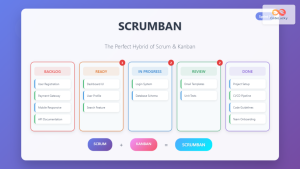
Scrumban: The Ultimate Hybrid Methodology for Agile Teams
What is Scrumban? Scrumban is a hybrid agile methodology that combines the structured framework of Scrum with the visual workflow...
Sprint Review: Demonstrating Value to Stakeholders – Complete Guide for Agile Teams
The Sprint Review stands as one of the most critical ceremonies in the Scrum framework, serving as the bridge between...
Kanban Cadences: Essential Meetings and Rhythms for Agile Success
Understanding Kanban Cadences: The Foundation of Agile Flow Kanban cadences represent the heartbeat of successful agile teams, providing structured rhythms...
Scrum Artifacts: Product Backlog, Sprint Backlog, Increment – Complete Guide
Scrum artifacts form the foundation of successful agile project management, providing transparency, inspection, and adaptation opportunities throughout the development process....
Program Increment (PI) Planning: Complete Guide to Large-Scale Agile Planning Success
What is Program Increment (PI) Planning? Program Increment (PI) Planning represents the heartbeat of large-scale Agile development, serving as a...