Scaling Agile adoption from a single team to an entire enterprise represents one of the most challenging yet rewarding transformations in modern software development. While implementing Agile practices within a small team is relatively straightforward, extending these principles across multiple teams, departments, and organizational levels requires careful planning, strategic thinking, and a deep understanding of both Agile methodologies and organizational dynamics.
This comprehensive guide explores the complete journey of Agile scaling, from foundational concepts to enterprise-wide implementation, providing you with actionable strategies, proven frameworks, and real-world insights to successfully transform your organization’s development culture.
Understanding the Scaling Challenge
The transition from team-level Agile to enterprise Agile scaling introduces complexities that don’t exist in smaller implementations. When a single team adopts Agile practices like daily standups, sprint planning, and retrospectives, the communication overhead remains manageable and decision-making processes stay relatively simple.
However, as organizations attempt to scale these practices across multiple teams, new challenges emerge. Coordination between teams becomes critical, dependencies between different work streams need careful management, and maintaining alignment with overall business objectives requires sophisticated planning mechanisms.
The primary scaling challenges include:
Inter-team Dependencies: Multiple teams often work on interconnected features or share common components, creating dependencies that must be carefully managed to avoid bottlenecks and delays.
Communication Overhead: As the number of teams increases, the communication complexity grows exponentially, requiring new structures and processes to maintain effective information flow.
Alignment and Coordination: Ensuring all teams work toward common goals while maintaining their autonomy and agility becomes increasingly difficult as the organization grows.
Cultural Resistance: Larger organizations often have established cultures and processes that resist change, making the transformation more challenging than in smaller, more flexible environments.
The Foundation: Team-Level Agile Mastery
Before attempting to scale Agile practices across an organization, it’s crucial to ensure that individual teams have mastered the fundamentals. A solid foundation at the team level serves as the building block for successful enterprise-wide adoption.
Successful team-level Agile implementation includes mastery of core Scrum practices such as sprint planning, daily standups, sprint reviews, and retrospectives. Teams should demonstrate consistent delivery of working software increments, effective use of user stories and acceptance criteria, and a collaborative culture that embraces continuous improvement.
Key indicators of team-level readiness for scaling include predictable velocity over multiple sprints, effective handling of changing requirements, strong collaboration between team members and stakeholders, and a culture of transparency and continuous learning.
Teams that haven’t achieved this level of maturity will struggle to participate effectively in scaled Agile implementations, potentially undermining the entire transformation effort.
Popular Scaling Frameworks
Several frameworks have emerged to address the challenges of scaling Agile practices. Each framework offers different approaches and is suited to different organizational contexts and challenges.
Scaled Agile Framework (SAFe)
The Scaled Agile Framework represents one of the most comprehensive approaches to enterprise Agile scaling. SAFe provides a structured methodology that combines Agile development practices with lean portfolio management and enterprise-level planning.
SAFe organizes work into multiple levels: Team, Program, Large Solution, and Portfolio. At the Team level, standard Scrum practices operate as usual. The Program level introduces the concept of Agile Release Trains (ARTs), which are long-lived teams of teams that work together to deliver value streams.
The Large Solution level addresses the needs of organizations building complex systems that require multiple ARTs working in coordination. Finally, the Portfolio level provides strategic alignment and investment funding for the entire organization’s development efforts.
SAFe’s strength lies in its comprehensive approach and detailed guidance for organizations that need structure and predictability. However, critics argue that it can be overly prescriptive and may reduce some of the agility that makes team-level Agile so effective.
Large-Scale Scrum (LeSS)
Large-Scale Scrum takes a minimalist approach to scaling, attempting to maintain the simplicity and principles of Scrum while extending it to multiple teams. LeSS operates on the principle that scaling should add as little as possible to standard Scrum practices.
In LeSS, multiple teams work on the same product backlog, with one Product Owner responsible for prioritization across all teams. The teams coordinate through shared Definition of Done, common sprint boundaries, and regular cross-team coordination meetings.
LeSS comes in two variants: LeSS for 2-8 teams and LeSS Huge for larger organizations. The framework emphasizes organizational simplicity, systems thinking, and lean principles while maintaining the empirical process control that makes Scrum effective.
The main advantage of LeSS is its simplicity and adherence to Agile principles. However, it may not provide enough structure for organizations that need more detailed guidance or have complex coordination requirements.
Nexus Framework
Developed by Scrum.org, Nexus provides a framework for scaling Scrum by adding minimal additional roles, events, and artifacts to coordinate multiple Scrum teams working on a single product.
Nexus introduces the concept of a Nexus Integration Team, which consists of the Product Owner, a Scrum Master, and Nexus Integration Team members. This team is responsible for coaching and guiding the individual Scrum teams to ensure proper integration of their work.
The framework adds Nexus-specific events such as Nexus Sprint Planning, Nexus Daily Scrum, Nexus Sprint Review, and Nexus Retrospective. These events complement the standard Scrum events and focus specifically on integration and coordination concerns.
Nexus works well for organizations that want to maintain close adherence to Scrum principles while adding just enough structure to coordinate multiple teams effectively.
Implementation Strategy and Roadmap
Successful Agile scaling requires a well-planned implementation strategy that considers the organization’s current state, desired future state, and the path between them. A phased approach typically works better than attempting to transform the entire organization simultaneously.
Assessment and Preparation Phase
The first phase involves conducting a comprehensive organizational assessment to understand the current state of Agile adoption, identify champions and potential resistance points, and evaluate the organization’s readiness for scaling.
This assessment should examine existing team-level Agile practices, organizational culture and change readiness, technical infrastructure and tooling capabilities, and leadership commitment and support for the transformation.
Based on this assessment, organizations can develop a transformation roadmap that identifies pilot programs, defines success metrics, establishes governance structures, and creates communication and training plans.
Pilot Implementation
Starting with a pilot implementation allows organizations to test their chosen scaling framework in a controlled environment, learn from early experiences, and refine their approach before broader rollout.
Successful pilots typically involve 2-5 teams working on related products or features, have strong leadership support and dedicated coaching resources, include representatives from different parts of the organization, and focus on delivering measurable business value quickly.
During the pilot phase, organizations should closely monitor key metrics such as team velocity and predictability, quality indicators and defect rates, employee satisfaction and engagement, and stakeholder satisfaction with delivered features.
Gradual Expansion
After proving success with the pilot implementation, organizations can begin expanding the scaled Agile practices to additional teams and business areas. This expansion should be carefully managed to ensure quality and sustainability.
Effective expansion strategies include identifying natural groupings of teams that work on related products, providing adequate coaching and training resources for new teams, maintaining consistent practices and standards across the expanding implementation, and continuously refining processes based on lessons learned.
Organizational Structure and Roles
Scaling Agile often requires adjustments to organizational structure and the introduction of new roles designed to facilitate coordination and alignment across multiple teams.
Release Train Engineer
In SAFe implementations, the Release Train Engineer serves as the chief Scrum Master for an Agile Release Train. This role focuses on facilitating ART events and processes, identifying and escalating impediments, and promoting continuous improvement across the entire release train.
The Release Train Engineer combines servant leadership with operational excellence, ensuring that the ART operates smoothly while maintaining focus on delivering value to customers.
Product Management Hierarchy
Scaled Agile implementations often require a hierarchy of product management roles to ensure proper prioritization and alignment across multiple teams and products.
At the team level, Product Owners continue to manage individual team backlogs and work directly with development teams. At higher levels, Product Managers may be responsible for coordinating across multiple teams or products, while Solution Management focuses on larger solution-level concerns.
Architecture and Technical Leadership
As organizations scale, the need for architectural guidance and technical coordination becomes more critical. System Architects and Solution Architects help ensure technical coherence across multiple teams and products.
These roles focus on defining architectural runway, facilitating technical decision-making across teams, and ensuring that individual team decisions support overall system goals.
Coordination and Communication Mechanisms
Effective scaled Agile implementations require sophisticated coordination and communication mechanisms that go beyond what individual teams need.
Program Increment Planning
Program Increment (PI) Planning represents one of the most important coordination mechanisms in scaled Agile implementations. During PI Planning, multiple teams come together to plan their work for the upcoming program increment, typically 8-12 weeks.
PI Planning includes business context presentations, team planning sessions, program board creation, and management review and problem-solving. The event concludes with teams committing to their planned objectives and identifying key dependencies and risks.
Scrum of Scrums
Scrum of Scrums provides a mechanism for multiple Scrum teams to coordinate their work on a regular basis. Representatives from each team meet to discuss progress, identify dependencies, and resolve impediments that affect multiple teams.
Effective Scrum of Scrums meetings focus on what each team has accomplished since the last meeting, what they plan to accomplish before the next meeting, and what impediments or dependencies they need help with.
Communities of Practice
Communities of Practice bring together practitioners with similar skills or interests from across the organization to share knowledge, establish standards, and drive improvement in their area of expertise.
These communities might focus on specific technologies, testing practices, user experience design, or other areas where cross-team collaboration and knowledge sharing can drive organizational improvement.
Managing Dependencies and Integration
One of the most significant challenges in scaled Agile implementations is managing dependencies between teams and ensuring that their work integrates effectively.
Dependency Mapping and Management
Effective dependency management starts with clear visibility into the relationships between different teams’ work. Dependency mapping exercises help identify these relationships and plan work to minimize bottlenecks.
Teams should regularly identify dependencies with other teams, communicate these dependencies clearly and early, plan work to minimize blocking dependencies, and establish escalation paths for resolving dependency conflicts.
Continuous Integration and Deployment
Technical practices become even more critical in scaled environments. Continuous integration ensures that multiple teams’ work can be combined effectively, while automated testing provides confidence in the integrated system.
Scaled Agile implementations should invest heavily in automated testing suites, continuous integration pipelines, deployment automation, and monitoring and observability tools.
Cultural Transformation
Scaling Agile requires more than just implementing new processes and frameworks; it requires a fundamental cultural transformation that embraces Agile values and principles at an organizational level.
Leadership Transformation
Leadership behavior has an enormous impact on the success of scaled Agile transformations. Leaders must shift from command-and-control management styles to servant leadership approaches that empower teams and remove impediments.
This transformation includes embracing transparency and empirical decision-making, focusing on outcomes rather than outputs, supporting experimentation and learning from failure, and investing in people development and capability building.
Employee Empowerment
Scaled Agile implementations succeed when employees at all levels feel empowered to make decisions, solve problems, and contribute to continuous improvement efforts.
Organizations should create psychological safety for teams to experiment and fail, provide training and development opportunities, recognize and reward collaborative behavior, and ensure that organizational structures support rather than hinder team autonomy.
Measuring Success and Continuous Improvement
Successful scaled Agile implementations require robust measurement systems that provide insight into both the health of the implementation and its impact on business outcomes.
Leading and Lagging Indicators
Effective measurement systems include both leading indicators that predict future success and lagging indicators that measure actual outcomes.
Leading indicators might include team engagement scores, training completion rates, impediment resolution time, and process compliance metrics. Lagging indicators include customer satisfaction, time to market, defect rates, and business value delivered.
Continuous Improvement Processes
Scaled Agile implementations should include systematic continuous improvement processes that operate at multiple levels of the organization.
Team-level retrospectives continue to drive improvement within individual teams, while program-level inspect and adapt events focus on improvement opportunities that span multiple teams. Enterprise-level improvement initiatives address organizational and systemic issues.
Common Pitfalls and How to Avoid Them
Organizations scaling Agile practices often encounter predictable challenges that can undermine their transformation efforts.
Scaling Too Quickly
One of the most common mistakes is attempting to scale too quickly without ensuring that foundational practices are solid. Organizations should resist the temptation to transform everything at once and instead focus on sustainable, incremental progress.
Insufficient Investment in Coaching
Scaled Agile transformations require significant investment in coaching and training. Organizations that underestimate this need often struggle with inconsistent practices and poor adoption of new ways of working.
Ignoring Organizational Design
Conway’s Law states that organizations design systems that mirror their communication structures. Successful scaled Agile implementations often require changes to organizational design to support the new ways of working.
Future Trends and Evolution
The field of scaled Agile continues to evolve as organizations gain more experience and new challenges emerge.
Current trends include increasing focus on business agility beyond just software development, integration of DevOps and continuous delivery practices, emphasis on customer-centricity and design thinking, and adoption of lean startup principles for innovation and experimentation.
Organizations should stay informed about these trends and consider how they might enhance their own scaled Agile implementations.
Conclusion
Scaling Agile adoption from team to enterprise level represents a significant undertaking that requires careful planning, sustained commitment, and continuous adaptation. Success depends on building strong foundational practices at the team level, choosing appropriate scaling frameworks for your organizational context, investing in cultural transformation and leadership development, and maintaining focus on continuous improvement.
While the journey is challenging, organizations that successfully scale Agile practices typically see significant improvements in their ability to respond to market changes, deliver value to customers, and engage their employees in meaningful work. The key is to approach scaling as a long-term transformation rather than a quick fix, maintaining patience and persistence throughout the journey.
Remember that scaled Agile is not a destination but an ongoing evolution. As your organization grows and changes, your scaled Agile implementation should evolve as well, always staying true to the fundamental principles of agility while adapting to new challenges and opportunities.
Related Posts
Agile Transformation: Complete Guide to Organizational Change Management
Agile transformation represents one of the most significant organizational changes companies undertake today. This comprehensive shift from traditional project management...
Agile Failure Modes: Common Reasons Why Agile Transformations Fail and How to Avoid Them
Agile methodologies promise faster delivery, better quality, and improved team collaboration. Yet despite widespread adoption, many organizations struggle with failed...
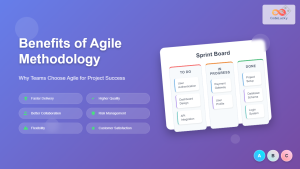
Benefits of Agile Methodology: Why Teams Choose Agile for Project Success
Agile methodology has revolutionized how teams approach project management and software development. Since its introduction through the Agile Manifesto in...
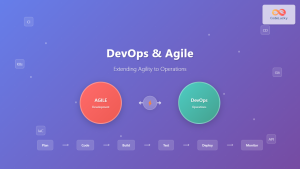
DevOps and Agile: Extending Agility to Operations – Complete Guide for Modern Software Delivery
The evolution of software development has witnessed remarkable transformations, from traditional waterfall methodologies to Agile practices, and now to the...
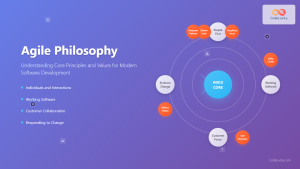
Agile Philosophy: Understanding Core Principles and Values for Modern Software Development
Introduction to Agile Philosophy Agile philosophy represents a fundamental shift in how software development teams approach project management, collaboration, and...
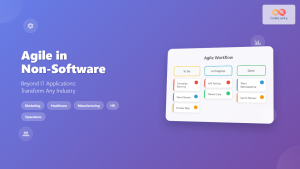
Agile in Non-Software: Complete Guide to Implementation Beyond IT Applications
Introduction to Agile Beyond Software Development While Agile methodologies originated in software development, their core principles of flexibility, collaboration, and...
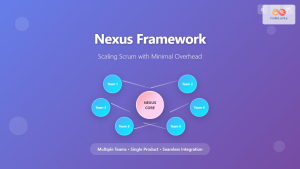
Nexus Framework: Master Scaling Scrum with Minimal Overhead for Large Teams
The Nexus Framework represents a revolutionary approach to scaling Scrum that maintains the core principles of agility while enabling multiple...
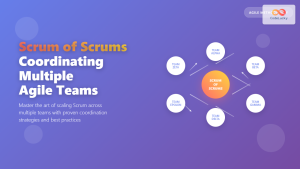
Scrum of Scrums: Complete Guide to Coordinating Multiple Agile Teams
When organizations scale their Agile practices beyond a single team, coordinating multiple Scrum teams becomes a critical challenge. Scrum of...
What is Agile Methodology: Complete Beginner’s Guide to Modern Software Development
Agile methodology has revolutionized how software development teams work, moving away from rigid traditional approaches to embrace flexibility, collaboration, and...
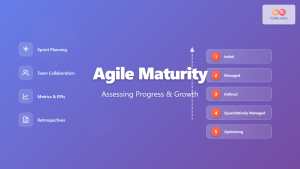
Agile Maturity: Complete Guide to Assessing Team Progress and Organizational Growth
Agile maturity represents the evolutionary journey of teams and organizations as they develop their agile capabilities, practices, and mindset. Understanding...
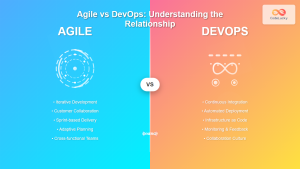
Agile vs DevOps: Understanding the Relationship Between Two Powerful Software Development Methodologies
In today's fast-paced software development landscape, organizations are constantly seeking methodologies that can accelerate delivery while maintaining quality. Two prominent...
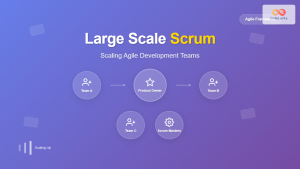
Large Scale Scrum (LeSS): Complete Guide to Scaling Agile Development Teams
Large Scale Scrum (LeSS) represents a revolutionary approach to scaling Scrum practices across multiple development teams without losing the core...