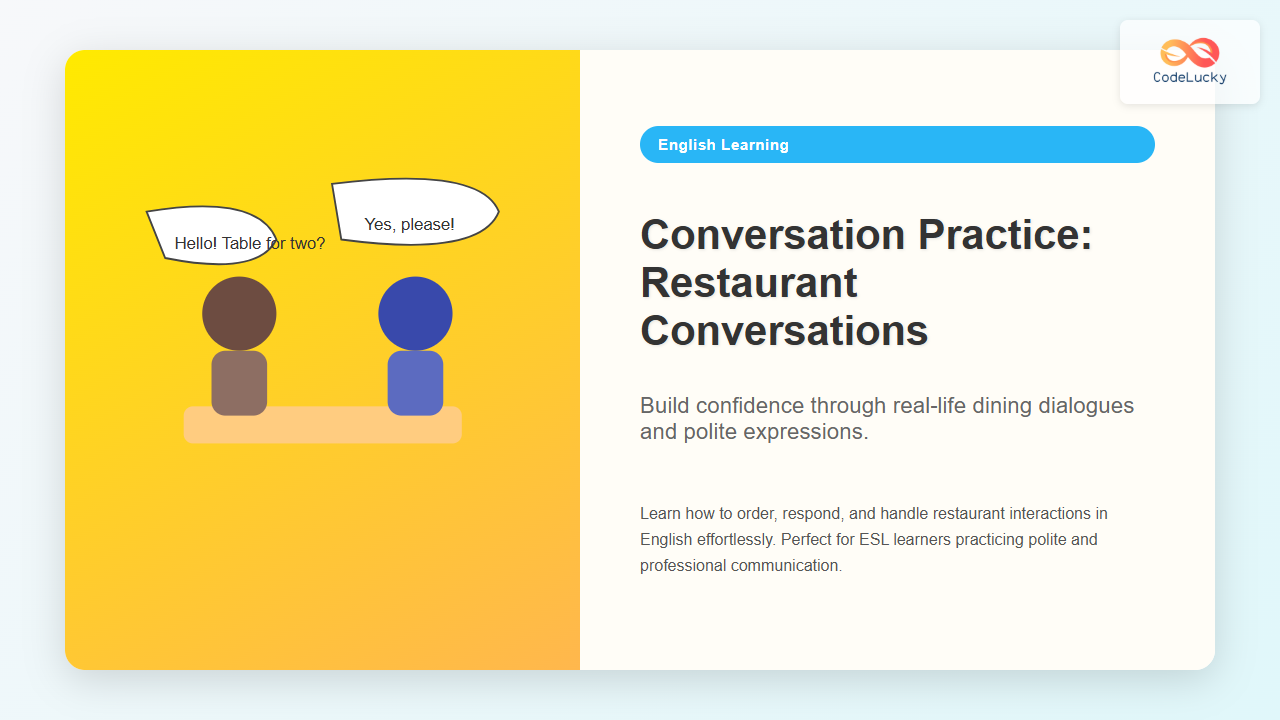
For many English learners, ordering food or handling a restaurant scenario in English can feel intimidating. This article, part of CodeLucky.com’s English Learning Series, will help you confidently navigate restaurant conversations—from making reservations to paying the bill. With structured examples, vocabulary lists, and interactive practice models, you’ll be ready to dine and communicate like a native speaker.
Why Practice Restaurant Conversations?
Restaurant conversations are among the most common real-life English interactions. They combine polite expressions, functional vocabulary, and real-time decision-making. By mastering them, learners build key communication skills like:
- Using courteous expressions (“Could I please have…”, “May I take your order?”)
- Understanding menu-related vocabulary
- Handling misunderstandings or corrections politely
- Engaging in small talk during service
These skills translate to broader communication fluency in professional and social settings.
Common Restaurant Vocabulary
| Category | Examples |
|---|---|
| Menu Items | Appetizer, Entrée, Dessert, Beverage |
| Useful Verbs | Order, Serve, Recommend, Try, Taste, Pay |
| Polite Expressions | Could I…, Would you like…, May I take…, Can we get the bill? |
| Utensils & Dining Items | Plate, Fork, Spoon, Napkin, Glass, Menu |
Typical Flow of a Restaurant Conversation
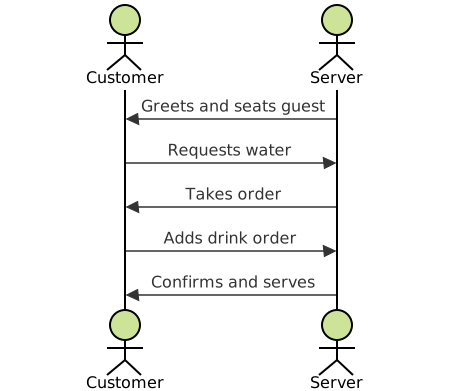
Most restaurant interactions follow a predictable structure. Understanding this flow helps build natural responses.

This sequence can serve as your mental model whenever you go to a restaurant in an English-speaking context.
Example 1: Simple Restaurant Dialogue
Situation: Two friends at a casual restaurant.
Server: Good evening! How many people are with you today?
Customer: Just two, please.
Server: Right this way. Would you like to see the menu?
Customer: Yes, please. Could we get some water first?
Server: Of course. Are you ready to order?
Customer: Yes. I’ll have the grilled sandwich, and my friend will have pasta.
Server: Great choice. Anything to drink?
Customer: A cola, please.
Server: Coming right up.
This dialogue demonstrates politeness, clarity, and sequencing — key elements in a smooth restaurant exchange.
Conversation Breakdown
Let’s analyze the key English expressions used:
- “How many people are with you today?” — A polite way to ask for table size.
- “Right this way.” — Friendly gesture for guiding guests.
- “Are you ready to order?” — Used by servers when checking timing.
- “I’ll have…” — Common way to order food.
Example 2: Correcting or Changing Orders
Situation: The customer receives the wrong dish.
Customer: Excuse me, I think there’s been a mistake. I ordered the veggie burger, not the chicken one.
Server: Oh, I’m so sorry about that! I’ll replace it right away.
Customer: Thank you for your help.
Server: Not a problem at all. I’ll bring the correct one shortly.
Notice the polite tone on both sides. Words like “Excuse me” and “I’m so sorry” maintain a respectful and friendly conversation.
Interactive Practice Activity
You can use this model as an interactive exercise. Cover the right-hand side and try completing the conversation aloud:
| Server | Customer (You) |
|---|---|
| Welcome! How many in your party? | __________ |
| Would you like something to drink? | __________ |
| Are you ready to order your meal? | __________ |
| Any dessert today? | __________ |
| Here’s your bill. Was everything okay? | __________ |
Example 3: Making a Reservation
Customer: Hello, I’d like to make a dinner reservation for four people at 7 PM tonight.
Receptionist: Sure, may I have your name please?
Customer: It’s Anita Patel.
Receptionist: Thank you, Ms. Patel. We’ve booked your table for four at 7 PM.
Using polite phrases like “I’d like to make a reservation” or “May I have your name?” keeps interactions professional and courteous.

Useful Phrases by Scenario
For Customers
- Could we see the menu, please?
- I’ll have the same as her/him.
- Could you recommend something popular?
- Can we get the check, please?
For Servers
- How would you like that cooked?
- Would you like to start with something to drink?
- Is everything alright with your meal?
- Thank you, have a great evening!
Pronunciation Tip
Focus on intonation—the rise and fall of your voice—to sound polite and natural. For example, in “Could I get some water, please?”, the pitch slightly rises at “please,” signaling courtesy.
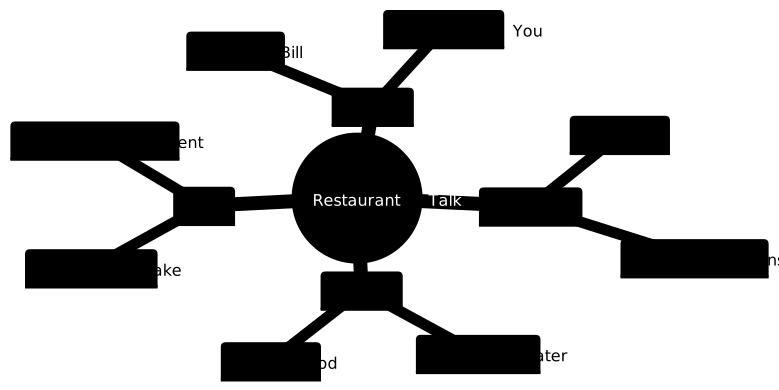
Visual Recap: Restaurant Conversation Journey
Conclusion
By practicing structured dialogues and polite expressions, you can manage restaurant conversations confidently in any English-speaking environment. Review these examples regularly, try acting them out, and slowly build variations to fit real-life dining experiences. The more natural your responses become, the more fluent and self-assured you’ll sound.
Continue exploring CodeLucky.com’s English Learning Series for real-world communication guides, including travel talks, hotel dialogues, and shopping interactions.