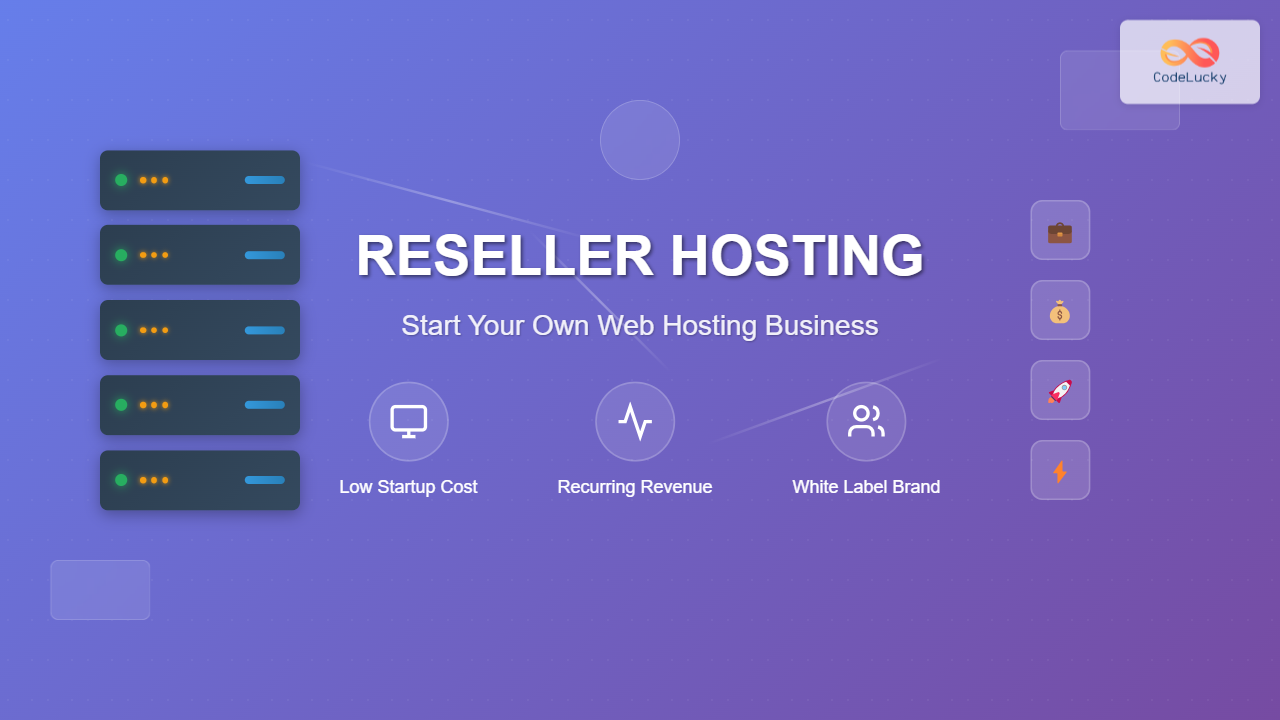
Reseller hosting represents one of the most accessible entry points into the lucrative web hosting industry. By purchasing hosting resources in bulk and redistributing them to your own customers, you can build a profitable hosting business without the massive infrastructure investments typically required.
This comprehensive guide will walk you through everything you need to know about starting and scaling your reseller hosting business, from choosing the right provider to implementing effective marketing strategies.
What is Reseller Hosting?
Reseller hosting is a business model where you purchase hosting resources from a parent hosting company and resell them to your own customers under your brand. You act as a middleman, providing hosting services without owning or maintaining the physical servers.

The parent company handles server maintenance, security updates, and infrastructure management while you focus on customer acquisition, support, and business growth. This arrangement allows you to enter the hosting market with minimal technical expertise and capital investment.
How Reseller Hosting Works
Understanding the mechanics of reseller hosting is crucial for success. Here’s how the process typically unfolds:
Resource Allocation
When you purchase a reseller hosting plan, you receive a predetermined amount of resources including:
- Disk Space: Storage capacity for websites and files
- Bandwidth: Data transfer allowance for website visitors
- CPU Resources: Processing power allocation
- RAM: Memory allocation for applications
- Email Accounts: Number of email addresses you can create
- Databases: MySQL database allowances
Management Interface
Most reseller hosting providers offer Web Host Manager (WHM) as the primary control panel for managing your reseller account. WHM allows you to:
- Create individual cPanel accounts for customers
- Set resource limits for each account
- Monitor resource usage across all accounts
- Manage DNS settings and domains
- Configure backup schedules
- Access server logs and statistics

Benefits of Starting a Reseller Hosting Business
Low Startup Costs
Reseller hosting requires minimal initial investment compared to other hosting business models. Most providers offer reseller plans starting from $15-50 per month, making it accessible to entrepreneurs with limited capital.
Recurring Revenue Model
Hosting services generate predictable monthly or annual recurring revenue, providing stable cash flow once you build a customer base. This subscription-based model is particularly attractive for long-term business planning.
Scalability
As your customer base grows, you can easily upgrade your reseller plan to accommodate more accounts and resources. Many providers offer seamless scaling options without service interruptions.
White-Label Opportunity
Most reseller hosting plans allow complete branding customization, enabling you to present the service as your own without mentioning the parent company. This includes custom control panels, email templates, and documentation.
No Technical Expertise Required
The parent hosting company handles server administration, security patches, and infrastructure maintenance, allowing you to focus on business development and customer service.
Choosing the Right Reseller Hosting Provider
Selecting the appropriate reseller hosting provider is crucial for your business success. Consider these key factors:
Server Performance and Reliability
Look for providers offering:
- 99.9%+ uptime guarantee with SLA backing
- SSD storage for faster website loading
- Content Delivery Network (CDN) integration
- Modern server hardware with regular updates
- Multiple data center locations for global reach
Control Panel and Management Tools
Ensure your provider offers:
- WHM/cPanel access for account management
- Automated billing integration with WHMCS or similar
- White-label customization options
- Resource monitoring tools
- Backup and restoration capabilities
Support Quality
Evaluate support offerings including:
- 24/7 technical support availability
- Multiple contact methods (live chat, phone, tickets)
- Response time guarantees
- Reseller-specific support tiers
- Knowledge base and documentation quality
Setting Up Your Reseller Hosting Business
Business Planning and Strategy
Before launching, develop a comprehensive business plan addressing:
- Target market identification: Small businesses, developers, agencies
- Competitive analysis: Research existing providers and pricing
- Unique value proposition: What sets your service apart
- Pricing strategy: Competitive yet profitable pricing model
- Marketing approach: Digital marketing, partnerships, referrals
Legal and Business Structure
Establish proper business foundations:
- Business registration: LLC, Corporation, or appropriate structure
- Terms of Service: Comprehensive legal agreements
- Privacy Policy: Data protection compliance
- Acceptable Use Policy: Service usage guidelines
- Business insurance: Liability and professional coverage
Brand Development
Create a professional brand identity including:
- Business name and domain: Memorable and relevant branding
- Logo and visual identity: Professional design elements
- Website development: Professional, conversion-optimized site
- Marketing materials: Brochures, email templates, presentations

Creating Hosting Plans and Pricing
Plan Structure Strategy
Design hosting plans that cater to different customer segments:
Starter Plan (Small Websites)
- 5-10 GB disk space
- 100-200 GB bandwidth
- 5-10 email accounts
- 1-3 MySQL databases
- Basic support
Professional Plan (Business Websites)
- 25-50 GB disk space
- 500-1000 GB bandwidth
- 25-50 email accounts
- 10-20 MySQL databases
- Priority support
- SSL certificate included
Enterprise Plan (High-Traffic Sites)
- 100+ GB disk space
- Unlimited bandwidth
- Unlimited email accounts
- Unlimited databases
- 24/7 premium support
- Advanced security features
Pricing Strategies
Implement competitive pricing while maintaining profitability:
- Market research: Analyze competitor pricing structures
- Cost calculation: Factor in hosting costs, support, and overhead
- Profit margin: Target 50-70% gross margin for sustainability
- Promotional pricing: Introductory offers to attract customers
- Annual discounts: Encourage long-term commitments
Customer Acquisition and Marketing
Digital Marketing Strategies
Implement comprehensive digital marketing approaches:
Search Engine Optimization (SEO)
- Target local and niche hosting keywords
- Create valuable content around web hosting topics
- Build authoritative backlinks from relevant sites
- Optimize for local search if targeting specific regions
Content Marketing
- Develop hosting tutorials and guides
- Create comparison articles and reviews
- Publish industry news and insights
- Offer free resources and tools
Pay-Per-Click (PPC) Advertising
- Target specific hosting-related keywords
- Create compelling ad copy highlighting unique benefits
- Optimize landing pages for conversion
- Monitor and adjust campaigns for ROI
Partnership Opportunities
Develop strategic partnerships for customer acquisition:
- Web development agencies: Offer white-label hosting services
- Marketing consultants: Partner for client hosting needs
- Domain registrars: Cross-promote hosting services
- Local business networks: Participate in chamber events
- Affiliate programs: Create referral incentives
Managing Customer Support
Support Structure
Establish efficient support processes:

Support Tools and Resources
Implement comprehensive support infrastructure:
- Ticketing system: Track and manage customer inquiries
- Knowledge base: Self-service articles and tutorials
- Live chat: Real-time customer assistance
- Video tutorials: Visual guides for common tasks
- Community forums: Peer-to-peer support platform
Common Support Scenarios
Prepare for typical customer support situations:
Website Setup Issues
- Domain DNS configuration
- File upload problems
- Email account setup
- SSL certificate installation
Performance Optimization
- Website speed improvements
- Resource usage optimization
- Caching configuration
- Database optimization
Security Concerns
- Malware removal assistance
- Security hardening recommendations
- Backup restoration
- Password reset procedures
Scaling Your Reseller Business
Growth Strategies
Implement systematic approaches to business expansion:
Service Diversification
- Domain registration: One-stop solution for customers
- SSL certificates: Enhanced security offerings
- Website builders: Simplified site creation tools
- Email marketing: Integrated marketing solutions
- Backup services: Premium data protection
Geographic Expansion
- Target new geographic markets
- Offer multi-language support
- Adapt pricing for local markets
- Partner with local businesses
Automation and Efficiency
Streamline operations for scalability:
- Automated billing: Reduce manual payment processing
- Account provisioning: Instant service activation
- Monitoring systems: Proactive issue detection
- Customer onboarding: Streamlined welcome processes
- Report generation: Automated business analytics
Financial Management and Profitability
Revenue Optimization
Maximize profitability through strategic approaches:
- Upselling opportunities: Premium features and add-ons
- Customer lifetime value: Focus on retention over acquisition
- Annual billing incentives: Improve cash flow
- Resource utilization: Optimize server resource allocation
- Cost management: Monitor and control operational expenses
Key Performance Indicators (KPIs)
Track essential metrics for business success:
- Monthly Recurring Revenue (MRR)
- Customer Acquisition Cost (CAC)
- Customer Lifetime Value (CLV)
- Churn rate and retention metrics
- Average Revenue Per User (ARPU)
- Support ticket resolution time
- Server resource utilization

Common Challenges and Solutions
Technical Challenges
Server Downtime: Partner with reliable providers offering strong SLAs and maintain transparent communication with customers during outages.
Resource Overselling: Monitor resource usage closely and implement alerts for approaching limits to prevent service degradation.
Security Issues: Implement robust security measures including regular backups, malware scanning, and security updates.
Business Challenges
Customer Acquisition: Develop multi-channel marketing strategies and focus on building strong referral programs.
Competition: Differentiate through superior customer service, specialized niches, or unique value propositions.
Cash Flow: Encourage annual payments through discounts and maintain reserve funds for operational expenses.
Future Trends in Reseller Hosting
Stay ahead of industry developments:
Cloud Integration
Traditional reseller hosting is evolving toward cloud-based solutions offering better scalability, reliability, and performance. Consider providers offering cloud reseller plans.
Managed Services
Customers increasingly demand managed solutions. Develop expertise in managed WordPress hosting, security services, and performance optimization.
Green Hosting
Environmental consciousness is growing. Partner with providers using renewable energy and promote eco-friendly hosting solutions.
AI and Automation
Implement AI-powered tools for customer support, resource optimization, and predictive analytics to improve service quality and efficiency.
Conclusion
Reseller hosting presents an excellent opportunity to enter the web hosting industry with minimal investment and technical requirements. Success depends on choosing the right provider, developing competitive service packages, implementing effective marketing strategies, and maintaining high customer service standards.
Focus on building long-term customer relationships, continuously improving your services, and staying current with industry trends. With dedication and strategic planning, your reseller hosting business can grow into a profitable and sustainable enterprise.
Remember that success in reseller hosting isn’t just about technical capabilities—it’s about understanding your customers’ needs, providing exceptional support, and building a trusted brand in the competitive hosting market. Start small, learn from your customers, and scale gradually as you gain experience and confidence in the business.