Quick Sort is one of the fastest and most widely-used sorting algorithms, thanks to its average-case time complexity of O(n log n). However, its performance depends heavily on selecting good pivot elements. A poorly chosen pivot can degenerate the sorting to O(n²), which is undesirable especially for large datasets. In this article, we will explore different strategies to optimize Quick Sort pivot selection, visualize how pivots affect partitioning, and provide practical Python code with outputs.
Why Pivot Selection Matters in Quick Sort
Quick Sort partitions an array around a chosen pivot element. Ideally, the pivot divides the array into two almost equal halves. This balance directly affects the recursion depth and overall efficiency. Poor pivot choices (for example, always picking the first or last element in an already sorted array) can cause extreme imbalance.

Common Pivot Selection Strategies
1. First or Last Element Pivot
The simplest method is to always pick the first or last element as the pivot. While easy to implement, this can lead to poor performance on sorted or reverse-sorted data.
def quick_sort_first_pivot(arr):
    if len(arr) <= 1:
        return arr
    pivot = arr[0]  # first element pivot
    left = [x for x in arr[1:] if x <= pivot]
    right = [x for x in arr[1:] if x > pivot]
    return quick_sort_first_pivot(left) + [pivot] + quick_sort_first_pivot(right)

print(quick_sort_first_pivot([3,7,2,9,1]))
Output:
[1,2,3,7,9]Efficient for small or random arrays, but risky on already ordered inputs.
2. Random Pivot
Choosing a pivot randomly reduces the likelihood of worst-case performance, as the pivot distribution is more uniform over multiple runs.
import random

def quick_sort_random_pivot(arr):
    if len(arr) <= 1:
        return arr
    pivot = random.choice(arr)
    left = [x for x in arr if x < pivot]
    middle = [x for x in arr if x == pivot]
    right = [x for x in arr if x > pivot]
    return quick_sort_random_pivot(left) + middle + quick_sort_random_pivot(right)

print(quick_sort_random_pivot([3,7,2,9,1]))
This prevents predictable pathologies, making Quick Sort more reliable.
3. Median-of-Three Pivot
This strategy takes three elements (commonly the first, middle, and last) and uses their median as the pivot. It is one of the most popular optimizations for Quick Sort.
def median_of_three(arr):
    first = arr[0]
    middle = arr[len(arr)//2]
    last = arr[-1]
    return sorted([first, middle, last])[1]

def quick_sort_median_of_three(arr):
    if len(arr) <= 1:
        return arr
    pivot = median_of_three(arr)
    left = [x for x in arr if x < pivot]
    middle = [x for x in arr if x == pivot]
    right = [x for x in arr if x > pivot]
    return quick_sort_median_of_three(left) + middle + quick_sort_median_of_three(right)

print(quick_sort_median_of_three([3,7,2,9,1,8,6]))
Output:
[1,2,3,6,7,8,9]
The median-of-three method effectively balances partitions and improves performance, especially in nearly sorted datasets.
4. Median-of-Medians Pivot (Deterministic Selection)
For critical cases where worst-case O(n²) must be avoided, the median-of-medians algorithm ensures pivot selection in linear time. While more complex, it guarantees O(n log n) performance.
Interactive Example: Comparing Pivot Choices
Let’s demonstrate how pivot choice affects partitioning. Suppose we need to sort:
[10, 2, 8, 15, 3, 1, 9]- First element pivot (10): Left = [2,8,3,1,9] | Right = [15]
- Random pivot (e.g., 3): Left = [2,1] | Right = [10,8,15,9]
- Median-of-three (8): Left = [2,3,1] | Right = [10,15,9]
Notice how the median-of-three yields a balanced partition, reducing recursion depth.
Hybrid Optimizations
Modern implementations often combine Quick Sort with other sorting strategies:
- Insertion Sort fallback: For small subarrays (size < 10), switch to Insertion Sort.
- IntroSort: A hybrid that starts with Quick Sort but switches to Heap Sort if recursion depth grows too large.
Time Complexity Analysis
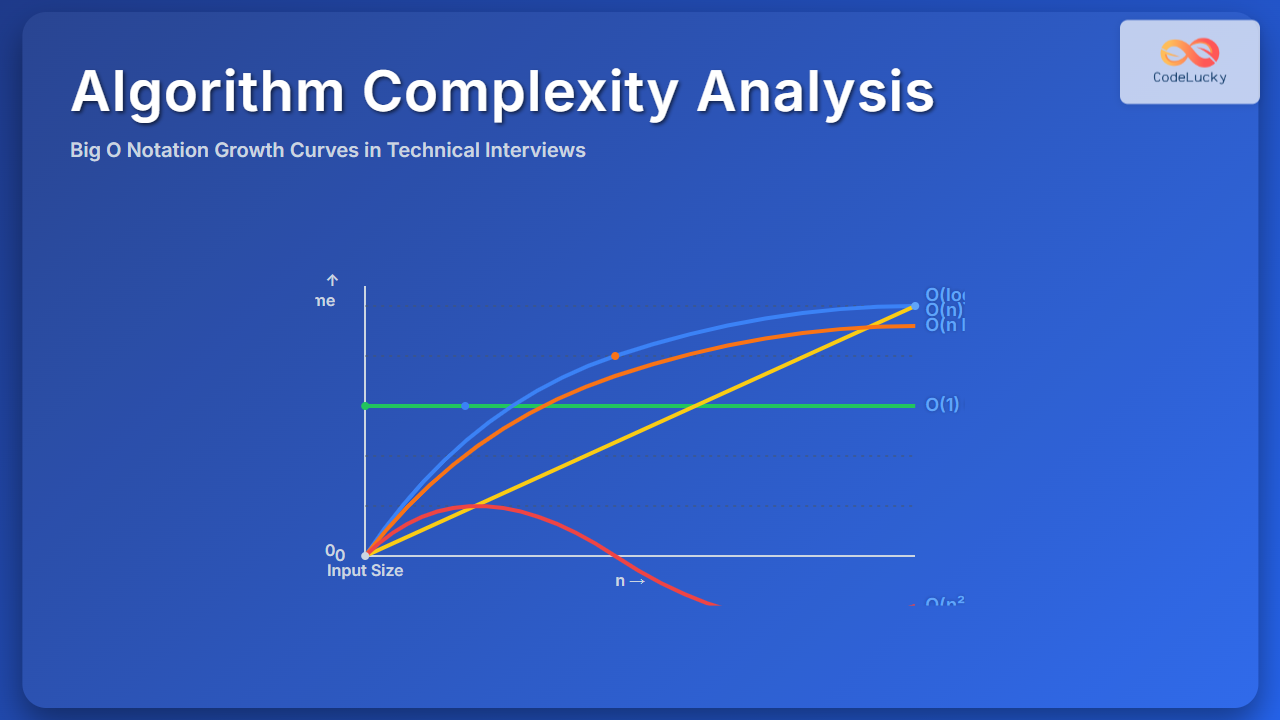
- Best case:
O(n log n)(balanced partitions) - Average case:
O(n log n) - Worst case:
O(n²)(always choosing bad pivots)
Conclusion
Quick Sort remains one of the fastest sorting algorithms, provided that pivot selection is done wisely. Among the strategies, the median-of-three method is a simple yet highly effective optimization that prevents degraded performance. For critical applications, deterministic selection methods like median-of-medians can be used to guarantee efficiency. By combining pivot optimization with hybrid approaches, Quick Sort can consistently deliver high-speed sorting even on large and challenging datasets.