Mastering question forms is one of the most essential steps in learning English fluently. Whether you’re asking for directions, conducting an interview, or engaging in conversation, understanding WH words (also called question words) gives you the power to ask the right questions clearly.
This article from CodeLucky.com explains in detail how WH words work, the structure of question forms, and provides plenty of examples to help you practice effectively.
What Are WH Words?
WH words are words used to ask for specific information. Unlike simple Yes/No questions, WH questions cannot be answered by just “yes” or “no”. They start with a WH word followed by a verb and subject depending on the sentence type.
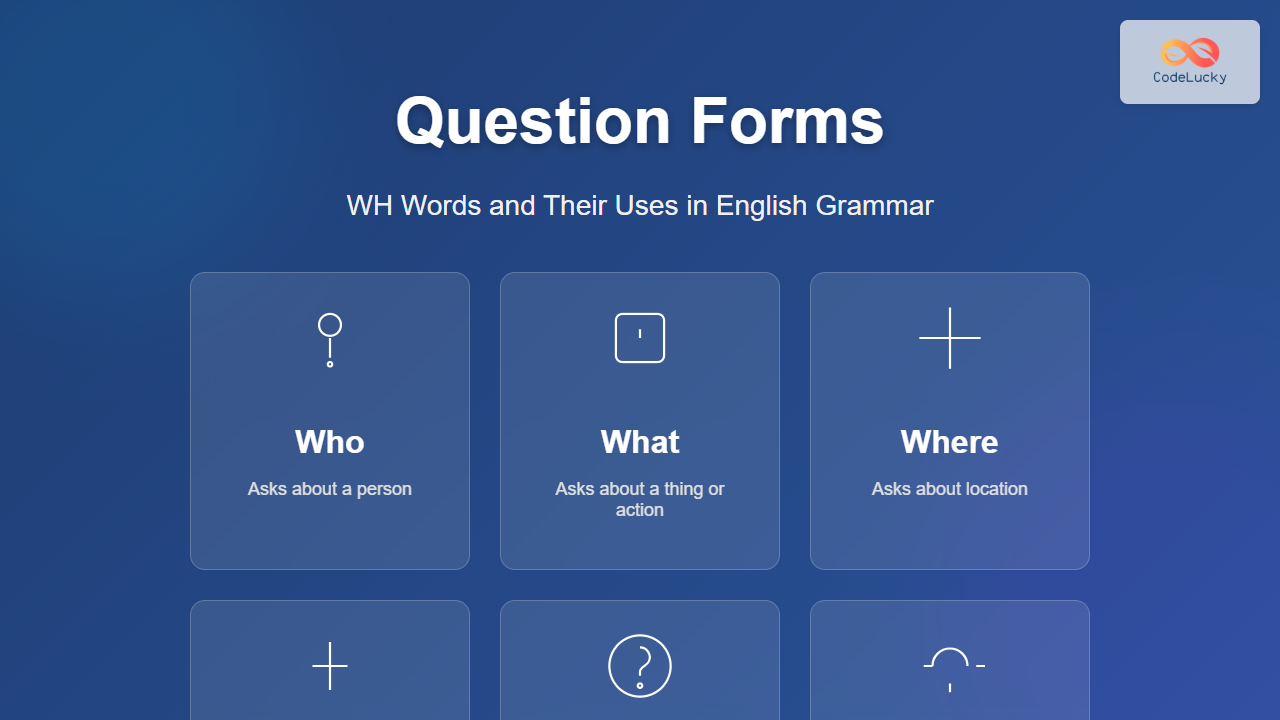
- Who – asks about a person
- What – asks about a thing or activity
- When – asks about time
- Where – asks about place
- Why – asks for reasons
- Which – asks about choice or preference
- Whose – asks about possession
- How – asks about manner, condition, or degree
This simple mental map helps visualize how each WH word connects to a type of information we want to find.
Basic Structure of WH Questions
Most WH questions follow a predictable structure:
WH word + Auxiliary Verb + Subject + Main Verb + (Rest of sentence)?
Example:
- Where do you live? → WH (Where) + Auxiliary (do) + Subject (you) + Verb (live).
- What does he do?
- Why are they late?
When the WH Word Is the Subject
There’s no need for an auxiliary verb when the WH word acts as the subject.
- Who broke the glass? (Here, “who” is the subject)
- What happened?

Types of WH Question Forms
1. WH + Aux + Subject + Verb
This is the most common structure for questions using auxiliary verbs like do / does / did.
Example: What do you eat for lunch?
2. WH + Be + Subject
Used when “be” is the main verb.
Example: Where are the documents?
3. WH + Modal + Subject + Verb
Used when a modal verb like can, should, would, could, will appears.
Example: Why can you drive at night?
4. WH + Possessive Form (Whose)
Example: Whose pen is this?
How to Form Questions Interactively
You can create WH questions by identifying what information is missing in a statement. Let’s see how that works.
Statement: She lives in Delhi.
Missing Information: Place
Question: Where does she live?
Try it yourself:
- He is eating an apple. → What … ?
- They arrived at 7 PM. → When … ?
- You borrowed someone’s book. → Whose … ?
Think carefully about the missing part — that determines which WH word you should use.
Common Mistakes with WH Questions
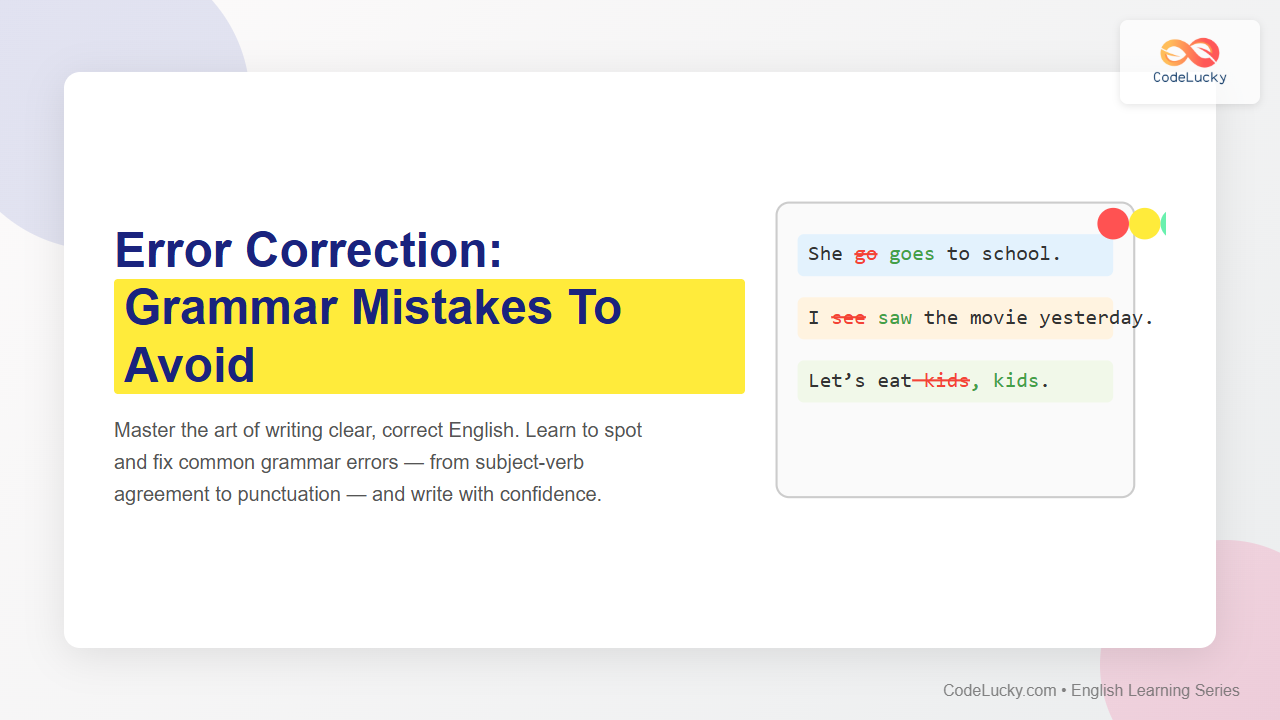
- ❌ Where you are going? → ✅ Where are you going?
- ❌ What he doing? → ✅ What is he doing?
- ❌ Why you like it? → ✅ Why do you like it?
The position of the auxiliary verb (do, does, is, are) always comes before the subject in English question forms.

WH Questions with “How” Forms
“How” is especially flexible and forms many useful question expressions:
| Form | Meaning | Example |
|---|---|---|
| How much | Quantity (uncountable) | How much rice do you need? |
| How many | Quantity (countable) | How many students are there? |
| How often | Frequency | How often do you exercise? |
| How long | Duration | How long have you lived here? |
| How far | Distance | How far is the station? |
| How old | Age | How old are you? |
Practice and Interactive Learning Idea
For self-practice, try converting ordinary sentences into WH questions by asking yourself what you want to know. For example:
- Statement: “She bought a new car.” → Question: “What did she buy?”
- Statement: “They travel on Sundays.” → Question: “When do they travel?”
- Statement: “He lives with his parents.” → Question: “Who does he live with?”
This thought exercise trains your brain to identify the information gap, which is the essence of forming natural WH questions.
Conclusion
WH words form the backbone of meaningful communication in English. By understanding how to use who, what, when, where, why, and how, you not only improve your grammar but also your ability to express curiosity and interact naturally. Keep practicing, observe patterns in conversations, and soon forming WH questions will become effortless.
Want more English grammar lessons like this? Explore the full English Learning Series at CodeLucky.com.