Python, as a versatile and expressive programming language, offers multiple ways to handle conditional logic. One common question among learners and developers alike is whether Python supports a ternary conditional operator similar to other programming languages like C, JavaScript, or Java. This article dives deep into Python’s approach to conditional expressions, illustrating how it provides the functionality of a ternary operator, along with examples, visuals, and tips for writing clean, Pythonic code.
What Is a Ternary Conditional Operator?
A ternary conditional operator, sometimes called a ternary operator or conditional expression, is a concise way to evaluate a condition and return one of two values depending on whether the condition is true or false. It reduces verbose if-else statements into a single line of code. In many languages, it looks like this:
condition ? value_if_true : value_if_false;This shorthand improves code readability and compactness in simple conditions.
Does Python Have a Ternary Operator?
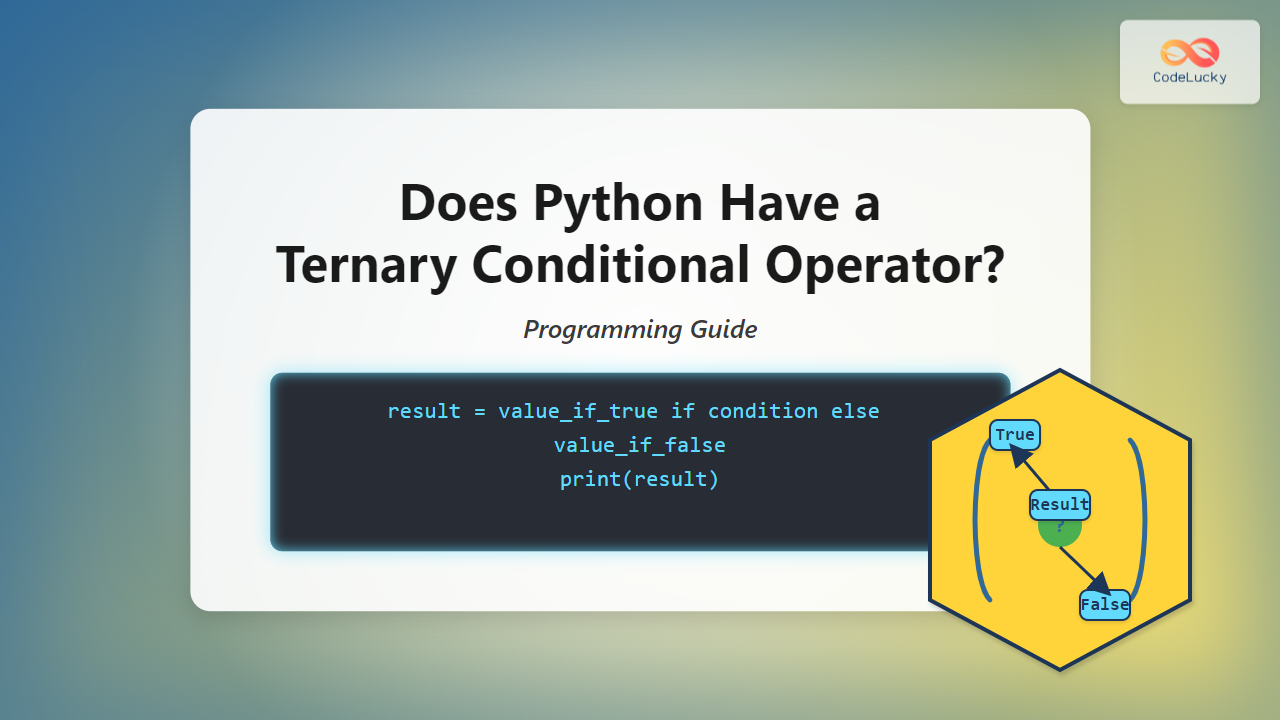
Strictly speaking, Python does not have a traditional ternary operator using ? and :. Instead, Python provides a conditional expression that achieves the same purpose but with a different syntax:
value_if_true if condition else value_if_falseThis expression is part of Python’s grammar since version 2.5 and is the recommended way to write inline conditionals.

Syntax Breakdown
value_if_true: The expression evaluated and returned if theconditionisTrue.condition: The boolean expression evaluated.value_if_false: The expression evaluated and returned if theconditionisFalse.
Order matters: the condition is in the middle, between the two possible values, which might feel reversed compared to some other languages.
Simple Examples
Example 1: Assign based on condition
age = 20
status = "Adult" if age >= 18 else "Minor"
print(status)  # Output: Adult
Example 2: Inline usage in function call
def get_discount(is_member):
    return 0.1 if is_member else 0.0

print(get_discount(True))   # Output: 0.1
print(get_discount(False))  # Output: 0.0
Interactive Example: Modify and Observe
Change the temperature value and observe the message update accordingly.
Temperature:
When to Use Python’s Ternary Conditional Expression
The ternary expression is ideal for simple conditional assignments or returning values based on conditions. It helps keep code concise without reducing readability.
- Use it for single conditional assignments.
- Avoid using it for complex decisions that require multiple expressions or statements.
- Aim to maintain readability — sometimes a standard
if-elseblock is clearer.
Comparison: Traditional If-Else vs. Python Ternary Conditional
| Approach | Example | Use Case |
|---|---|---|
| Traditional If-Else |
|
Clear and suitable for multiple statements or complex logic. |
| Python Ternary Conditional |
|
Best for simple, single-expression conditionals. |
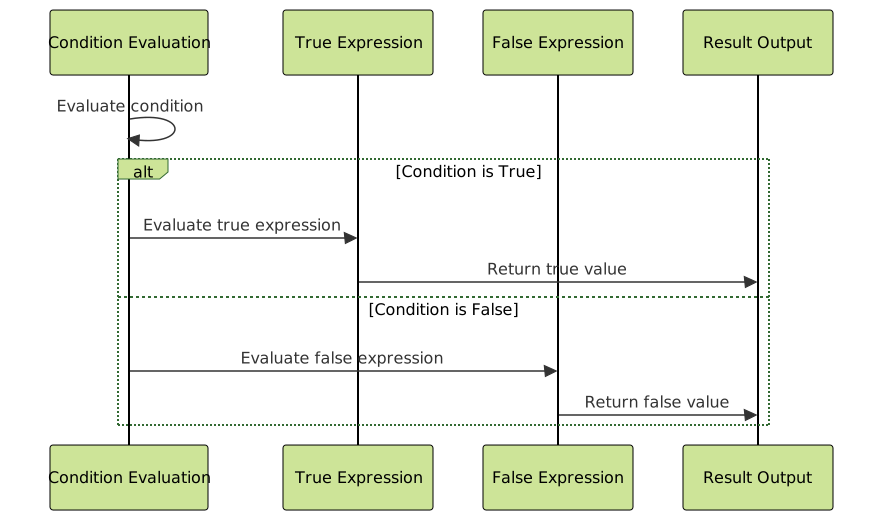
How It Works Under the Hood
Nested Ternary Expressions
Python’s conditional expressions can be nested to handle multiple conditions, though this can impact readability.
result = "High" if score > 80 else "Medium" if score > 50 else "Low"
While powerful, nested ternaries should be used sparingly to avoid confusing code.
Summary
Python offers a clear and expressive way to perform conditional assignments inline via its ternary conditional expression with the syntax value_if_true if condition else value_if_false. Although it may look different from operators in other languages, it is functionally equivalent and fully integrated into Python’s syntax. Using it can help make code concise and readable for straightforward conditions.
Remember to balance brevity with clarity and prefer traditional if-else blocks for more complex conditions or when the readability might suffer.