Punctuation is the backbone of clear writing. It gives structure, rhythm, and meaning to sentences—helping readers understand tone, pauses, and emphasis. Without punctuation, writing becomes confusing or misleading. This guide explains the basic punctuation rules every beginner should know with examples and visuals for better understanding.
Why Punctuation Matters in English
Punctuation marks are visual signals that guide readers through text. They show where to pause, stop, ask, or express emotion. Think of punctuation as the “road signs” of language—without them, communication quickly goes off track.

1. Period (.) – The Stop Sign
A period ends a complete sentence or statement.
Examples:
- She loves painting.
- We went to the park.
Tip: Use a period when the thought is complete and you’ve communicated a full idea.
2. Comma (,) – The Pause Mark
The comma separates ideas or items in a list and marks brief pauses.
Examples:
- I bought apples, oranges, and bananas.
- After dinner, we watched a movie.
Common mistake: Don’t use a comma where a period or semicolon should be. Example of error: He finished his work, he went home. (This is a comma splice.)

3. Question Mark (?) – The Inquiry Signal
A question mark ends a direct question.
Examples:
- What time is the meeting?
- Did you enjoy the trip?
Do not use multiple question marks (like “What??”) in formal writing.
4. Exclamation Mark (!) – Emotion and Emphasis
An exclamation mark adds strong feeling or surprise.
Examples:
- Wow! That’s amazing!
- Stop! Don’t go there.
In professional writing, use it sparingly. Overusing can make the tone seem exaggerated or less serious.
5. Colon (:) – Introducing Information
A colon introduces examples, lists, or explanations.
Examples:
- She bought three items: milk, bread, and eggs.
- He has one goal: to succeed.
6. Semicolon (;) – Linking Related Ideas
A semicolon connects two independent clauses that are closely related in meaning.
Examples:
- I finished my homework; now I can relax.
- It was a hot day; we went swimming.
A semicolon is stronger than a comma but weaker than a period.

7. Apostrophe (’) – Ownership or Contraction
The apostrophe shows possession or replaces missing letters in contractions.
Examples:
- Possession: Sarah’s book, the dog’s leash.
- Contraction: it’s (it is), don’t (do not).
Don’t confuse: its (belonging to it) vs. it’s (it is).
8. Quotation Marks (“ ”) – Quoting Speech or Text
Quotation marks are used to show someone’s spoken or written words.
Examples:
- She said, “I’ll be ready in five minutes.”
- The teacher asked, “Who can answer this question?”
Place punctuation inside the quotation marks in American English, but outside in British English.

9. Parentheses ( ) – Extra Information
Parentheses include non-essential information or clarifying notes.
Examples:
- She finally answered (after a long pause) that she agreed.
- The company was founded in 1999 (in California).
10. Dash (—) – Adding Emphasis or Interruption
The em dash (—) emphasizes or interrupts a thought.
Examples:
- He was going to propose—but changed his mind.
- Everything she said—absolutely everything—was true.
Practice: Spot the Punctuation Errors
Try improving the following sentences by adding proper punctuation:
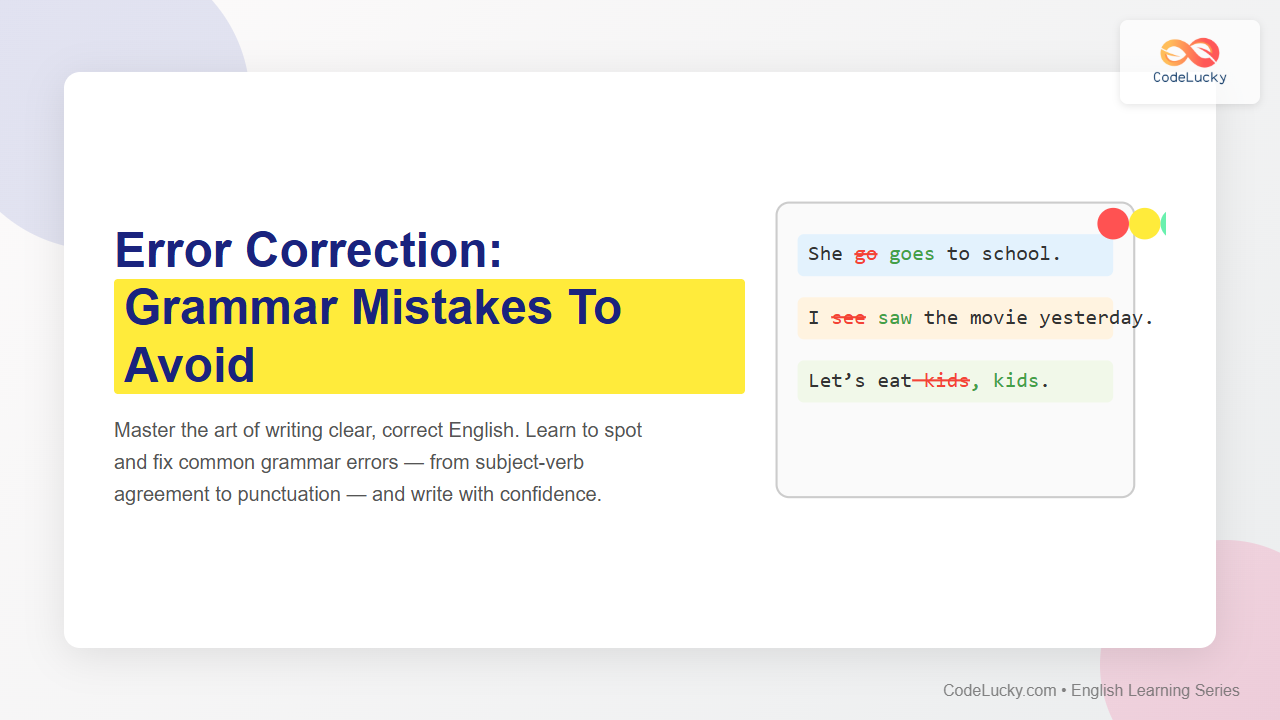
- lets eat grandma
- its raining outside
- can you help me
- Wow that was amazing
Corrected:
- Let’s eat, Grandma.
- It’s raining outside.
- Can you help me?
- Wow! That was amazing.
Interactive Tip
Here’s a simple exercise: copy one paragraph of text from a news article, remove all punctuation, and then try adding them back. Compare your version—this helps you truly understand sentence flow and clarity.
Quick Summary Table
| Punctuation Mark | Purpose | Example |
|---|---|---|
| Period (.) | End a complete statement | She smiled. |
| Comma (,) | Separate ideas or list items | Soft, warm, and cozy blanket. |
| Question Mark (?) | End a direct question | How are you? |
| Exclamation Mark (!) | Show strong feeling | That’s incredible! |
| Semicolon (;) | Join related sentences | I was tired; I went to bed. |
Final Thoughts
Learning basic punctuation may seem simple, but it’s the foundation of powerful writing. Clear punctuation makes your ideas flow naturally and helps readers understand you precisely. Practice regularly—each mark you place correctly brings you closer to confident, polished English writing.