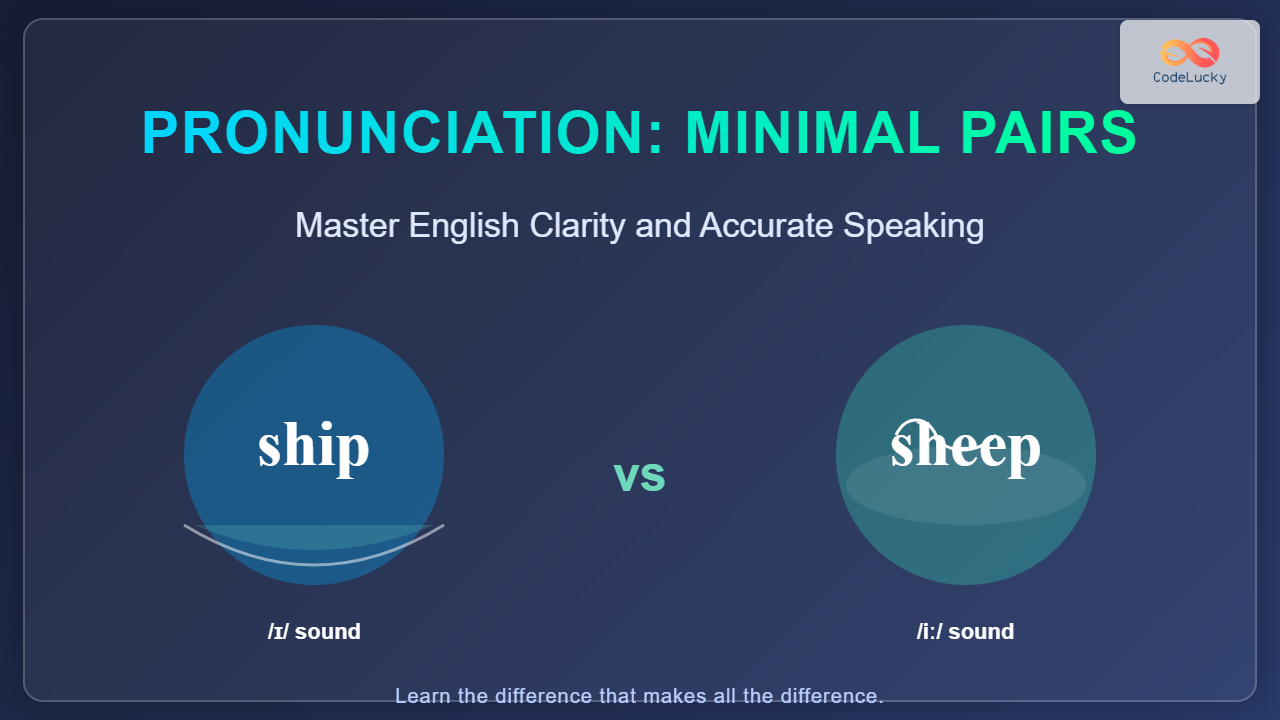
Accurate pronunciation is one of the most critical aspects of mastering any language. In English, subtle sound differences often change meaning entirely — such as in the words ship and sheep. To grasp these nuances, learners practice minimal pairs — pairs of words that differ by only one sound. This article explores how to use minimal pairs to improve your English pronunciation for clearer, more confident speech.
What Are Minimal Pairs?
A minimal pair is a set of two words that differ by just one distinct sound, and that single sound changes the meaning. They are essential in pronunciation training because they help learners identify subtle differences that often go unnoticed.
For example:
- bit vs beat — short /ɪ/ sound vs long /iː/ sound
- pen vs pin — vowel /e/ vs /ɪ/
- bat vs pat — /b/ vs /p/ sound
Why Minimal Pairs Matter in Pronunciation
Practicing minimal pairs sharpens your ability to distinguish sounds. This is especially helpful for non-native speakers whose first language lacks certain English phonemes. With regular practice, you will:
- Develop clear and confident pronunciation.
- Avoid misunderstandings caused by mispronounced words.
- Improve listening accuracy in English conversations.
- Enhance your accent and speech fluency.
Visualizing Sound Differences
Every sound in English originates from unique tongue, lip, and mouth positions. The diagram below illustrates how minimal pairs differ at this phonetic level:

Common English Minimal Pairs
Below is a table of frequently confused English minimal pairs with pronunciation explanations:
| Minimal Pair | Sound Difference | Example Sentences |
|---|---|---|
| ship – sheep | /ɪ/ vs /iː/ | “The ship is sailing.” vs “The sheep is grazing.” |
| fan – van | /f/ vs /v/ | “Turn on the fan.” vs “Park the van.” |
| coat – goat | /k/ vs /g/ | “I bought a coat.” vs “I saw a goat.” |
| bat – pat | /b/ vs /p/ | “He has a bat.” vs “He wrote a pat on the back.” |
| thank – tank | /θ/ vs /t/ | “Thank you.” vs “Fill the tank.” |
Interactive Pronunciation Practice
Here’s a simple exercise you can do to identify minimal pair differences. Choose the correct word after listening (or imagining) the sound:
- If you hear /ɪ/, type “ship”. If you hear /iː/, type “sheep”.
- If you hear /f/, type “fan”. If you hear /v/, type “van”.
<label>Type what you hear: </label>
<input type="text" placeholder="Enter word" />
<button>Check Answer</button>
This interactive method simulates pronunciation testing and reinforces listening comprehension — a key skill in improving spoken English accuracy.
How to Practice Minimal Pairs Effectively
- Listen and repeat. Use online dictionaries or pronunciation tools to hear both words clearly.
- Record your voice. Compare your pronunciation with native speakers.
- Use mirrors. Notice your lips, jaw, and tongue positions when making each sound.
- Group by sound type. Organize pairs by vowel, consonant, or ending sound for structured learning.
- Engage in minimal pair quizzes. Apps and pronunciation games provide instant feedback.
Vowel Minimal Pairs Map
The diagram below shows how vowel changes in minimal pairs shift along the front, central, and back areas of the mouth:

Consonant Minimal Pairs Network
Consonant minimal pairs often challenge learners due to articulation at different mouth points. Here’s a diagram showing their phonetic relation:

Common Mistakes to Avoid
- Ignoring minimal differences and assuming they sound the same.
- Overemphasizing sounds, which leads to unnatural pronunciation.
- Skipping listening practice and focusing only on speaking.
- Not recognizing that stress and intonation also influence clarity.
Minimal Pairs in Accent Training
Accent trainers and linguists frequently use minimal pairs to help speakers polish their accent. British and American English variants sometimes stress different pairs — for instance, cot and caught sound different in most British accents but nearly identical in some American ones. Recognizing these shifts builds awareness of regional pronunciation.

Advanced Tip: Minimal Phrases
While most learners start with single-word minimal pairs, advanced learners can move to minimal phrases — short phrases that differ by one sound:
- He’s sick. vs He’s thick.
- She’s busy. vs She’s dizzy.
- That seat. vs That sheet.
Practicing at phrase level improves rhythm, connected speech, and fluency in real-life communication.
Conclusion
Minimal pairs are powerful tools for clear and accurate English pronunciation. Regular practice helps you identify subtle sound differences, avoid misunderstandings, and speak with greater confidence. Whether you are preparing for English exams, improving a professional accent, or simply becoming more fluent, mastering minimal pairs ensures your message is heard exactly as intended.
Start with a few pairs, record your voice, and note your progress — clarity comes one sound at a time.