Pronunciation plays a critical role in effective English communication. Even when your grammar and vocabulary are strong, unclear pronunciation can cause confusion or misinterpretation. This guide from CodeLucky.com focuses on practical error correction strategies to help you fix common pronunciation problems and develop a natural-sounding accent.
Why Pronunciation Error Correction Matters
Incorrect pronunciation affects clarity and confidence. In interviews, presentations, or daily conversations, clear articulation helps listeners understand your message instantly. Moreover, fixing pronunciation errors ensures you are not judged unfairly based on speech clarity rather than language ability.
Common Pronunciation Mistakes and Their Fixes
1. Confusing Short and Long Vowel Sounds
Many learners confuse short and long vowels, especially the pairs /ɪ/ vs. /iː/ and /ʊ/ vs. /uː/. The difference lies in mouth position and duration.
| Common Mistake | Correct Pronunciation | Example Difference |
|---|---|---|
| bit /biːt/ instead of /bɪt/ | /bɪt/ (short) | bit vs beat |
| pull /puːl/ instead of /pʊl/ | /pʊl/ (short) | pull vs pool |
Fix: Record your voice reading pairs like ship/sheep, pull/pool, and listen for vowel length. Keep the short sound quick and relaxed.
2. Silent Letters Mispronunciation
Words like know, debt, and island often confuse learners. They include silent letters that must not be pronounced.
- Wrong: k-now
- Right: noʊ (the ‘k’ is silent)
Fix: Study silent letters in groups. For instance, k is silent before n (know, knife), and b is silent after m (climb, bomb).

3. Stress and Intonation Errors
Word stress and sentence rhythm are crucial in English. Incorrect stress can change meaning. For example, record (noun) stresses the first syllable, while record (verb) stresses the second.
| Word | Noun Stress | Verb Stress |
|---|---|---|
| record | RE-cord | re-CORD |
| present | PRE-sent | pre-SENT |
Fix: Practice minimal pairs using apps or flashcards. Repeat them with a pause between each form.

4. Consonant End-Sound Omissions
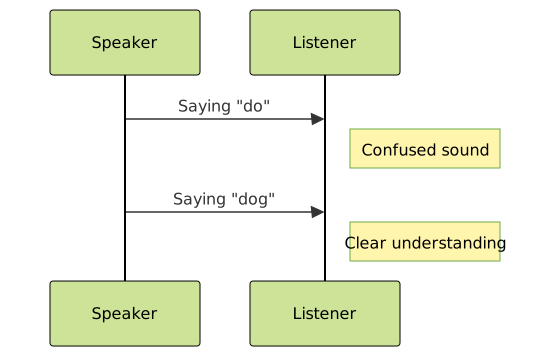
Many non-native speakers drop final consonant sounds, especially in words like dog, want, or check. This can make speech unclear.
Fix: Exaggerate the ending when practicing. Say dog as /dɒg/ with a soft “g”, not /dɒ/.
Interactive tip: Repeat sequence aloud —
dog → dogs → dog's toy
5. The ‘Th’ Challenge (/θ/ and /ð/)
Many learners replace th with /t/ or /d/. The key is placing your tongue between your teeth and blowing air gently.
- /θ/ – think, math, mouth
- /ð/ – this, mother, they
Fix: Place your tongue lightly between your teeth and breathe out. Practice phrases like think through things thoroughly.

Interactive Practice Tips
- Listen and Imitate: Use pronunciation videos and repeat line-by-line. Shadow native speakers to match their rhythm.
- Use a Pronunciation App: Try phonetic transcription tools or speech recognizers to get live feedback.
- Mirror Practice: Speak in front of a mirror to observe mouth movement for tricky sounds like /v/ vs /w/.
- Phoneme Charts: Familiarize yourself with the International Phonetic Alphabet (IPA) to decode sound patterns.

How to Build Long-Term Pronunciation Accuracy
Developing pronunciation fluency requires consistency. Create a daily 10-minute pronunciation habit that integrates listening, speaking, and self-review.
Follow this strategy:
- Focus on one sound each day (e.g., /ʒ/ in measure).
- Record your speech weekly and compare before–after differences.
- Listen to English podcasts and repeat dialogues aloud.
- Engage in online voice chats with native or fluent speakers.
Conclusion
Correct pronunciation is an essential skill for speaking English confidently. By understanding sound differences, stress patterns, and common pitfalls, you can drastically improve clarity. Use the visual guides, diagrams, and interactive exercises provided here as part of your daily speaking routine to sound more natural and persuasive.
Keep practicing, stay patient, and let each correction bring you one step closer to confident communication.