Pronunciation forms the foundation of effective communication in English. Even fluent speakers sometimes mispronounce common words, leading to misunderstandings or reduced confidence. In this detailed guide, we’ll explore commonly mispronounced English words, learn practical pronunciation fixes, and understand the logic behind English sounds using phonetic hints and diagrams.
Why Pronunciation Matters
Clear pronunciation ensures that listeners understand your message without effort. It also builds credibility and fluency. Many learners memorize vocabulary but overlook how those words sound—a critical mistake, especially in professional or global communication settings.
Common Causes of Mispronunciation
- Native language interference: Sounds that don’t exist in your first language are hard to reproduce.
- Spelling confusion: English spelling often misleads learners (example: “colonel” vs how it is pronounced).
- Silent letters: Many English words include letters that are not pronounced.
- Stress patterns: Incorrect emphasis on syllables changes meaning (“record” as noun vs verb).
Top Mispronounced English Words and Their Fixes
| Word | Common Wrong Pronunciation | Correct Pronunciation (IPA) | Trick to Remember |
|---|---|---|---|
| Colonel | koh-lo-nel | /ˈkɜː.nəl/ | Think “kernel” of corn — sounds same. |
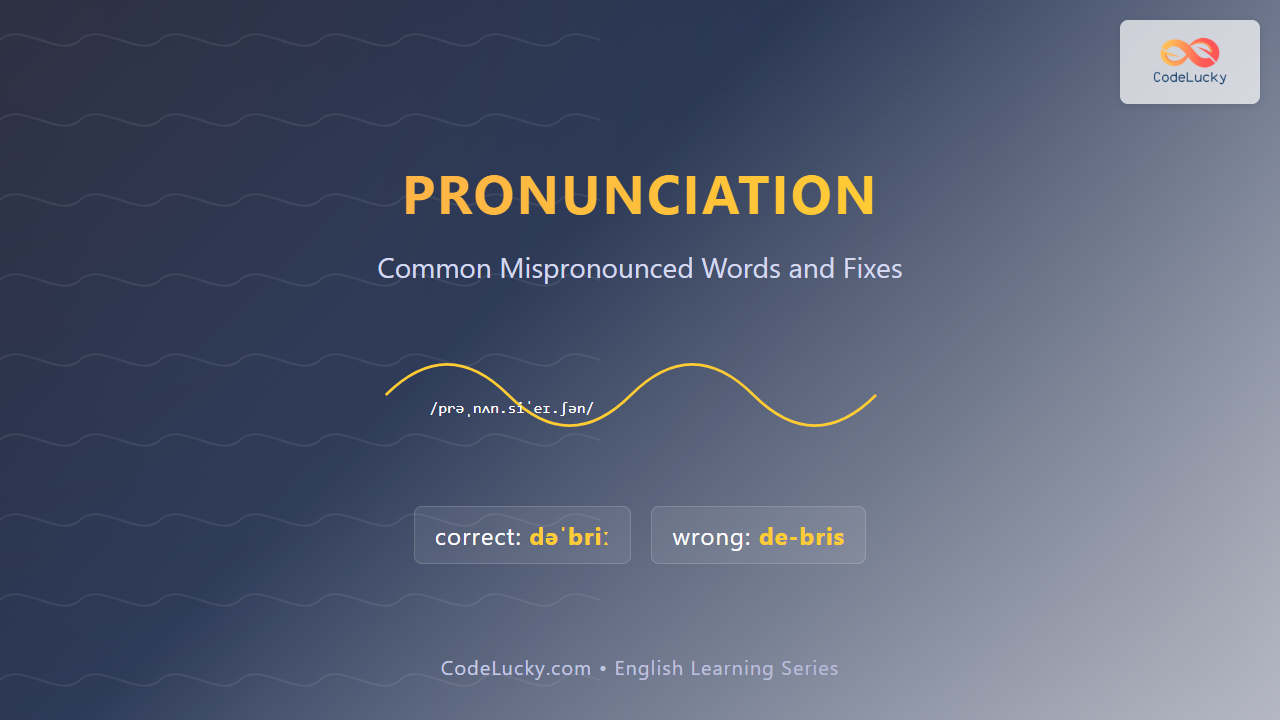
| Debris | de-bris | /dəˈbriː/ | Skip the “s” sound—it’s silent! |
| Wednesday | wens-day | /ˈwenz.deɪ/ | Just say “WENZ-day”, ignore the “d”. |
| Salmon | sal-mon | /ˈsæm.ən/ | The ‘l’ is silent—say “sam-un”. |
| Plumber | plum-ber | /ˈplʌm.ər/ | Don’t pronounce ‘b’. Say “plum-er”. |
| Rendezvous | ren-dez-vus | /ˈrɒn.deɪ.vuː/ | French origin! It’s “RON-day-voo”. |
Word Stress and Intonation Patterns
In English, word stress means some syllables are pronounced more strongly than others. Incorrect stress may change meaning or sound unnatural.

Example: ‘REcord’ (noun) vs. ‘reCORD’ (verb). You can see how stress changes both meaning and rhythm.
Interactive Pronunciation Fix (Try It Yourself)
Follow this quick ear-training exercise:
- Record yourself saying: “comfortable, photographer, development, vegetable.”
- Compare your pronunciation to online references or voice assistants.
- Note which syllables you overemphasize and adjust gradually.
A simple visualization of syllable stress:

Common Category-Based Mispronunciations
1. Technology Terms
- Cache → say “cash”, not “cash-ay”.
- Linux → say “LIH-nuhks”, not “LIE-nux”.
- Data → both “day-tuh” and “da-tuh” are accepted (regionally).
2. Everyday Terms
- Clothes → sounds like “clodz” (the “th” merges).
- Etcetera → “et-set-er-uh”, not “ex-setra”.
- Receipt → “ri-seet” (ignore the “p”).
3. Brand and Place Names
- Adidas → “ah-DEE-das”, not “uh-DEE-dus”.
- Nike → “Nai-kee”, not “Naik”.
- BMW → Say letters: “bee-em-double-you”.
Silent Letters and Their Patterns
English hides silent letters everywhere—especially in words borrowed from French or Old English. Here’s a simple chart showing common silent letters.

Tip: To master them, make a personalized “silent letters notebook” and categorize new words based on letter patterns.
Pronunciation Improvement Techniques
- Use the IPA (International Phonetic Alphabet): Helps you see the actual sounds rather than the spelling.
- Listen and repeat: Watch English news or videos with accurate pronunciation and mimic speakers.
- Minimal pairs practice: Improve clarity by comparing similar sounds (ship/sheep, fan/van).
- Record yourself daily: Compare recordings to practice self-correction.

Minimal Pair Exercise Example
| Pair | Sound Difference | Practice Sentence |
|---|---|---|
| ship / sheep | /ɪ/ vs /iː/ | The ship sails; the sheep stays. |
| fan / van | /f/ vs /v/ | The fan is fast; the van is slow. |
How to Keep Improving
- Read aloud daily for 10 minutes from English texts.
- Use pronunciation apps or English dictionaries with voice playback.
- Join English clubs or online platforms focused on accent training.
- Focus on one sound group each week (like “th”, “r”, or “l”).
Conclusion
Perfect pronunciation isn’t about sounding like a native speaker—it’s about being clear and confident. By learning common mispronounced words and applying phonetic awareness, you’ll quickly elevate your spoken English. Remember: small daily practice builds lasting accuracy. Speak it, hear it, fix it—and your pronunciation will evolve naturally over time.