Present Perfect Tense is one of the most useful and slightly tricky tenses in English. It connects the past with the present — describing actions that happened recently, have results now, or continue until now. In simple words, we use the Present Perfect Tense to talk about “what has happened” or “what we have done” before now.
1. Structure of Present Perfect Tense
The Present Perfect Tense is formed using the auxiliary verb have/has + the past participle (V3 form) of the main verb.
Subject + has/have + past participleExamples:
- I have finished my homework.
- She has written a letter.
- They have gone to the market.
Tip: Use ‘has’ with he, she, it, or singular nouns and ‘have’ with I, you, we, they, or plural nouns.
2. When to Use Present Perfect Tense
a. To Talk About Experiences
We use the Present Perfect when we have done something at some point before now (the exact time is not important).
- I have visited the Taj Mahal.
- She has eaten sushi before.
b. To Talk About Recent Actions (with Result Now)
It’s used for actions completed recently, especially when the result is visible now.
- I have lost my phone. (That’s why I can’t call you now.)
- He has broken his arm. (So, he can’t play today.)
c. To Talk About Actions Continuing Up to Now
We use it for actions that started in the past and still continue.
- We have lived here since 2010.
- She has worked at this company for five years.

3. Signal Words Used with Present Perfect
Some words often indicate the use of the Present Perfect Tense. Recognizing them helps identify when to use it correctly.
- Ever, Never: Have you ever been to London? / I have never tried sushi.
- Just, Already, Yet: She has just arrived. / Have you done it yet?
- Since, For: We have lived here since 2018. / He has studied English for three years.
- Recently, Lately: They have recently moved to a new city.
4. Negative and Interrogative Forms
Negative:
Subject + has/have + not + past participleExamples:
- I have not finished my work.
- He has not seen that movie.
Interrogative:
Has/Have + subject + past participle?Examples:
- Have you visited Paris?
- Has she called you yet?

5. Common Mistakes with Present Perfect
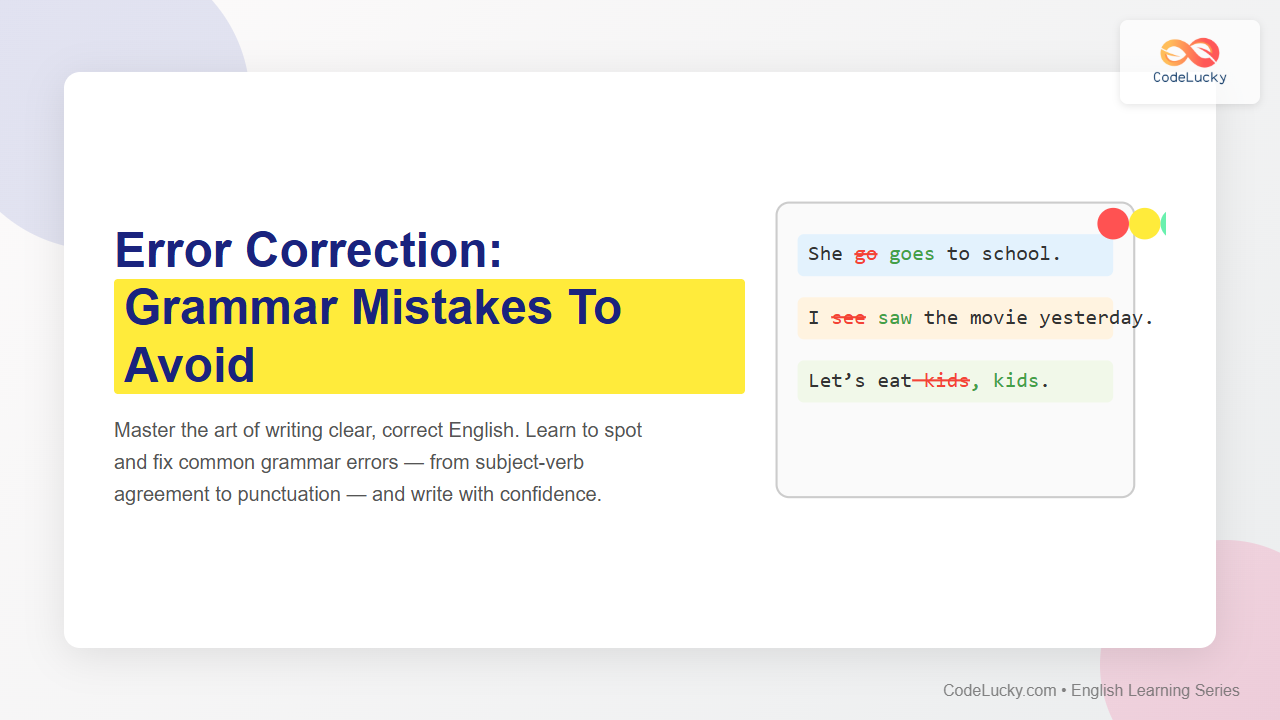
- ❌ I have seen him yesterday. → ✅ I saw him yesterday. (Use Past Simple when time is mentioned.)
- ❌ She has did her homework. → ✅ She has done her homework. (Use past participle, not past form.)
- ❌ Did you ever visit Delhi? → ✅ Have you ever visited Delhi?

6. Interactive Exercise
Try filling in the blanks to test your understanding. (Hover to reveal the correct answer)
- 1. I ______ (see) that movie three times. have seen
- 2. She ______ (already/finish) her work. has already finished
- 3. They ______ (live) in Delhi since 2012. have lived
7. Present Perfect vs. Past Simple
Understanding the contrast between Present Perfect and Past Simple helps you choose the correct one.
| Situation | Present Perfect | Past Simple |
|---|---|---|
| No specific time mentioned | I have met him before. | – |
| Specific past time given | – | I met him yesterday. |
| Recent action, result now | I have broken my glasses. | – |
| Completed in the past | – | I broke my leg last year. |

8. Quick Recap
- Use have/has + V3 form for the Present Perfect Tense.
- Use for actions with present results, experiences, and ongoing actions.
- Use since (starting point) and for (period of time).
- Avoid mentioning specific past times like “yesterday” or “last week.”
9. Practice Section
Write your own sentences using the Present Perfect Tense in the comments below—mention whether your example shows an experience, result, or ongoing action. Try to use signal words like since, for, or already.
By mastering the Present Perfect Tense, you’ll sound more natural, fluent, and confident in English conversations and writing.