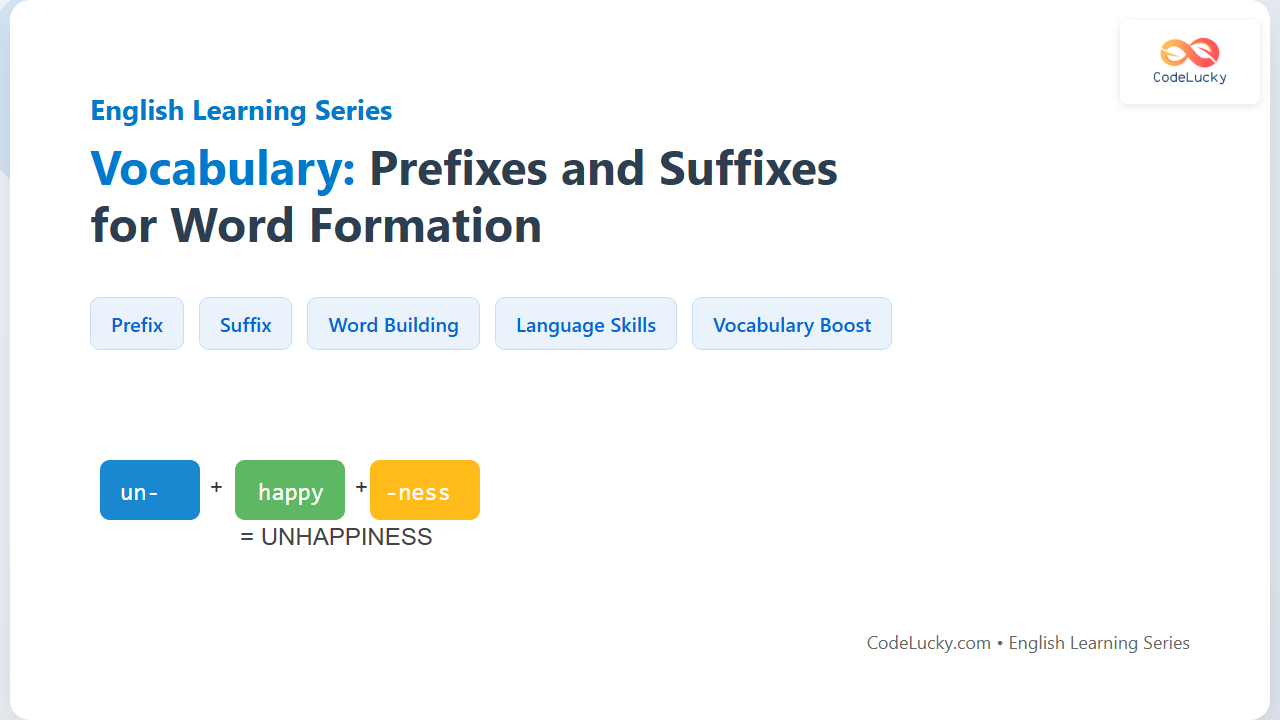
Learning how to form new words using prefixes and suffixes is one of the most effective ways to expand your English vocabulary. Understanding these word parts helps you unlock meaning, recognize connections between words, and form more precise sentences. This article explores every aspect of prefixes and suffixes with visual and interactive explanations ideal for learners at any level.
Understanding Word Formation
Word formation in English is the process of creating new words by adding meaningful elements—called affixes—to a root or base word. These affixes may appear at the beginning or the end of the word:
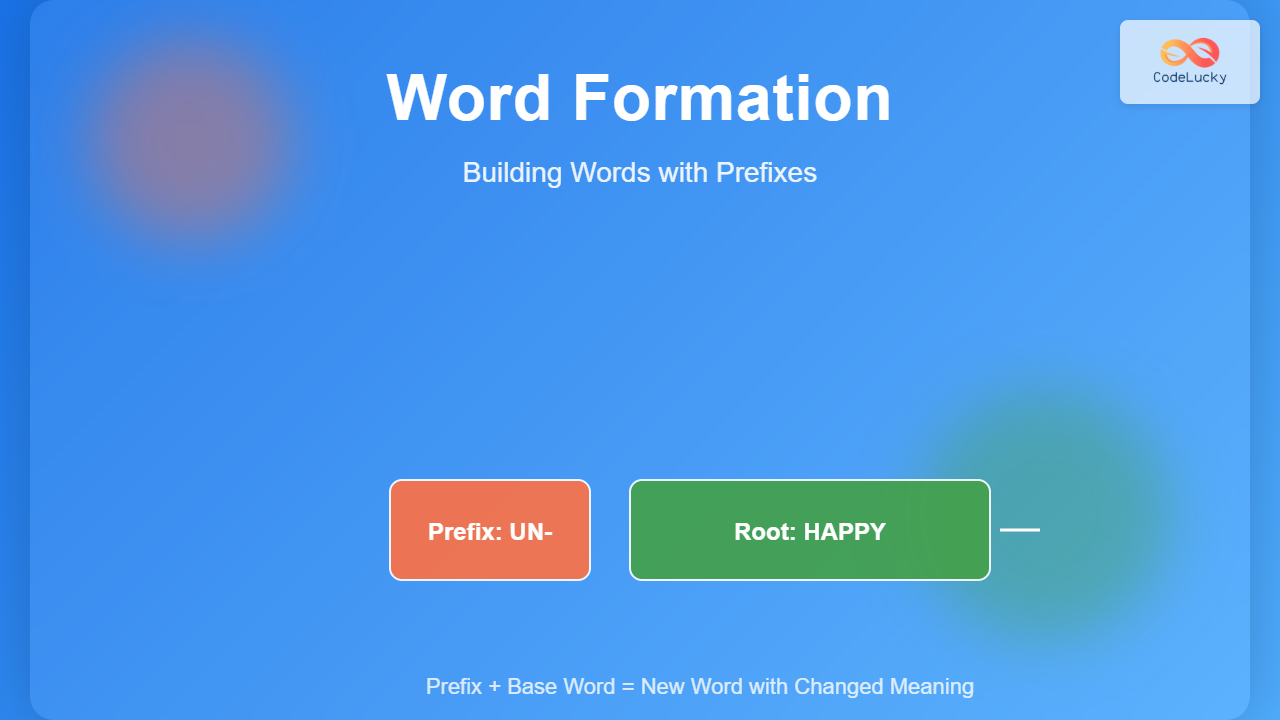
- Prefix: Added before the root word (e.g., un + happy = unhappy)
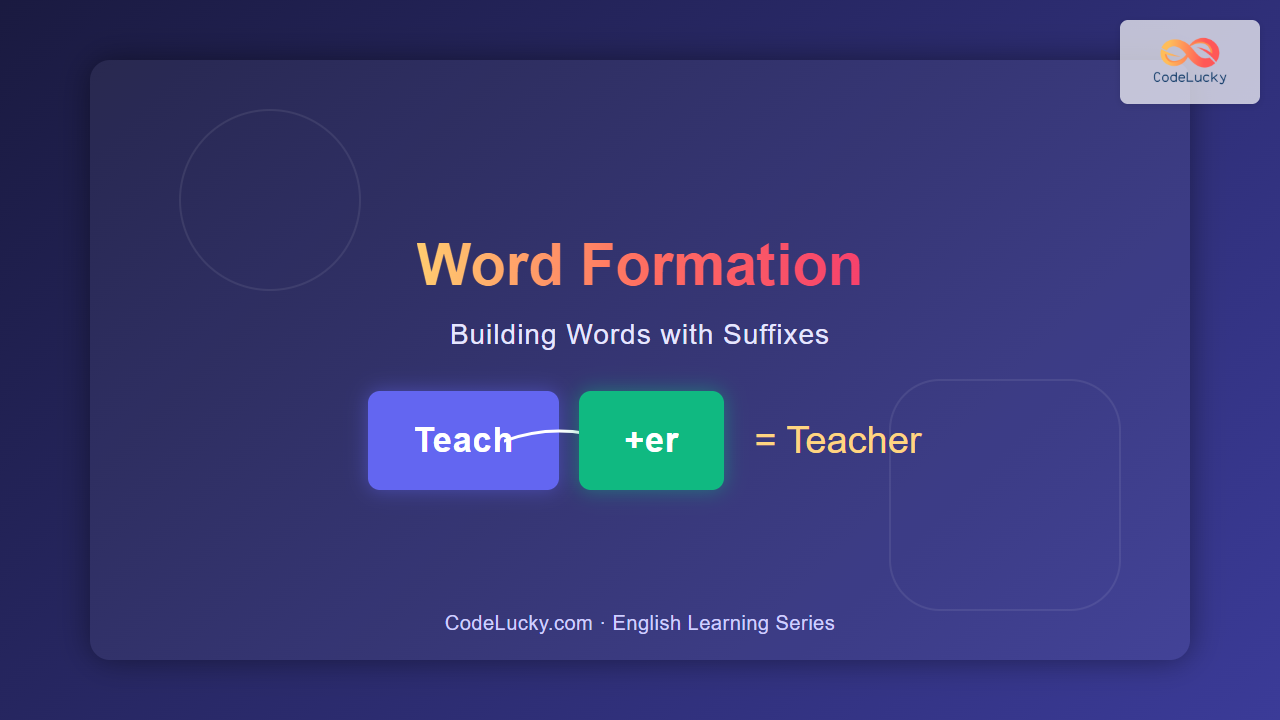
- Suffix: Added after the root word (e.g., happy + ness = happiness)

Prefixes often change the meaning of a word, while suffixes often change the form (for example, making an adjective into a noun).
Common Prefixes and Their Meanings
Prefixes are small parts added to the beginning of words to modify or reverse their meaning. Here are some frequent English prefixes with meanings and examples:
| Prefix | Meaning | Base Word | New Word | Meaning of New Word |
|---|---|---|---|---|
| un- | not | happy | unhappy | not happy |
| re- | again | write | rewrite | write again |
| pre- | before | view | preview | view before |
| dis- | opposite | agree | disagree | hold the opposite opinion |
| mis- | wrongly | lead | mislead | lead in a wrong direction |
Common Suffixes and Their Meanings
Suffixes are added to the end of base words, often changing the word class (for instance, a verb becomes a noun or an adjective). Here are key examples every learner should know:
| Suffix | Word Type Created | Base Word | New Word | Example Meaning |
|---|---|---|---|---|
| -ness | noun | kind | kindness | the quality of being kind |
| -ful | adjective | hope | hopeful | full of hope |
| -less | adjective | care | careless | without care |
| -ly | adverb | quick | quickly | in a quick manner |
| -er | noun (person performing action) | teach | teacher | one who teaches |

How Prefixes and Suffixes Affect Meaning
Adding affixes can completely change both the definition and the grammar role of a word. Consider these transformations:
- happy → unhappily (prefix + suffix = change in meaning + word type)
- use → reusable (prefix and suffix work together to create new context)
- act → reaction (base verb becomes a noun with a new meaning)

Interactive Practice: Word Building Challenge
Try forming new words yourself! Combine the prefixes and suffixes below to create valid English words.
| Prefix Options | Root Words | Suffix Options |
|---|---|---|
| re-, dis-, un- | cover | -ed, -ing |
| pre-, mis-, co- | operate | -ive, -ion |
| over-, under-, non- | estimate | -ing, -ed |
Challenge: How many correct words can you form? Example: pre + view + ing = previewing.
Tips for Mastering Prefixes and Suffixes
- Focus on understanding root meanings first—knowing “act” helps decode “react,” “actor,” and “action.”
- Learn affixes in word families (e.g., appear → disappear → appearance).
- Use flashcards or word maps to visualize word connections.
- When reading, highlight new prefixes or suffixes and research their meanings.

Why This Matters in English Learning
Understanding word formation makes reading and writing more powerful. Instead of memorizing individual words, learners can decode and construct vocabulary independently. This skill also enhances comprehension in academic writing, professional communication, and standardized testing like IELTS or TOEFL.
Conclusion
Prefixes and suffixes are the building blocks of English vocabulary. By mastering them, you gain control over language structure, meaning, and style—allowing you to express ideas with precision and creativity. Practice consistently, play with combining roots and affixes, and soon word formation will become second nature.
Next Step: Explore our upcoming lesson on Word Roots and Meanings to deepen your understanding of English word origins.