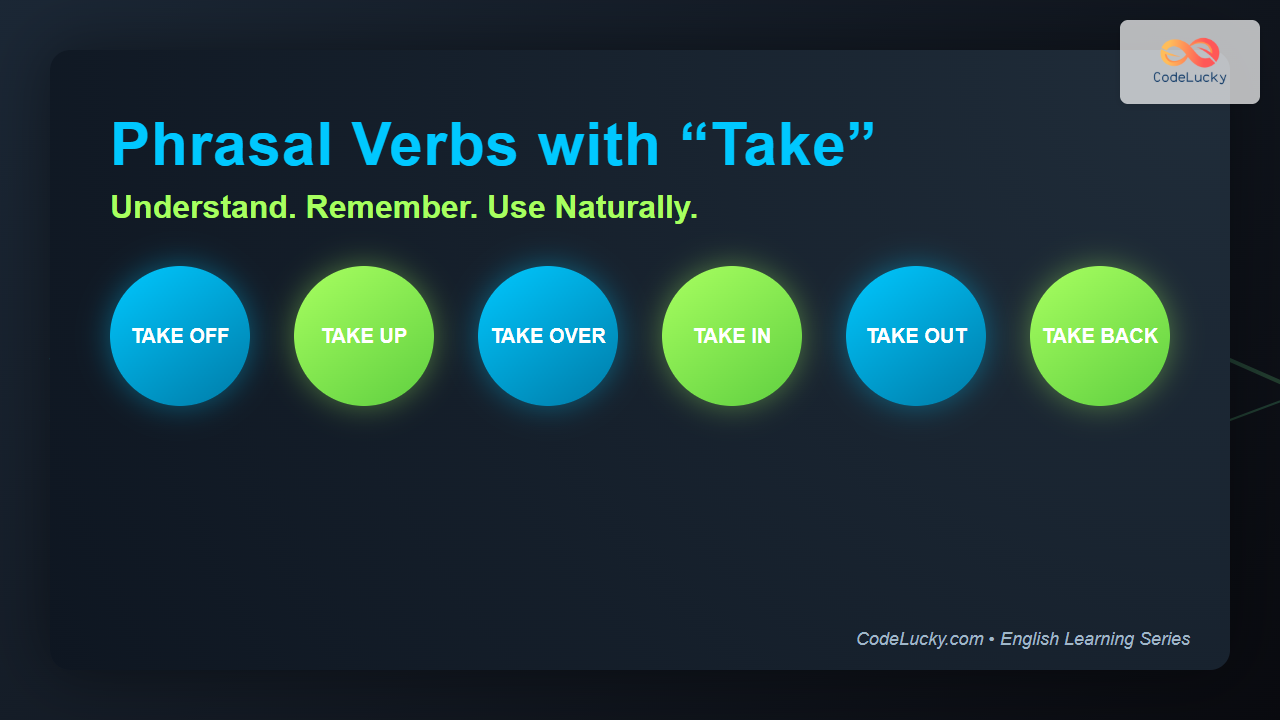
Phrasal verbs are essential in mastering fluent and natural English communication. Among them, verbs with “take” are especially common and versatile. From business meetings to everyday conversations, phrasal verbs like take off, take up, and take over appear everywhere. In this article from CodeLucky.com, we’ll explore the most useful phrasal verbs with “take”, their meanings, and examples to help you use them confidently.
What Are Phrasal Verbs?
A phrasal verb is a phrase that combines a verb with a preposition or an adverb (or both). The meaning often changes completely from the original verb. For example:
Take+off→ to remove something or to leave quickly.

Why Learn ‘Take’ Phrasal Verbs?
The verb “take” changes meaning depending on the particle that follows it. Learning these combinations boosts comprehension and expression. You’ll sound natural when you use them instead of literal translations.
Common Phrasal Verbs with “Take”
1. Take Off
Meanings:
- (of an aircraft) To leave the ground and start flying.
- (of a person or business) To become successful or popular quickly.
- (clothing) To remove something you are wearing.
Examples:
- The plane took off at 7 PM.
- Her YouTube channel took off after one viral video.
- Please take off your shoes before entering.

2. Take Up
Meanings:
- To start doing a new activity or hobby.
- To accept an offer or challenge.
- To occupy time, space, or effort.
Examples:
- I’ve recently taken up painting.
- She decided to take up the job offer in London.
- His new project takes up most of his evenings.
3. Take Over
Meanings:
- To assume control or responsibility for something.
- To replace someone in a position or role.
Examples:
- She took over as team leader after John left.
- A global brand has taken over the local company.

4. Take In
Meanings:
- To understand or absorb information.
- To provide shelter or lodging for someone.
- To deceive or trick someone.
Examples:
- It’s hard to take in all this news at once.
- They took in a stray cat during the storm.
- Don’t let yourself be taken in by scams.
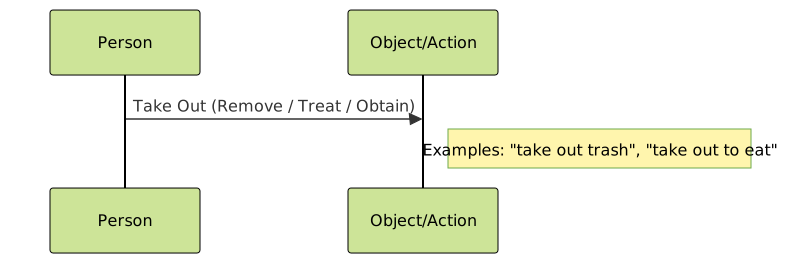
5. Take Out
Meanings:
- To remove something from a place or container.
- To invite someone on a social outing.
- To obtain official documents, like insurance or a loan.
Examples:
- She took out her phone to check messages.
- He took her out to dinner last night.
- I need to take out medical insurance soon.
6. Take Back
Meanings:
- To admit you said something wrong and retract it.
- To return an item to a store or owner.
- To remind someone of the past (nostalgia).
Examples:
- I take back what I said earlier.
- She took back the shoes that didn’t fit.
- This song takes me back to my school days.
7. Take After
Meaning:
- To resemble a parent or relative in appearance or behavior.
Examples:
- He takes after his father in both looks and temper.
Quick Summary of ‘Take’ Phrasal Verbs
| Phrasal Verb | Main Meaning | Example |
|---|---|---|
| Take off | To leave the ground/remove | The plane took off at 7 PM. |
| Take up | To start doing something new | He took up photography last year. |
| Take over | To assume control | The new CEO took over in 2024. |
| Take in | To absorb or understand | I couldn’t take in all the details. |
| Take out | To remove or treat | Let’s take out the trash. |
| Take back | To retract or return | I take back what I said. |
| Take after | To resemble someone | He takes after his mother. |
Interactive Practice: Fill in the Blanks
Try completing these sentences by choosing the correct “take” phrasal verb:
- The company will _______ the smaller brand next year.
- You should _______ your jacket—it’s getting warm.
- I’ve decided to _______ yoga for better health.
- Don’t be _______ by false advertising.
- This smell _______ me _______ to my childhood.
Hint: Possible answers – take over, take off, take up, taken in, takes back.
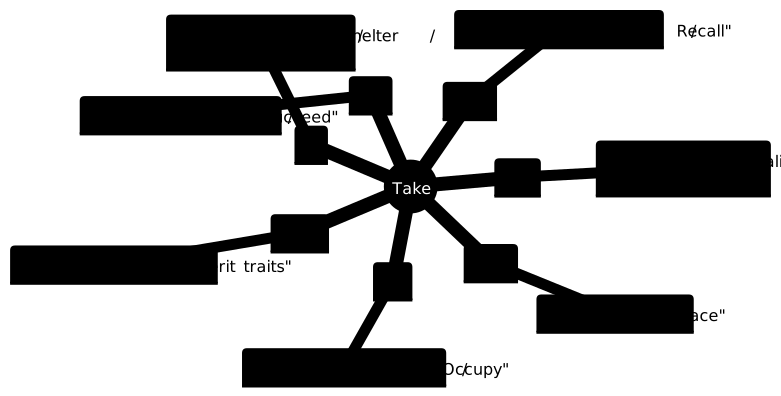
Visual Mind Map of Phrasal Verbs with “Take”
Conclusion
Mastering phrasal verbs with “take” is an excellent step toward sounding more like a native English speaker. They bring flexibility, nuance, and natural rhythm to your speech. Practice using a few each day until they come naturally—each phrasal verb opens up new ways to express ideas more vividly and fluently.
Learn, practice, and level up your English vocabulary with more lessons at CodeLucky.com.