Learning phrasal verbs with “make” can transform the way you speak and understand English. These phrases are used daily — from casual conversation to professional writing. In this guide from CodeLucky.com, we’ll explore the most common and useful phrasal verbs with ‘make’, their meanings, visual explanations, and real-life examples that help you remember them better.
What Are Phrasal Verbs with “Make”?
A phrasal verb is a combination of a verb (like make) and one or more particles (prepositions or adverbs) such as up, out, or over. Together, they create a new meaning that’s different from the original verb “make.”

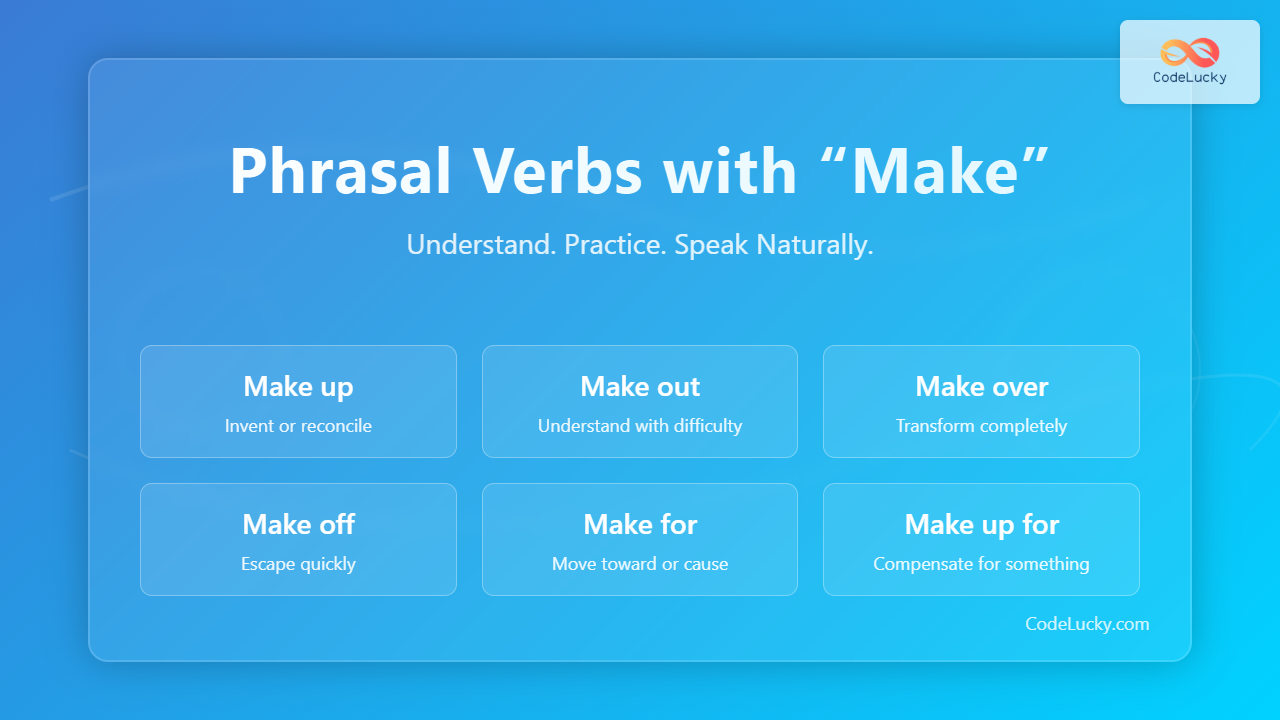
1. Make up
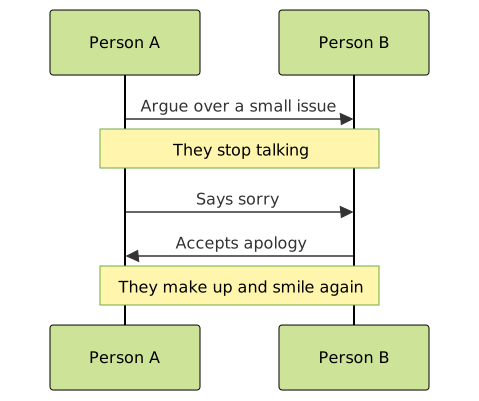
Meaning: To invent something or to reconcile after a disagreement.
Examples:
- She made up a story to explain why she was late.
- They argued last night but made up this morning.
2. Make out
Meaning: To understand something with difficulty, or to kiss passionately.
Examples:
- I can barely make out what he’s saying — the connection is poor.
- They were making out behind the cinema!
Tip: Context is key! In conversations, “make out” can sound very different depending on the situation.
3. Make over
Meaning: To give a new look or appearance; to transfer ownership.
Examples:
- The old café was completely made over into a modern lounge.
- She made over all her property to her children.

4. Make off
Meaning: To leave quickly, especially after committing a crime or doing something wrong.
Examples:
- The thieves made off with the jewels before the police arrived.
- The kids made off as soon as they saw the teacher coming!
5. Make for
Meaning: To move toward a place, or to contribute to a situation or result.
Examples:
- After hearing the noise, everyone made for the exit.
- Good training and teamwork make for a successful project.
A[Good Teamwork] –> B[Better Coordination] B –> C[Success]