Modern applications demand high performance, real-time responses, and the ability to scale. Sequential execution often fails in such scenarios, and that’s where parallel and concurrent algorithms with multi-threading solutions step in. These algorithms harness multiple computational resources or threads to handle tasks simultaneously, leading to improved efficiency and throughput.
Introduction to Parallel and Concurrent Algorithms
While parallel algorithms aim to divide a large task into smaller ones and execute them simultaneously, concurrent algorithms focus on structuring programs so multiple tasks can make progress at once, even if not executed truly in parallel. Understanding the difference is essential:
- Parallelism: Actual simultaneous execution of tasks on multiple CPU cores or processing units.
- Concurrency: Multiple tasks making progress independently, often interleaved or scheduled by the system.
- Multi-threading: A practical implementation of both, enabling multiple threads of execution within a process.

Why Multi-Threading Is Essential
With increasing hardware cores, multi-threading helps software utilize full hardware potential. Benefits include:
- Reduced execution time through parallel work distribution.
- Improved responsiveness in real-time systems like gaming or finance.
- Scalable solutions for big data, AI training, and simulations.
Examples of Parallel Algorithms
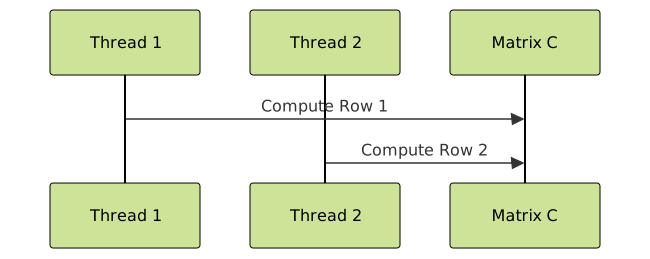
Parallel algorithms can often be observed in matrix multiplication, sorting, and divide-and-conquer techniques. Consider parallel matrix multiplication where each thread computes a part of the output matrix.
# Parallel matrix multiplication using threading
import threading

def worker(A, B, C, row):
    for j in range(len(B[0])):
        for k in range(len(B)):
            C[row][j] += A[row][k] * B[k][j]

A = [[1,2],[3,4]]
B = [[5,6],[7,8]]
C = [[0,0],[0,0]]

threads = []
for i in range(len(A)):
    t = threading.Thread(target=worker, args=(A,B,C,i))
    threads.append(t)
    t.start()

for t in threads:
    t.join()

print(C)  # [[19,22],[43,50]]
Visual Output: For the example above, two threads compute rows in parallel.
Concurrent Algorithms Example: Producer-Consumer Problem
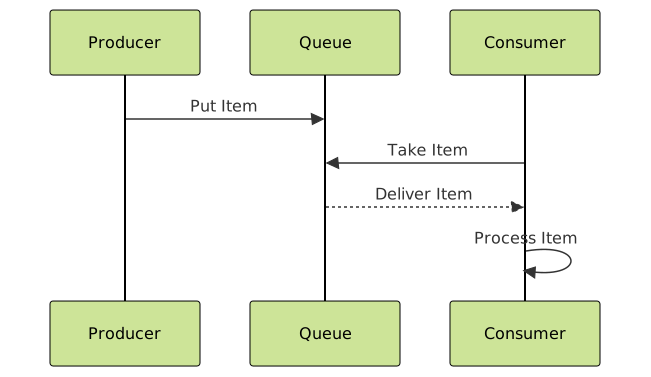
Concurrency doesn’t always mean tasks are executed simultaneously; it means multiple tasks progress without blocking each other unnecessarily. A classic case is the Producer-Consumer problem.
import threading, queue, time

q = queue.Queue()

def producer():
    for i in range(5):
        q.put(i)
        print(f"Produced {i}")
        time.sleep(0.5)

def consumer():
    while True:
        item = q.get()
        if item is None:
            break
        print(f"Consumed {item}")
        time.sleep(1)

t1 = threading.Thread(target=producer)
t2 = threading.Thread(target=consumer)

t1.start()
t2.start()
t1.join()
q.put(None)
t2.join()
Visual Example: The producer keeps adding items, and the consumer processes them concurrently. Both make progress without being blocked completely.
Design Considerations
When designing parallel and concurrent algorithms with multi-threading, keep the following aspects in mind:
- Load Balancing: Threads should share work fairly to avoid idle cores.
- Data Dependencies: Shared variables must be protected to avoid race conditions.
- Synchronization: Mutexes, semaphores, and atomic operations are crucial for safe shared access.
- Scalability: Algorithm performance should scale with cores without excessive overhead.
Interactive Example for Understanding
Imagine splitting a list of numbers into chunks and running a sum reduction in parallel:
from concurrent.futures import ThreadPoolExecutor

data = list(range(1, 11))  # [1..10]
def partial_sum(sublist):
    return sum(sublist)

chunks = [data[i:i+5] for i in range(0, len(data), 5)]

with ThreadPoolExecutor() as executor:
    results = executor.map(partial_sum, chunks)

print("Final Sum:", sum(results))  # Output: 55
This example shows how dividing tasks across threads helps compute aggregates much faster for larger datasets.
Conclusion
Parallel and concurrent algorithms with multi-threading solutions are at the core of high-performance applications today. From search engines and databases to machine learning and gaming, these principles make systems responsive, efficient, and scalable. Understanding the differences and designing carefully with synchronization and data sharing in mind helps developers fully exploit the power of multi-core architectures.