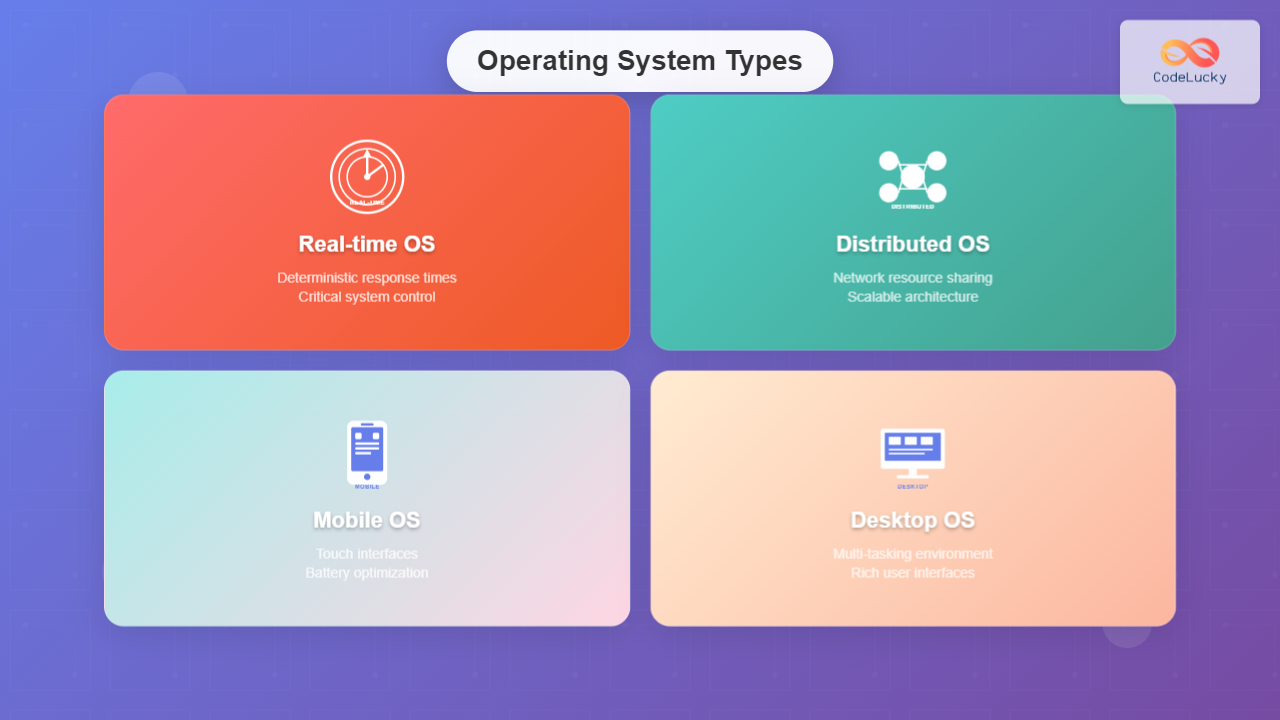
Operating systems serve as the crucial bridge between computer hardware and software applications, but not all operating systems are created equal. Different computing environments require specialized operating system architectures to meet their unique demands. This comprehensive guide explores the four major categories of operating systems: real-time, distributed, mobile, and desktop systems, examining their characteristics, use cases, and implementation strategies.
Understanding Operating System Classification
Operating systems can be classified based on various criteria including their intended use case, response time requirements, resource management approaches, and architectural design. The classification helps system architects choose the most appropriate OS type for specific applications and hardware configurations.

Real-time Operating Systems (RTOS)
Real-time operating systems are designed to process data and respond to events within strict time constraints. These systems prioritize predictable response times over overall system throughput, making them essential for time-critical applications.
Characteristics of Real-time OS
- Deterministic behavior: Guaranteed response times for critical tasks
- Priority-based scheduling: Tasks are executed based on their urgency and importance
- Minimal latency: Reduced overhead for faster task switching
- Resource allocation: Predictable memory and CPU allocation patterns
- Interrupt handling: Efficient and fast interrupt processing mechanisms
Types of Real-time Systems
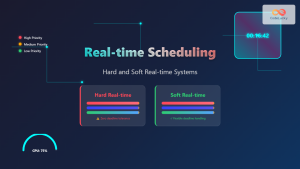
Hard Real-time Systems
Hard real-time systems have absolute deadlines that must never be missed. Missing a deadline can result in system failure or catastrophic consequences.
Examples:
- Aircraft flight control systems
- Nuclear power plant control systems
- Automotive engine management systems
- Medical life support equipment
Soft Real-time Systems
Soft real-time systems have deadlines that are important but not absolutely critical. Missing occasional deadlines degrades performance but doesn’t cause system failure.
Examples:
- Video streaming applications
- Audio processing systems
- Online gaming platforms
- Voice over IP (VoIP) systems
Popular Real-time Operating Systems
| RTOS | Type | Key Features | Common Applications |
|---|---|---|---|
| VxWorks | Hard/Soft | Deterministic scheduling, POSIX compliance | Aerospace, automotive, industrial automation |
| FreeRTOS | Soft | Open source, small footprint, portable | IoT devices, embedded systems |
| QNX | Hard | Microkernel architecture, fault tolerance | Automotive infotainment, medical devices |
| RTLinux | Hard | Linux-based, dual-kernel approach | Industrial control, robotics |
Distributed Operating Systems
Distributed operating systems manage resources across multiple interconnected computers, presenting them as a single unified system to users and applications. These systems enable resource sharing, load distribution, and fault tolerance across network-connected machines.

Key Characteristics
- Transparency: Users interact with the system as if it were a single machine
- Scalability: Easy addition or removal of nodes from the system
- Fault tolerance: System continues operating despite individual node failures
- Resource sharing: Efficient utilization of distributed computing resources
- Communication: Inter-node communication through message passing
Types of Distributed Systems
Network Operating Systems
Network operating systems provide services to manage network resources and enable communication between connected devices.
Examples:
- Novell NetWare
- Windows Server with Active Directory
- UNIX-based network systems
Middleware-based Distributed Systems
These systems use middleware layers to provide distributed computing services on top of existing operating systems.
Examples:
- Apache Hadoop ecosystem
- Kubernetes orchestration platform
- Apache Spark distributed computing
Distributed OS Examples and Applications
| System | Architecture | Key Features | Use Cases |
|---|---|---|---|
| Google’s Borg | Cluster management | Container orchestration, resource isolation | Large-scale web services |
| Apache Mesos | Resource abstraction | Multi-framework support, fault tolerance | Data centers, cloud computing |
| Plan 9 | Distributed UNIX | Network transparency, resource naming | Research, distributed computing |
Mobile Operating Systems
Mobile operating systems are specifically designed for smartphones, tablets, and other portable devices. They optimize for battery efficiency, touch interfaces, wireless connectivity, and app ecosystem management.
Core Characteristics
- Power management: Aggressive battery optimization and power-saving modes
- Touch interface: Gesture-based navigation and touch-optimized UI frameworks
- Connectivity: Integrated support for cellular, Wi-Fi, Bluetooth, and NFC
- App sandboxing: Security isolation between applications
- Hardware integration: Direct access to sensors, cameras, and specialized mobile hardware

Major Mobile Operating Systems
Android
Android, developed by Google, is based on the Linux kernel and uses a Java-based application framework.
Key Features:
- Open-source architecture with customizable UI layers
- Google Play Services integration
- Dalvik/ART runtime for Java applications
- Extensive hardware support across multiple manufacturers
iOS
Apple’s iOS is based on Darwin (BSD Unix) and designed exclusively for Apple devices.
Key Features:
- Tight hardware-software integration
- Objective-C/Swift development environment
- App Store ecosystem with strict quality control
- Advanced security features including hardware-based encryption
Other Mobile Operating Systems
| OS | Developer | Key Characteristics | Market Focus |
|---|---|---|---|
| HarmonyOS | Huawei | Multi-device compatibility, microkernel | IoT and smart devices |
| KaiOS | KaiOS Technologies | Feature phone optimization, web apps | Emerging markets |
| Tizen | Samsung/Linux Foundation | HTML5 apps, multiple device types | Smart TVs, wearables |
Desktop Operating Systems
Desktop operating systems are designed for personal computers, workstations, and laptops, focusing on user productivity, multitasking capabilities, and support for diverse software applications.
Fundamental Characteristics
- Multi-tasking: Concurrent execution of multiple applications
- User interface: Sophisticated graphical interfaces with window management
- File systems: Hierarchical file organization with advanced access controls
- Hardware support: Extensive driver ecosystem for diverse hardware components
- Development tools: Comprehensive programming and development environments

Major Desktop Operating Systems
Microsoft Windows
Windows dominates the desktop market with its user-friendly interface and extensive software compatibility.
Evolution and Features:
- Windows 11: Modern UI, enhanced security, improved performance
- Windows 10: Universal Windows Platform, Cortana integration
- Backward compatibility with legacy applications
- Active Directory integration for enterprise environments
macOS
Apple’s macOS combines UNIX stability with an intuitive graphical interface, optimized for Apple hardware.
Key Advantages:
- Seamless integration with Apple ecosystem
- Advanced graphics and multimedia capabilities
- Built-in development tools (Xcode, Terminal)
- Strong focus on user privacy and security
Linux Distributions
Linux offers numerous distributions tailored for different use cases and user preferences.
Popular Desktop Distributions:
- Ubuntu: User-friendly with strong community support
- Fedora: Cutting-edge features and technologies
- openSUSE: Enterprise-grade stability with YaST configuration
- Arch Linux: Minimal, customizable, rolling release model
Comparative Analysis of Operating System Types

| Aspect | Real-time OS | Distributed OS | Mobile OS | Desktop OS |
|---|---|---|---|---|
| Primary Focus | Timing constraints | Resource distribution | Mobility and efficiency | User productivity |
| Response Time | Deterministic | Variable | Optimized | Interactive |
| Resource Management | Predictable allocation | Distributed sharing | Power-aware | Multi-application |
| Typical Applications | Control systems | Cloud computing | Apps and services | General computing |
| User Interface | Minimal/None | Distributed GUI | Touch-optimized | Rich GUI |
Emerging Trends and Future Directions
Operating system development continues to evolve with changing hardware capabilities and user requirements. Several trends are shaping the future of OS design:
Convergence and Hybrid Systems
Modern operating systems increasingly blur traditional boundaries. Examples include:
- Windows 11: Incorporates mobile-like features and touch optimization
- iPadOS: Bridges mobile and desktop computing paradigms
- Chrome OS: Web-centric approach with Android app support
Cloud-Native Operating Systems
Operating systems designed specifically for cloud computing environments:
- Container-optimized OS distributions
- Kubernetes-native operating systems
- Serverless computing platforms
AI and Machine Learning Integration
Modern operating systems incorporate AI capabilities for:
- Predictive resource management
- Intelligent task scheduling
- Enhanced security threat detection
- Personalized user experience optimization
Selecting the Right Operating System Type
Choosing the appropriate operating system type depends on several critical factors:
Application Requirements Analysis
- Timing constraints: Hard deadlines suggest real-time OS
- Scale requirements: Large-scale deployments may need distributed systems
- User mobility: Portable devices require mobile-optimized OS
- General computing: Productivity applications suit desktop OS
Hardware Considerations
- Processing power: Limited resources favor lightweight OS variants
- Memory constraints: Embedded systems need minimal memory footprint
- Power requirements: Battery-powered devices need power-efficient OS
- Connectivity needs: Network-dependent applications benefit from distributed OS
Development and Maintenance Factors
- Development ecosystem: Available tools and libraries
- Community support: Documentation and troubleshooting resources
- Long-term viability: Vendor support and update policies
- Security requirements: Built-in security features and update mechanisms
Understanding the distinct characteristics and optimal use cases for each operating system type enables informed architectural decisions. Whether designing embedded control systems, large-scale distributed applications, mobile experiences, or desktop productivity tools, selecting the appropriate OS type forms the foundation for successful system implementation.
As computing continues to evolve with emerging technologies like edge computing, IoT proliferation, and artificial intelligence integration, operating system architectures will adapt to meet new challenges while maintaining their core design principles. The key lies in matching system requirements with the inherent strengths of each operating system category.
Related Posts
Real-time Operating System: Complete Guide to RTOS Characteristics and Examples
A Real-time Operating System (RTOS) is a specialized operating system designed to handle tasks with strict timing constraints. Unlike traditional...
Embedded Operating System: Complete Guide to Resource-Constrained Environments
Embedded operating systems form the backbone of countless devices we interact with daily, from smart home appliances to automotive control...
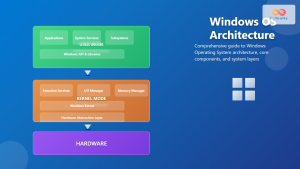
Windows Operating System: Complete Guide to Architecture and Core Components
The Windows Operating System stands as one of the most widely used operating systems globally, powering billions of devices from...
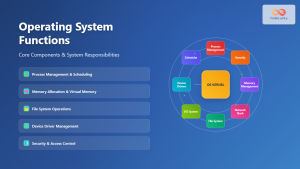
Operating System Functions: Core Components and System Responsibilities
An operating system (OS) serves as the fundamental software layer that manages computer hardware resources and provides essential services to...
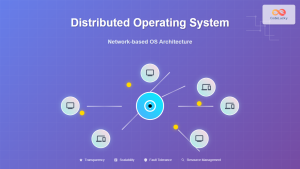
Distributed Operating System: Complete Guide to Network-based OS Architecture
What is a Distributed Operating System? A distributed operating system is a sophisticated software system that manages and coordinates multiple...
Operating System Basics: Complete Guide to What is an OS and How it Works
An operating system (OS) is the fundamental software that manages computer hardware and software resources, acting as an intermediary between...
Mobile Operating System: Android vs iOS Architecture Deep Dive Guide 2025
Mobile operating systems form the backbone of modern smartphones, with Android and iOS dominating the market with over 99% combined...
Operating System Architecture: Monolithic vs Microkernel Design Patterns
Introduction to Operating System Architecture Operating system architecture defines how the core components of an OS are organized and interact...
Virtual Machine in Operating System: Complete Guide to Hardware Virtualization Technology
What is a Virtual Machine in Operating System? A Virtual Machine (VM) is a software-based emulation of a physical computer...
Real-time Scheduling: Hard and Soft Real-time Systems in Operating Systems
Real-time scheduling is a critical component of operating systems that manage tasks with strict timing requirements. Unlike traditional scheduling systems...
Microkernel Operating System: Modular Architecture for Enhanced System Reliability
What is a Microkernel Operating System? A microkernel operating system represents a minimalist approach to kernel design where only the...
Exokernel: Application-level Resource Management Architecture in Operating Systems
Introduction to Exokernel Architecture The exokernel represents a revolutionary approach to operating system design that fundamentally challenges traditional kernel architectures....