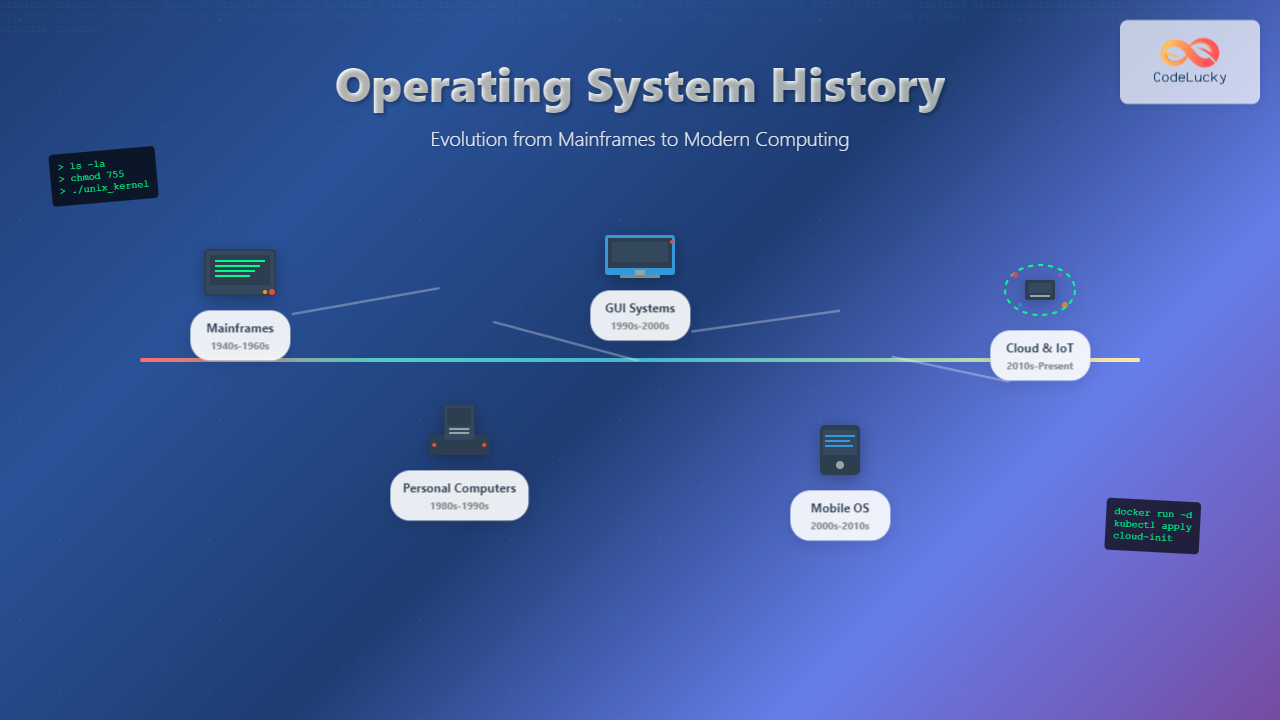
The evolution of operating systems represents one of the most fascinating journeys in computing history. From room-sized mainframes that required teams of operators to today’s smartphones that fit in our pockets, operating systems have been the invisible foundation that makes all computing possible. This comprehensive exploration traces the remarkable transformation of how we interact with machines and how machines manage themselves.
The Dawn of Computing: Pre-Operating System Era (1940s-1950s)
In the earliest days of computing, the concept of an operating system didn’t exist. Machines like the ENIAC (1946) and UNIVAC I (1951) were programmed through physical rewiring and punch cards. Programmers had direct access to the hardware, manually loading programs and managing every aspect of execution.
The challenges were immense:
- Manual operation: Operators physically flipped switches and inserted punch cards
- No multitasking: Only one program could run at a time
- Direct hardware access: Programs controlled memory, I/O, and CPU directly
- Debugging nightmares: Finding errors required examining physical components
The Birth of Operating Systems: Batch Processing Era (1950s-1960s)
As computers became more expensive and time-sharing became crucial, the first operating systems emerged to maximize efficiency. The IBM 704 introduced the concept of batch processing, where similar jobs were grouped together to reduce setup time.
Key Innovations of Early Operating Systems
The GM-NAA I/O system (1956) is considered one of the first operating systems. It introduced several groundbreaking concepts:
- Automatic job sequencing: Programs ran in sequence without manual intervention
- Basic I/O management: Standardized input/output operations
- Memory protection: Prevented programs from interfering with the OS
- Error handling: Automated recovery from common errors

The Multiprogramming Revolution (1960s)
The 1960s marked a revolutionary period with the introduction of multiprogramming. Systems like IBM OS/360 and CTSS (Compatible Time-Sharing System) allowed multiple programs to reside in memory simultaneously, dramatically improving CPU utilization.
CTSS: The Time-Sharing Pioneer
Developed at MIT in 1961, CTSS introduced time-sharing, allowing multiple users to interact with a computer simultaneously. This system featured:
- Interactive computing: Users could type commands and receive immediate responses
- File systems: Hierarchical organization of data
- User accounts: Individual user spaces and permissions
- Command-line interface: Text-based interaction model
IBM OS/360: Standardization Breakthrough
Released in 1966, OS/360 was IBM’s ambitious attempt to create a single operating system for their entire computer line. Despite initial problems, it introduced crucial concepts:
- Device independence: Programs could work with different hardware configurations
- Job Control Language (JCL): Standardized way to describe job requirements
- Virtual memory concepts: Early forms of memory management
- Spooling: Simultaneous Peripheral Operations On-Line
The Unix Revolution: Simplicity and Portability (1970s)
In 1969, Ken Thompson and Dennis Ritchie at Bell Labs began developing Unix, an operating system that would fundamentally change computing forever. Unix introduced the philosophy of “do one thing and do it well,” creating a modular, elegant system.
Unix Design Principles
Unix revolutionized operating system design with these core principles:
- Everything is a file: Devices, processes, and data all treated uniformly
- Small, composable tools: Programs designed to work together
- Plain text storage: Human-readable configuration and data
- Portability: Written in C, making it hardware-independent

Unix Innovations That Shaped Modern Computing
Unix introduced numerous innovations that remain fundamental today:
- Hierarchical file systems: Tree-like directory structure
- Pipes and filters: Connecting program outputs to inputs
- Regular expressions: Powerful pattern matching
- Shell scripting: Automating tasks through command combinations
- Multi-user capabilities: Secure user separation and permissions
The Microcomputer Era: Personal Computing Takes Off (1980s)
The 1980s witnessed the explosion of personal computers, bringing operating systems to individual users rather than just large organizations. This era saw the birth of user-friendly interfaces and mass-market computing.
MS-DOS: The Foundation of PC Computing
Microsoft’s MS-DOS (1981) became the dominant operating system for IBM PC compatibles. Despite its limitations, MS-DOS brought computing to millions:
- Single-user, single-tasking: Only one program at a time
- Command-line interface: Text-based interaction
- 16-bit architecture: Limited to 640KB of conventional memory
- File allocation table (FAT): Simple but effective file system
Apple’s GUI Revolution
Apple’s Lisa (1983) and Macintosh (1984) introduced graphical user interfaces to personal computing, inspired by work at Xerox PARC. The Mac OS featured:
- Point-and-click interface: Mouse-driven interaction
- Windows and menus: Visual representation of programs and files
- Desktop metaphor: Files and folders on a virtual desktop
- WYSIWYG editing: What You See Is What You Get
The GUI Wars: Windows vs. Mac (1990s)
The 1990s marked intense competition between Microsoft Windows and Apple’s Mac OS, driving rapid innovation in user interface design and system capabilities.
Windows Evolution
Microsoft’s Windows evolved from a DOS shell to a full operating system:
- Windows 3.1 (1992): Cooperative multitasking and improved GUI
- Windows 95 (1995): 32-bit architecture, preemptive multitasking, Plug and Play
- Windows NT (1993): Professional workstation OS with advanced security
- Windows 98 (1998): Internet integration and USB support

Mac OS Innovations
Apple continued pushing interface boundaries:
- System 7 (1991): Virtual memory, cooperative multitasking, AppleScript
- Mac OS 8-9: Improved multitasking, better networking, modern file system
- Design consistency: Human Interface Guidelines ensuring uniform experience
The Unix Renaissance: Linux and Open Source (1990s-2000s)
While commercial operating systems battled for desktop supremacy, a quiet revolution was brewing in the Unix world. Linus Torvalds released the Linux kernel in 1991, sparking the open-source movement.
Linux: The Collaborative Operating System
Linux combined the power of Unix with collaborative development:
- Open source: Free to use, modify, and distribute
- Modular design: Kernel plus user-space tools
- Distribution ecosystem: Different flavors for different needs
- Server dominance: Became the backbone of the internet
Key Linux Distributions
- Slackware (1993): One of the earliest distributions
- Red Hat (1994): Enterprise-focused commercial support
- Debian (1996): Community-driven, stability-focused
- Ubuntu (2004): User-friendly desktop Linux
The Internet Age: Networking and Security (2000s)
The widespread adoption of the internet fundamentally changed operating system requirements. Security, networking, and web integration became paramount concerns.
Windows XP: Convergence and Maturity
Windows XP (2001) merged Microsoft’s consumer and professional lines:
- NT kernel: Stable, secure foundation
- Improved security: User Account Control precursors
- Better networking: Built-in internet and network support
- Plug and Play: Automatic hardware detection and configuration
Mac OS X: The Unix Renaissance
Apple’s Mac OS X (2001) combined Mac usability with Unix power:
- Darwin kernel: Unix-based foundation
- Aqua interface: Beautiful, intuitive GUI
- POSIX compliance: Unix compatibility
- Carbon and Cocoa: Application frameworks
The Mobile Revolution: Operating Systems Go Portable (2007-Present)
The introduction of smartphones and tablets created entirely new categories of operating systems optimized for touch interfaces, battery life, and mobility.
iOS: Reimagining User Interaction
Apple’s iOS (2007) revolutionized mobile computing:
- Touch-first design: Multi-touch gestures and interface
- App Store ecosystem: Controlled software distribution
- Sandboxing: Isolated app execution for security
- Power management: Optimized for battery life
Android: Open Mobile Platform
Google’s Android (2008) brought open-source philosophy to mobile:
- Linux kernel: Familiar foundation
- Java applications: Cross-platform development
- Open ecosystem: Multiple manufacturers and customization
- Google services integration: Cloud-connected experience

Modern Operating Systems: Cloud, Containers, and Beyond (2010s-Present)
Today’s operating systems face new challenges: cloud computing, containerization, artificial intelligence, and the Internet of Things (IoT) have reshaped what we expect from our computing platforms.
Cloud-Native Operating Systems
New operating systems designed for cloud computing:
- Chrome OS: Web-first, cloud-storage focused
- Container-optimized OS: Minimal systems for running containers
- Serverless platforms: Function-as-a-Service execution environments
Containerization and Virtualization
Modern operating systems embrace virtualization:
- Docker containers: Lightweight application packaging
- Kubernetes orchestration: Managing containerized applications
- Hypervisors: Multiple OS instances on single hardware
- Microservices architecture: Distributed system design
AI and Machine Learning Integration
Operating systems now include AI capabilities:
- Voice assistants: Siri, Cortana, Google Assistant
- Predictive features: Anticipating user needs
- Hardware acceleration: GPU and specialized AI chips
- Edge computing: Local AI processing
Key Technological Milestones in OS Evolution
Memory Management Evolution
- 1960s: Fixed partitioning and simple allocation
- 1970s: Virtual memory and paging systems
- 1980s: Segmentation and protection mechanisms
- 1990s: Advanced virtual memory management
- 2000s+: NUMA awareness and memory compression
File System Advancements
- Early systems: Sequential and indexed files
- Hierarchical systems: Directory trees and path navigation
- Journaling systems: Crash recovery and data integrity
- Distributed systems: Network file systems
- Modern systems: Copy-on-write, snapshots, and deduplication
Security Evolution
- 1960s-70s: Basic user separation
- 1980s-90s: Access control lists and permissions
- 2000s: Mandatory access controls and sandboxing
- 2010s+: Hardware-assisted security and trusted computing
The Future of Operating Systems
As we look toward the future, several trends are shaping the next generation of operating systems:
Emerging Paradigms
- Edge computing: Distributed processing closer to data sources
- Quantum computing: Entirely new computational models
- AR/VR integration: Immersive computing experiences
- Blockchain integration: Decentralized trust and verification
Sustainability and Efficiency
- Green computing: Energy-efficient operation
- Carbon-aware scheduling: Using renewable energy when available
- Hardware longevity: Supporting older devices longer
- Resource optimization: Minimal resource usage
Lessons from Operating System Evolution
The history of operating systems teaches us valuable lessons about technology evolution:
Recurring Patterns
- Abstraction layers: Successful systems hide complexity
- Standardization benefits: Common interfaces enable innovation
- Open vs. closed ecosystems: Both models can succeed
- User experience matters: Technical superiority isn’t always enough
Innovation Drivers
- Hardware advances: New capabilities demand new software
- User needs: Changing requirements drive evolution
- Competition: Market forces accelerate innovation
- Open source: Collaborative development creates alternatives
The evolution of operating systems from room-sized mainframes to pocket-sized smartphones represents one of humanity’s greatest technological achievements. Each generation built upon the innovations of the previous, creating increasingly sophisticated and user-friendly computing experiences.
From the manual operation of early computers to today’s AI-powered systems that anticipate our needs, operating systems have transformed from simple program loaders to complex orchestrators of digital life. As we move forward into an era of quantum computing, artificial intelligence, and ubiquitous connectivity, operating systems will continue to evolve, adapting to new hardware capabilities and user expectations.
Understanding this history helps us appreciate not just where we’ve come from, but where we’re heading. The fundamental principles established by pioneering systems like Unix continue to influence modern designs, while new paradigms like containerization and edge computing are shaping the future. The story of operating systems is far from over – it’s entering its most exciting chapter yet.
Related Posts
C Introduction: Language Overview and History
C is a powerful, versatile, and efficient programming language that has stood the test of time. Since its inception in...
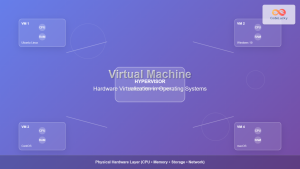
Virtual Machine in Operating System: Complete Guide to Hardware Virtualization Technology
What is a Virtual Machine in Operating System? A Virtual Machine (VM) is a software-based emulation of a physical computer...
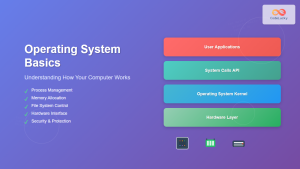
Operating System Basics: Complete Guide to What is an OS and How it Works
An operating system (OS) is the fundamental software that manages computer hardware and software resources, acting as an intermediary between...
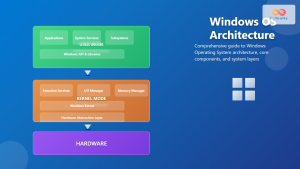
Windows Operating System: Complete Guide to Architecture and Core Components
The Windows Operating System stands as one of the most widely used operating systems globally, powering billions of devices from...
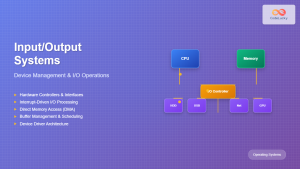
Input Output Systems: Complete Guide to Device Management and I/O Operations
Input/Output (I/O) systems form the critical bridge between a computer's internal processing capabilities and the external world. These systems manage...
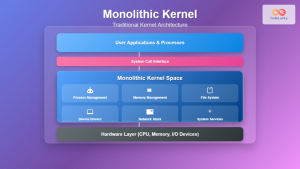
Monolithic Kernel: Complete Guide to Traditional Kernel Architecture
What is a Monolithic Kernel? A monolithic kernel is a traditional kernel architecture where the entire operating system runs in...
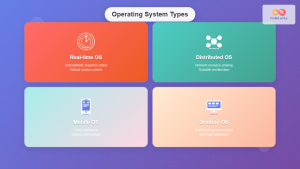
Operating System Types: Real-time, Distributed, Mobile and Desktop Systems Explained
Operating systems serve as the crucial bridge between computer hardware and software applications, but not all operating systems are created...
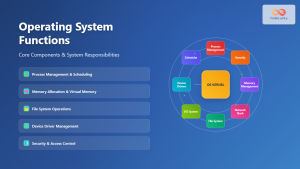
Operating System Functions: Core Components and System Responsibilities
An operating system (OS) serves as the fundamental software layer that manages computer hardware resources and provides essential services to...

Device Drivers in Operating System: Complete Guide to Hardware Abstraction Layer
Device drivers serve as the critical bridge between your operating system and hardware components, forming what's known as the Hardware...
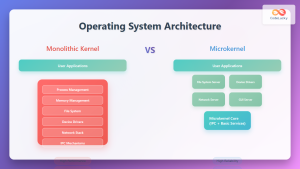
Operating System Architecture: Monolithic vs Microkernel Design Patterns
Introduction to Operating System Architecture Operating system architecture defines how the core components of an OS are organized and interact...
Exokernel: Application-level Resource Management Architecture in Operating Systems
Introduction to Exokernel Architecture The exokernel represents a revolutionary approach to operating system design that fundamentally challenges traditional kernel architectures....
C in Embedded Systems: Basics of Embedded Programming
Embedded systems are ubiquitous in our modern world, powering everything from smart home devices to automotive control systems. At the...