The N-Queens Problem is one of the most famous problems in computer science and algorithms. It combines logic, recursion, and backtracking to solve a timeless chess puzzle. The task is simple to state: place N queens on an N×N chessboard such that no two queens attack each other. However, the problem’s challenge lies in finding all valid solutions efficiently.
This problem not only appears in typical algorithm studies but is also a popular interview and exam problem since it tests recursive thinking, problem decomposition, and optimization strategies using backtracking. In this article, we’ll explore its definition, algorithm step-by-step, complexity analysis, and practical Python implementations along with clear visual examples.
Understanding the N-Queens Problem
In chess, a queen can attack horizontally, vertically, and diagonally. Thus, when placing N queens on an N×N chessboard, the constraint is:
- No two queens can share the same row.
- No two queens can share the same column.
- No two queens can share the same diagonal.
For example, for N=4, there are exactly two valid solutions. For N=8 (the classic chessboard), there are 92 possible solutions.

Algorithm: Backtracking Approach
The backtracking algorithm systematically attempts to place queens row by row:
- Start with the first row.
- Try placing a queen in the first safe column.
- If placement is valid, move to the next row.
- If no valid position exists in a row, backtrack and try the next column in the previous row.
- Repeat until you either solve the problem or exhaust all possibilities.
Key Idea
The essence lies in pruning invalid paths early, avoiding unnecessary computations. This is why the backtracking approach is efficient compared to brute force.
Python Implementation of N-Queens
Here’s the Python implementation for solving the N-Queens problem:
def solveNQueens(n):
    solutions = []
    board = [["."] * n for _ in range(n)]

    def is_safe(row, col):
        # Check vertical
        for i in range(row):
            if board[i][col] == "Q":
                return False
        # Check left diagonal
        i, j = row - 1, col - 1
        while i >= 0 and j >= 0:
            if board[i][j] == "Q":
                return False
            i -= 1
            j -= 1
        # Check right diagonal
        i, j = row - 1, col + 1
        while i >= 0 and j < n:
            if board[i][j] == "Q":
                return False
            i -= 1
            j += 1
        return True

    def backtrack(row):
        if row == n:
            solution = ["".join(r) for r in board]
            solutions.append(solution)
            return
        for col in range(n):
            if is_safe(row, col):
                board[row][col] = "Q"
                backtrack(row + 1)
                board[row][col] = "."

    backtrack(0)
    return solutions

# Example for N=4
for sol in solveNQueens(4):
    for row in sol:
        print(row)
    print()
Example Output for N=4
. Q . .
. . . Q
Q . . .
. . Q .

. . Q .
Q . . .
. . . Q
. Q . .
Visual Representation of N=4 Solution

Interactive Visualization Idea (Optional)
To better understand the placements, you can create an interactive chessboard using HTML, CSS, and JavaScript. For each solution returned by the Python function above, render it as a chess grid with queens represented by the ♛ symbol.
Complexity Analysis
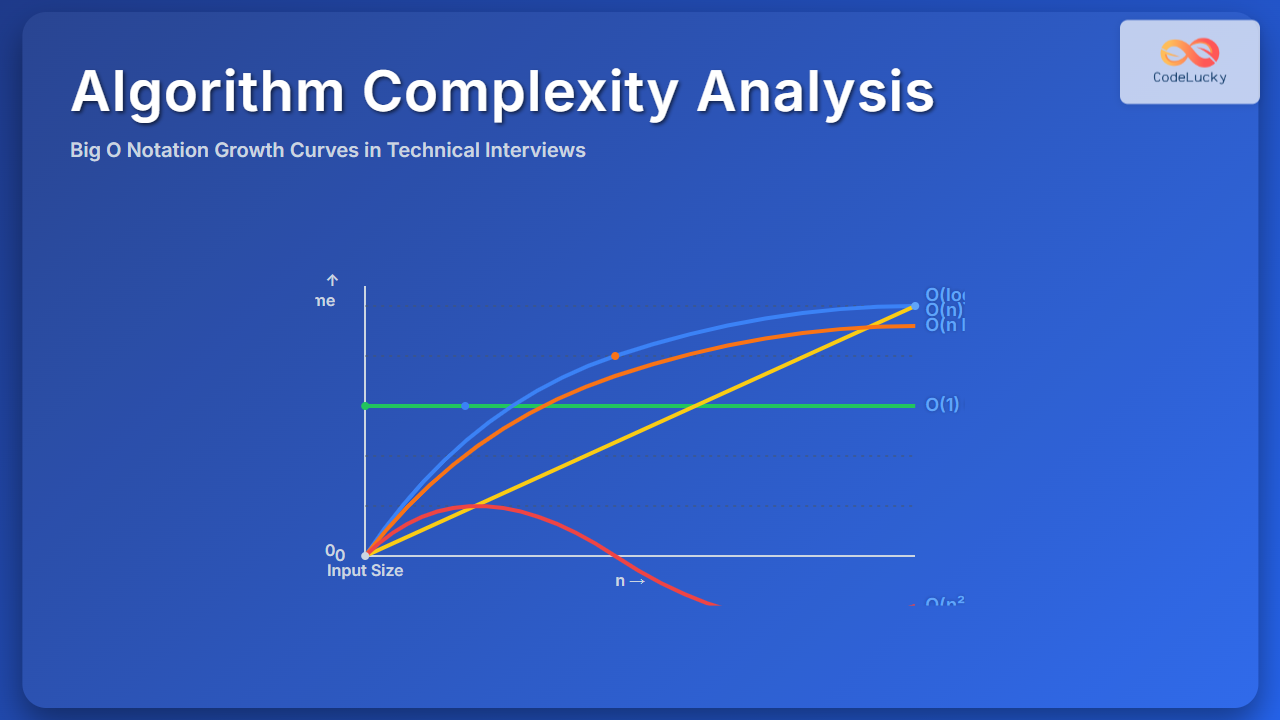
The time complexity is approximately O(N!) for generating all solutions, because in each row we attempt different column placements. But due to pruning (backtracking), the practical performance is better than brute force.
The space complexity is O(N^2) for storing the board configuration, though in optimized approaches it is reduced using column and diagonal tracking with sets.
Applications of N-Queens Problem
- Demonstrating recursion and backtracking algorithms.
- Studying constraint satisfaction problems.
- Forming the basis for optimization algorithms and AI puzzles.
- Enhancing logical and algorithmic thinking skills.
Conclusion
The N-Queens Problem is more than a mathematical curiosity—it’s a gateway into the world of recursion, backtracking, and complex problem solving. Mastering this problem builds a foundation for tackling generalized constraint satisfaction and optimization problems in computer science.
By understanding and implementing the N-Queens backtracking solution in Python, we gain insight into how to prune invalid states, generate complex solutions systematically, and visualize algorithmic thinking in action.