The Multi-CDN strategy is an advanced approach to content delivery that uses multiple Content Delivery Network (CDN) providers simultaneously to optimize website performance, enhance availability, and improve redundancy. This article explores the benefits, architecture, implementation techniques, and practical examples of using multiple CDNs, empowering developers and technical teams to build resilient, faster, and more scalable web services.
What is a Multi-CDN Strategy?
A Multi-CDN strategy involves deploying more than one CDN provider to deliver website or application content to end users. Instead of relying on a single CDN, traffic is distributed intelligently among multiple CDNs to capitalize on their respective strengths and global reach. This reduces latency, prevents bottlenecks, and mitigates risks of downtime caused by CDN provider outages.

Benefits of Multi-CDN Strategy
- Improved Performance: By leveraging the geographically distributed edge nodes of multiple CDNs, requests are served from the closest and fastest provider, reducing load times.
- Higher Availability & Redundancy: If one CDN faces an outage or degradation, traffic automatically shifts to healthy CDNs, minimizing downtime.
- Cost Optimization: Negotiation with multiple providers can reduce costs by balancing traffic according to price-performance tradeoffs.
- Global Reach: Different CDNs may have stronger presence in specific regions, combining their coverage enhances global delivery.
How Multi-CDN Works: Architecture Overview
The core of the Multi-CDN setup is a traffic management layer responsible for routing user requests among CDNs. This can be implemented using DNS load balancing, HTTP redirectors, or third-party traffic steering platforms.

Implementation Techniques
1. DNS-Based Traffic Routing
Using DNS-level load balancing, the DNS server responds with different CDN IP addresses based on latency, geography, or health checks.
Example: Using a DNS provider with latency-based routing, requests from Europe may resolve to CDN A, while those from Asia resolve to CDN B.
2. Application Layer Routing
At the HTTP level, a global traffic manager or edge proxy directs traffic by rewriting URLs or using HTTP redirects to switch CDNs dynamically.
3. Client-Side or API-Based Selection
Applications or clients can be coded to choose CDNs based on realtime metrics, fallback mechanisms, or user regions.
Example: Multi-CDN DNS Routing Configuration
Here is a simplified example of DNS records for multi-CDN routing:
; DNS A records with multiple CDN IPs for multi-CDN delivery
www.example.com.  300 IN A 198.51.100.1 ; CDN1 Edge
www.example.com.  300 IN A 203.0.113.5  ; CDN2 Edge
www.example.com.  300 IN A 192.0.2.9    ; CDN3 Edge
DNS servers use geo-locational or latency-based policies to decide which IP to return to users.
Advanced Example: Dynamic Traffic Steering with Health Checks
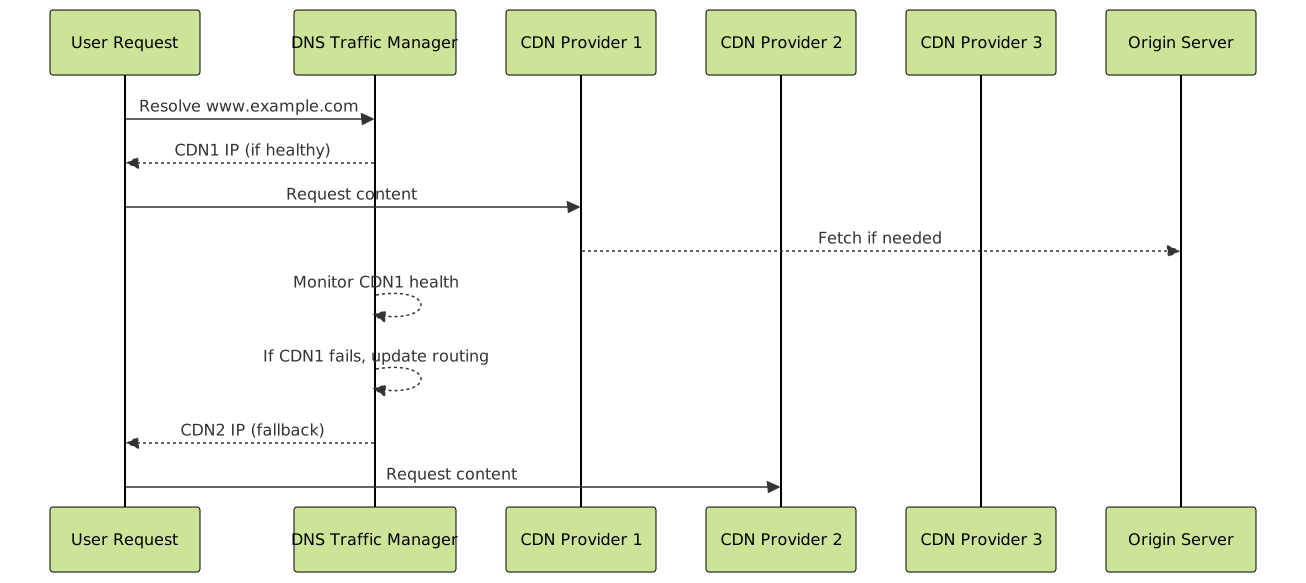
Dynamic traffic steering monitors each CDN’s availability and latency. If a CDN shows poor performance or fails a health check, traffic is automatically diverted away.
Visualizing CDN Traffic Distribution
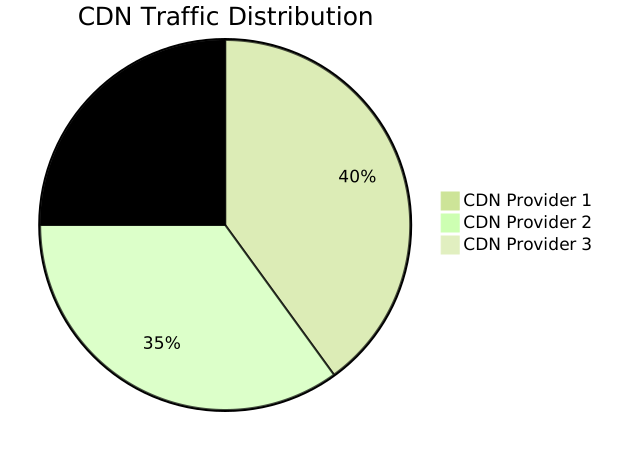
The following diagram shows how a traffic manager balances user requests across multiple CDNs based on performance and health:
Key Considerations for Multi-CDN Strategy
- Complexity: Managing multiple CDNs requires sophisticated monitoring and automation to switch traffic correctly.
- Cost: While offering resiliency, multi-CDN can increase costs if not optimized carefully.
- Analytics Integration: Centralized analytics are crucial to understand traffic patterns across CDNs.
- SSL Certificate Management: Coordinating certificates and security settings across CDNs must be planned.
Tools & Services for Multi-CDN Management
Several platforms specialize in Multi-CDN orchestration providing health checks, real-time steering, and unified dashboards:
- Akamai Kona Site Defender Multi-CDN
- NS1 Multi-CDN Traffic Management
- Cloudflare Load Balancer with Multi-CDN
- Amazon Route 53 Latency-Based Routing
Conclusion
A well-architected Multi-CDN strategy can profoundly enhance web application performance, reliability, and user experience, especially for global audiences. By intelligently distributing traffic across providers and implementing failover mechanisms, businesses can reduce latency, increase uptime, and gain operational flexibility. Using the patterns and examples discussed here, developers can design robust multi-CDN architectures tailored to their needs.